MTC clears transmission upgrades to meet Mumbai’s 6,500 MW demand by 2031
The Maharashtra Transmission Committee (MTC) has approved a series of transmission infrastructure projects to strengthen Mumbai’s power network, including the city’s first 400 kV transmission backbone, as part of preparations for electricity demand projected to reach around 6,500 MW by 2031.
The approved works include the creation of a 400 kV level at Tata Power Company-Transmission’s (TPC-T) existing 220 kV Trombay Substation, upgrades at multiple substations, conductor capacity enhancement and protection system improvements aimed at improving both grid reliability and future capacity.
400 kV network
The most significant approval is the development of a 400 kV level at TPC-T’s existing 220 kV Trombay Substation. The project will introduce a 400 kV transmission network in Mumbai for the first time and is intended to serve as the backbone of the city’s future transmission system.
The proposal follows recommendations of the High-Level Committee constituted after the Mumbai Metropolitan Region grid disturbance of October 12, 2020. The upgraded transmission infrastructure is expected to support Mumbai’s increasing electricity demand, with peak load projected to rise from the current 4,642 MW to around 6,500 MW by 2031.
Substation upgrades
Alongside the Trombay project, the committee approved several transmission system augmentation works across the network.
For the Kolsheb-BMC-BO-BO 110 kV system, Rs 14 crore has been sanctioned to increase conductor capacity from 750 A to 900 A. The upgrade is intended to ensure reliable operation while the Salsette-Kolsheb 220 kV transmission corridor undergoes strengthening.
At the Davdi Substation, the committee approved an investment of Rs 4.50 crore for the installation of a transfer bus and transfer breaker bay. The facility will allow maintenance work to be carried out without complete line outages, reducing operational disruptions during network upgrades.
The committee also approved Rs 4.00 crore for works at the Salsette and Trombay substations. The project includes installation of a new Neutral Grounding Transformer (NGT) for the 250 MVA ICT-1 at Salsette and replacement of the ageing NGT associated with the 80 MVA DT-6 at Trombay to strengthen system protection and improve network reliability.
At the Chandivali Extra High Voltage (EHV) Substation, Rs 25.40 crore has been approved for installation of a second 33 kV Gas Insulated Switchgear (GIS) board. The additional GIS board will provide eight new outgoing feeders requested by the Distribution Licensee while enabling better utilisation of the existing 2×125 MVA transformation capacity.
Strengthening the grid
According to the committee, the approved projects address both near-term operational requirements and Mumbai’s long-term transmission needs. The combination of a new 400 kV transmission backbone, conductor upgrades, protection system enhancements and switchgear expansion is intended to improve network resilience while supporting future load growth.
The projects also form part of efforts to address vulnerabilities identified following the October 2020 Mumbai Metropolitan Region grid disturbance and reinforce the city’s transmission system ahead of rising electricity demand.
The committee also approved Rs 165.54 crore for expanding transmission surveillance and emergency restoration infrastructure across Maharashtra. The package includes Rs 101.35 crore for Phase-III of the CCTV-Centralized Visual Advance Monitoring System (CVAMS), which will extend surveillance to another 100 Extra High Voltage (EHV) substations across the 400 kV, 220 kV and 132 kV networks and establish a centralised Control & Monitoring Centre in Mumbai. An additional Rs 64.19 crore has been sanctioned for three Emergency Restoration System (ERS) sets, each comprising 10 towers, to be stationed at Amravati, Karad and Vashi, increasing Maharashtra State Electricity Transmission Company Limited’s (MSETCL) total ERS inventory to five sets. The approvals are aimed at improving grid monitoring and strengthening emergency response capabilities across the state’s transmission network.
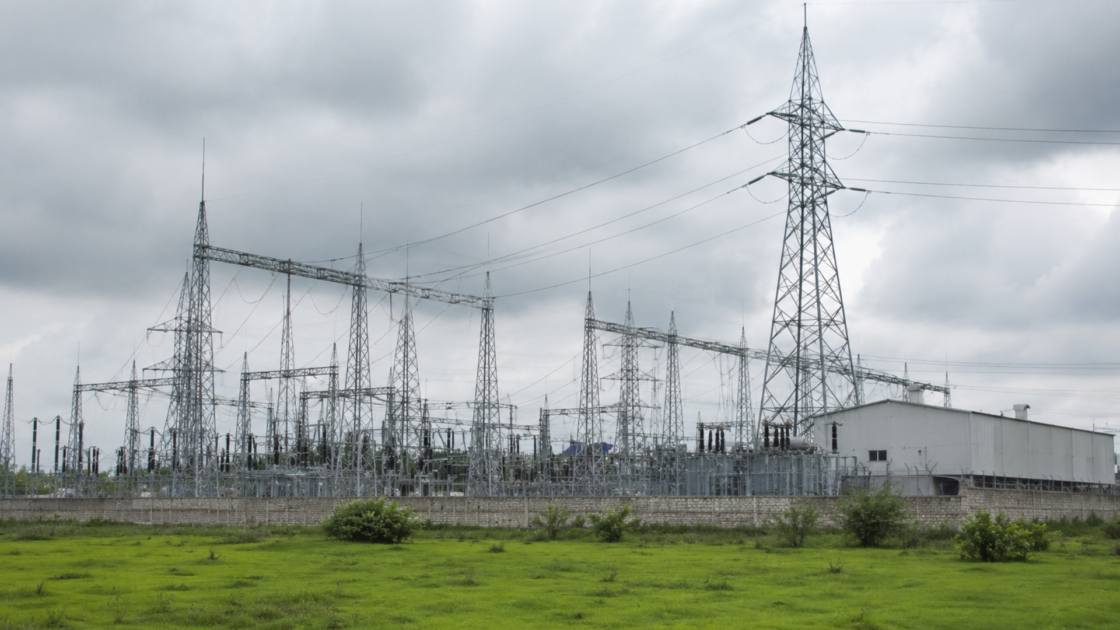
The featured photograph is for representation only.