
India yet to commission offshore wind despite 70 GW potential

India has yet to commission any offshore wind capacity despite an estimated 70 GW of technical potential along the coasts of Gujarat and Tamil Nadu, according to the Global Offshore Wind Report 2026 published by the Global Wind Energy Council (GWEC). The report stated that a tender cancellation in 2025 slowed near-term progress, while new policy interventions and a revised tender schedule expected in the second half of 2026 indicate renewed activity in the sector.
Early-stage market
As of April 2026, India had installed 56 GW of onshore wind capacity, ranking fourth globally in both wind and renewable energy capacity. Offshore wind development, however, remains at an early stage with no commissioned projects and limited project execution so far, according to the Ministry of New and Renewable Energy (MNRE).
Tender setbacks
In August 2025, the Solar Energy Corporation of India (SECI) cancelled offshore wind tenders totalling 4.5 GW due to limited developer participation. The offshore wind supply chain in India remains underdeveloped, with continued dependence on imports and limited availability of specialised installation vessels.
To improve project viability, the government approved a Rs 74.53 billion (USD 893 million) Viability Gap Funding (VGF) scheme covering 1 GW of offshore wind capacity and associated port infrastructure upgrades. It also extended the Inter-State Transmission System (ISTS) waiver for offshore wind projects until 2032.
Estimated offshore wind tariffs remain above prevailing grid tariffs. Project costs are estimated at Rs 10.5 per kWh in Gujarat and Rs 9.6 per kWh in Tamil Nadu, compared to current grid tariffs of around Rs 7 per kWh.
Fresh tenders
MNRE is expected to issue offshore wind tenders in the second half of 2026, either as two separate 500 MW projects or a single 1,000 MW tender. The Bureau of Indian Standards (BIS) has also introduced offshore wind turbine design standards for blades and towers aligned with International Electrotechnical Commission (IEC) norms.
International cooperation
In February 2026, India and the United Kingdom launched an offshore wind task force under the Vision 2035 partnership to accelerate sector development. Central and state government agencies are also working with multilateral institutions, bilateral agencies, think tanks, and expert groups on maritime spatial planning and offshore wind skill development.
Outlook
GWEC expects India’s first offshore wind projects to be commissioned in the early 2030s, with total capacity projected to reach 2 GW by 2035. The sector is also expected to generate higher-value technical employment across marine operations, offshore safety, subsea cable installation, and port logistics.
Global market
Globally, offshore wind capacity reached 92.5 GW by the end of 2025 after 9.3 GW of new capacity was added during the year, marking a 16% increase over 2024. China led annual installations for the eighth consecutive year with 6.6 GW, while Europe added nearly 2 GW across three markets.
GWEC forecasts annual offshore wind installations to double in 2026, triple by 2030, and exceed 50 GW annually by 2035. Between 2026 and 2035, global additions are projected to exceed 327 GW, taking cumulative capacity to 420 GW by end-2035.
The Asia-Pacific region accounted for 58% of global offshore wind capacity by end-2025, with China contributing 48.4 GW of the region’s 53.5 GW total. China’s offshore wind capacity is projected to exceed 115 GW by 2030 and 200 GW by 2035.
Floating wind
GWEC stated that commercialisation of floating offshore wind has been delayed to the early 2030s. While governments globally have announced ambitions for around 90 GW of floating wind capacity, only 1.5 GW has secured active offtake contracts. The council now expects just 1 GW of floating wind to be installed globally by 2030.
Europe added only 2 GW of offshore wind capacity in 2025, the lowest annual figure since 2016, though installations are expected to accelerate during 2031-2035, averaging 17 GW per year.
Offshore wind development in the United States has effectively stalled under the current administration following the suspension of offshore leasing and cancellation of designated wind energy areas. GWEC expects limited new additions once projects currently under construction are completed.
The Philippines, Vietnam, Japan, South Korea, Australia, and Turkiye have been identified as key future growth markets. The Philippines launched its first dedicated offshore wind auction targeting 3.3 GW, while Vietnam, South Korea, and Japan announced revised long-term deployment targets.
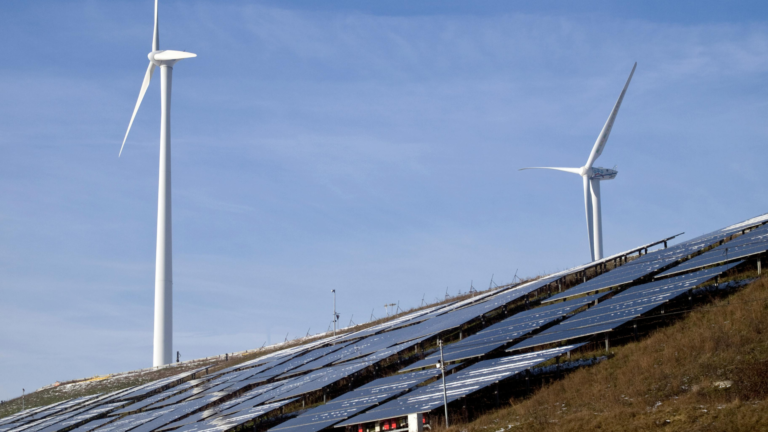
The featured photograph is for representation only.