
THDC’s 1,500 MW Humbarli Birmani pumped storage project clears ToR stage

The Expert Appraisal Committee (EAC) for River Valley and Hydroelectric Projects under the Ministry of Environment, Forest and Climate Change (MoEFCC) has recommended Terms of Reference (ToR) for THDC India Limited’s proposed 1,500 MW Humbarli Birmani Open Loop Pumped Storage Project across Satara and Ratnagiri districts of Maharashtra.
The Rs 8,470.89 crore project will have six 250 MW units and is designed to generate 3,207.44 MU annually. The EAC recommended the ToR on July 15, 2026, after THDC India Limited (THDCIL) obtained a No Objection Certificate (NOC) from the Mahabaleshwar-Panchgani Eco-Sensitive Zone (ESZ) Monitoring Committee, which had been required before the proposal could proceed.
The project is planned for completion within 60 months from the start date, including a 12-month pre-construction period.
Project design
The Humbarli Birmani project is an off-stream open-loop pumped storage scheme spanning two adjacent valleys. The upper reservoir will be located at Hatlot village in Mahabaleshwar taluka of Satara district, while the lower reservoir will be at Birmani village in Khed taluka of Ratnagiri district.
The project will operate with a rated net head of 505.23 metres, providing 6.17 hours of daily peaking generation and 7.17 hours of pumping. The upper reservoir will have a 51.09-metre-high and 607.66-metre-long Geomembrane Faced Rockfill Dam (GFRD) across a seasonal nala that is a tributary of the Koyna River. The lower reservoir will have a 76.15-metre-high and 567.04-metre-long concrete gravity dam across a seasonal nala that is a tributary of the Jagbudi River.
The water conductor system and powerhouse will be entirely underground. The system will include two 8.0-metre-diameter Head Race Tunnels (HRTs), each approximately 392 metres long, along with pressure shaft tunnels and tail race tunnels. An underground powerhouse cavern measuring 169m x 22.90m x 50.10m will house the six 250 MW generating units.
The levelized tariff is estimated at Rs 8.07/kWh, assuming a pumping energy cost of Rs 2.50.
Land and water
The project requires 334.82 hectares of land, comprising 49.50 hectares of forest land and 285.32 hectares of non-forest land. The total submergence area is 87.05 hectares, including 1.31 hectares of forest land and 85.74 hectares of non-forest land.
The scheme will operate through non-consumptive recirculation, with 7.457 million cubic metres (MCM) of recirculation water. The one-time filling requirement is estimated at 9.56 MCM, while 0.719 MCM will be required annually to compensate for losses. Water will be sourced from yield generated within the 4.64 sq km catchment area of the lower dam and subsequently used cyclically for energy storage and discharge.
Environmental issues
The project is located within the Mahabaleshwar-Panchgani ESZ notified under S.O. 52(E) dated January 17, 2001. The nearest project boundary is approximately 8.82 km from the core zone of Koyna Wildlife Sanctuary within the Sahyadri Tiger Reserve, while the reserve’s buffer zone is around 3.30 km from the lower reservoir. The project villages are also covered by the Western Ghats Ecologically Sensitive Area under draft notification S.O. 3060(E) dated July 31, 2024.
The EAC had initially deferred the proposal on April 13, 2026, after noting that hydel power plants with capacity above 50 MW fall under the Red category of industries under Central Pollution Control Board (CPCB) classification. Since the project falls within the Mahabaleshwar-Panchgani ESZ, prior NOC from the competent authority was required.
THDCIL subsequently applied to the Mahabaleshwar-Panchgani ESZ Monitoring Committee, which considered the proposal on April 15, 2026, and granted the NOC on July 6, 2026. The clearance was submitted to the Ministry on July 7, 2026. The EAC has stipulated that final clearance from the ESZ Monitoring Committee must be obtained before Environmental Clearance (EC) is granted.
EAC conditions
THDCIL will have to prepare an inventory of all natural streams and nalahs within a 10 km radius and undertake comprehensive aquifer mapping, accompanied by an action plan for protection of natural springs and streams. A watershed development plan must be prepared in consultation with the Indian Council of Agricultural Research (ICAR) or other expert institutions, while large-scale plantation of native species must be undertaken in consultation with the State Forest Department.
The project proponent must submit 10 years of water availability data certified by the Central Water Commission (CWC) or State Water Resources Department and explore options to reduce the 49.50 hectares of forest land required. Muck disposal sites and the project township must be located outside forest areas.
A certificate from the Chief Wildlife Warden will be required confirming the status of the project boundary with respect to any Eco-Sensitive Area, Wildlife Sanctuary or Tiger/Elephant corridor within a 10 km radius. THDCIL must also prepare a transportation plan, including a risk assessment for movement through wildlife areas, and an Environmental Cost Benefit Analysis covering loss of forest ecosystems, biodiversity and ecological flows.
The EAC has sought component-wise estimates of muck generation and a disposal plan, along with measures to prevent muck from entering water bodies. Construction areas will require a restoration plan, while the effects of blasting and drilling on aquatic and terrestrial ecosystems must be assessed.
A detailed socio-economic assessment of the tribal population based on primary data must also be undertaken. A Tribal Development Plan is to be prepared in consultation with the District Administration and Tribal Welfare Department, while land acquisition will have to comply with the Right to Fair Compensation and Transparency in Land Acquisition, Rehabilitation and Resettlement (RFCTLARR) Act, 2013.
Project benefits
The project is expected to generate an average of 3,207.44 MU annually and employ approximately 1,500 workers during construction. Catchment Area Treatment and Green Belt Development Plans are expected to increase vegetal cover, while Corporate Social Responsibility (CSR) initiatives and Watershed Development Plans are proposed for development of the surrounding area.
THDC India Limited is a joint venture of the Government of India and the Government of Uttar Pradesh and is engaged in the development of hydroelectric and pumped storage projects across the country.
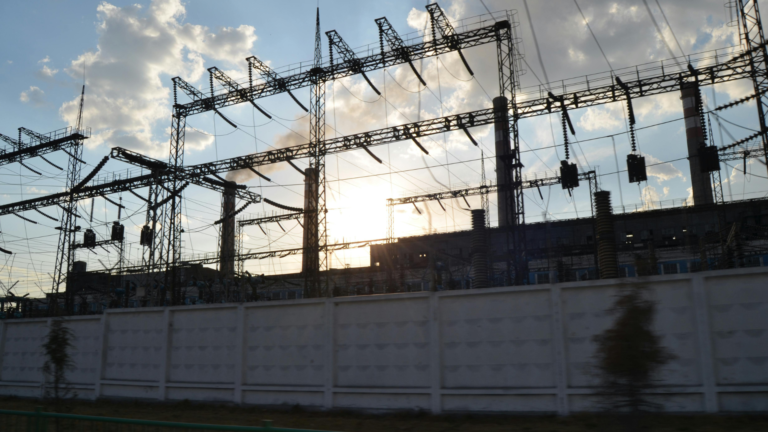
The featured photograph is for representation only.