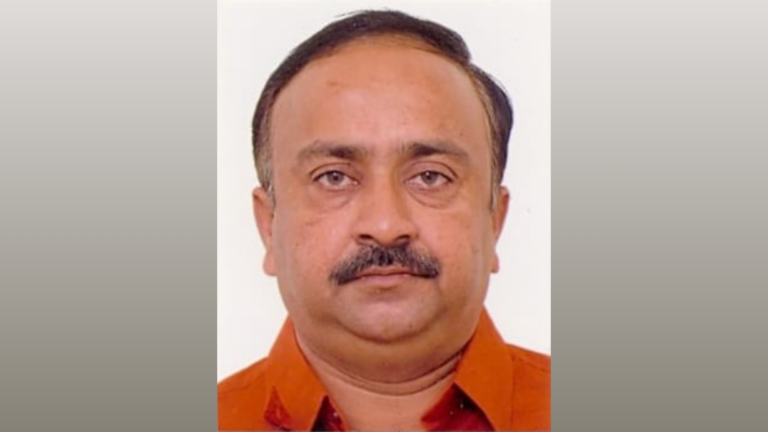

Interview with Teppo Hemiä: From pilot thinking to infrastructure thinking in India’s metering rollout

Wirepas has spent over 15 years building wireless mesh infrastructure for environments where conventional connectivity struggles: dense cities, fragmented grids, and large fleets of endpoints that need to operate reliably over long periods. The company’s technology now underpins smart metering deployments across India at a scale that has reshaped assumptions about what RF mesh can deliver. In this conversation, Teppo Hemiä, Chief Executive Officer of Wirepas, discusses how the market has matured, what operating at national scale reveals, and how utilities in Europe and other regions are approaching the next phase of connectivity.
1. Wirepas has been around since 2010 and today has over 15 million meters connected globally. What problem were you originally set up to solve, and how has that problem changed since then?
When Wirepas was founded, the problem was surprisingly simple: how do you connect massive numbers of devices reliably and economically, without depending on heavy infrastructure or expensive communication layers? At the time, most wireless networking models assumed a central coordinator, a gateway-heavy architecture, or a relatively small number of connected endpoints. That worked for enterprise Wi-Fi or industrial automation islands, but not for dense, distributed environments where you might need to connect hundreds of thousands or millions of devices.
The original challenge was scalability. If every endpoint depends on a direct connection to infrastructure, cost grows linearly with deployment size. Utilities and industrial operators needed a model where the network itself could grow organically.
Decentralized RF mesh became the answer. Instead of relying on a central point of control, every connected device participates in routing data. The network becomes self-forming and self-healing. Adding more devices strengthens the network instead of burdening it.
What has changed over the last decade is the nature of the question. Instead of asking, “Can I connect a meter?”, utilities are now asking, “Can I operate this system for 15 years at predictable cost, with high availability and without locking myself into a single communications model?” The discussion has shifted from technology feasibility to operational resilience. Utilities now care about ownership models, interoperability, upgradeability, cybersecurity and long-term lifecycle economics.
2. How does a decentralised RF mesh network actually operate in a utility or industrial setting, from device to control system, and what does it enable that a cellular or centralised network cannot?
In a utility environment, every meter becomes both a data source and a communication participant. It measures energy usage, but it also helps carry traffic for neighbouring devices.
In a decentralized RF mesh, data does not travel through a fixed path. Each device communicates with nearby peers, and packets move dynamically across the network until they reach a collection point connected to the utility backend. The critical distinction is that routing intelligence sits inside the network itself. There is no single controller deciding the path for every message. Devices continuously optimize routes based on radio conditions, density, and availability.
For utilities, that creates several advantages. Coverage improves in difficult environments, dense urban neighbourhoods, concrete-heavy buildings, and geographically fragmented communities, which often create dead zones for direct-connect technologies. Mesh networks can route around obstacles. Reliability increases because the network is resilient to failure: if one path becomes unavailable, traffic automatically finds another. Infrastructure costs can be significantly lower because fewer backhaul points are needed.
Cellular is a strong solution when you need guaranteed direct connectivity, mobility, or rapid deployment. But for very dense, fixed-device environments such as smart metering, decentralized RF mesh becomes highly efficient because scale works in its favour. As networks become denser, performance often improves rather than degrades. That characteristic is difficult to replicate with centralized architectures.
3. India has been your largest and most demanding deployment. What has operating at that scale changed in terms of where RF mesh can realistically go next, both in markets and applications?
India fundamentally changed the industry’s understanding of what RF mesh can do.
Before large-scale deployments, many viewed RF mesh as suitable mainly for smaller utility projects or regional smart metering programs. India demonstrated that the technology can operate at national scale. The environment itself is highly demanding. Utilities are working across dense urban areas, semi-rural settlements, high-rise housing, informal neighborhoods, and varied climate conditions. In many places, communications infrastructure is inconsistent or expensive to scale. Deployments in India proved that RF mesh can perform reliably under conditions where density, interference, and operational complexity are very high.
What this changed for Wirepas, and for the market, is confidence in scale. Once a technology demonstrates reliable operation across millions of endpoints, it becomes easier to consider broader applications. We now see growing interest beyond electricity metering into decentralized energy resources, grid monitoring, street lighting, and industrial sensing.
India also demonstrated that mesh is not limited to greenfield environments. It can be introduced into existing utility ecosystems where infrastructure, regulation, and procurement structures are already mature. That opens the door for adoption in other high-density regions across Asia, the Middle East, Latin America, and Europe, where utilities are now reassessing long-term connectivity strategies.
4. Since Wirepas entered India, the smart metering market has shifted considerably, in scale, in regulation, and in how utilities think about connectivity. How would you characterise that evolution, and as you look at the next five years, where do you see the biggest opportunities for Wirepas, and what are the challenges you are watching most closely?
India’s smart metering market has evolved from pilot thinking to infrastructure thinking.
In the early stages, utilities focused heavily on proving the concept: could smart metering reduce losses, improve billing accuracy, and support operational visibility? Today, the discussion is much more mature. Utilities are evaluating long-term communications architecture, operational efficiency, rollout speed, and lifecycle economics. They are also putting weight on open ecosystems and interoperability.
The scale of India’s rollout has changed expectations. Smart metering is no longer an isolated technology project; it is becoming part of a broader digital utility transformation. Connectivity decisions made now matter because they influence operational cost structures for years to come. Regulation has also become more structured. Performance expectations are clearer, and there is greater accountability around uptime, communication reliability, and data availability.
Over the next five years, the opportunity is to extend digital infrastructure around those meters. Once utilities have dense communications coverage, they can begin connecting additional assets such as transformers or grid sensors. That creates a platform effect, one communications layer can support multiple use cases.
The main challenge is ensuring long-term interoperability and avoiding fragmented deployments that create operational silos. Another is maintaining deployment quality at a very large scale. Rapid rollout can sometimes create pressure around installation consistency, commissioning quality, and network optimization. Those factors become increasingly important as networks mature.
5. In India’s performance-based smart metering rollout, what specific metrics determine whether a deployment is delivering value, and how are those metrics tracked and enforced over time?
India’s rollout model has shifted attention towards measurable operational outcomes. Utilities and service providers typically focus on several core metrics.
Communication reliability is one of the most important. This includes meter read success rates, network availability, and latency for critical commands. Billing efficiency is another major metric. Utilities measure whether data collection improves billing accuracy, reduces manual intervention, and shortens billing cycles.
Reduction of aggregate technical and commercial losses is also closely tracked. Smart metering provides utilities with visibility into consumption behavior, outages, tampering, and theft detection. Operational responsiveness matters as well; utilities monitor how quickly meters can be commissioned, disconnected, reconnected, or updated remotely.
In India’s performance-linked framework, these outcomes are typically tied to service-level agreements. Connectivity performance is continuously measured, not evaluated once during deployment. The communications layer must maintain performance over the years, not just at installation. This is particularly important because utilities increasingly view smart metering as an operational system rather than a one-time procurement exercise.
6. In brownfield European markets, utilities have sunk costs in PLC and cellular. What is the break-even point at which switching to RF mesh becomes economically rational?
There is rarely a single break-even threshold because utilities evaluate communications technology based on a combination of operational cost, replacement cycles, and network performance.
In brownfield European environments, utilities often already have PLC or cellular infrastructure in place. The decision is less about replacing technology immediately and more about identifying where legacy approaches stop delivering value. PLC can perform well in certain grid conditions, but utilities may encounter limitations in reliability, maintenance effort, or deployment flexibility, particularly in ageing distribution networks. Wirepas has profiles enabling sub-second reading intervals, a level of performance not supported by any other technology.
Cellular offers simplicity and speed of early deployment, but recurring connectivity costs can become significant at a very large scale, and the network has a limited lifetime. Cellular also leaves black spots in coverage that are expensive to fix afterwards. The transition toward RF mesh becomes more economically attractive when utilities begin expanding beyond a single use case.
Another trigger is meter replacement cycles. Utilities rarely replace communications infrastructure in isolation. The strongest economic case typically appears when meter fleets are already approaching renewal. At that point, utilities can evaluate total lifecycle cost over the next 10 to 15 years rather than comparing technologies purely on installation cost. The discussion increasingly shifts from capex versus opex toward network ownership and long-term operational control.
7. Looking ahead, what are Wirepas’ priorities for India and the broader global market? Are there specific regions or use cases you are focused on expanding into, and what does that growth look like over the next few years?
India remains strategically important because it continues to demonstrate what large-scale digital utility infrastructure can look like. The priority there is ensuring networks continue to perform as they scale and mature.
Beyond India, Wirepas sees a strong opportunity in regions where utilities are seeking alternatives to high recurring connectivity costs or fragmented infrastructure models. That includes parts of Southeast Asia, Latin America, and selected European markets. The opportunity is particularly strong in high-density environments where mesh benefits increase with network scale.
From a use-case perspective, smart electricity metering remains a core market, but growth also comes from other industries requiring large-scale, reliable networks. As the platform effect takes hold, we expect the same connectivity layer that serves metering today to support a much wider set of utility and industrial applications tomorrow.