Gujarat’s data centre policy mandates 51% renewable energy sourcing
The Government of Gujarat has notified the Viksit Gujarat Data Center Policy 2026-29, targeting 7.5 GW of hyperscale data centre capacity by 2029 and making renewable energy procurement a condition for eligible projects. Under the policy, qualifying data centres must source at least 51% of their operational electricity consumption from renewable and green energy sources.
The policy places the Dholera Special Investment Region at the centre of the state’s data centre expansion plans. It seeks to attract hyperscale and AI-optimised digital infrastructure investments by leveraging Gujarat’s nearly 74 GW installed power capacity, established renewable energy ecosystem, dense optical fibre connectivity and the financial infrastructure available through GIFT City.
Fiscal incentives
Projects with an approved installed IT load of 150 MW or above will be eligible for a package of fiscal incentives. These include a capital subsidy of 2.5% on eligible fixed capital investment (EFCI) for projects in the Dholera region and an interest subsidy of up to 4% for 10 years, subject to a cap of ₹25 crore annually.
The policy also provides a power tariff subsidy of ₹1 per unit for 20 years, 100% exemption from stamp duty and registration fees on land lease or purchase, and 100% reimbursement of electricity duty for 20 years. SGST reimbursement will also be available for plant and machinery, building infrastructure and eligible services.
The overall financial incentives available under the policy are capped at 75% of eligible fixed capital investment. Annual disbursement will be limited to 5% of the total eligible amount.
Development support
The policy provides data centre-specific building and development provisions, including enhanced Floor Space Index (FSI), ground coverage of up to 70%, flexibility in floor-to-ceiling heights and permission to install chillers on rooftops.
The state government will facilitate distribution licensing, dual power supply through independent feeders and open access for electricity procurement.
It will also facilitate captive desalination plants. Such facilities can receive capital assistance of up to 20% of expenditure or ₹2 crore per million litres per day (MLD), whichever is lower, for plants of up to 20 MLD per gigawatt of capacity.
Green power
The mandatory 51% renewable and green energy sourcing requirement is a key feature of the policy and sets Gujarat’s framework apart from data centre policies introduced by states including Maharashtra, Karnataka, Tamil Nadu, Uttar Pradesh, West Bengal, Haryana and Odisha.
While those policies have primarily provided incentives such as stamp duty waivers, development charge exemptions and power subsidies, Gujarat has linked eligibility for its data centre incentives to a minimum level of renewable and green energy consumption.
Data centre operations have also been designated as an “Essential Service” under the Gujarat Essential Services Maintenance Act, 1972.
Implementation
The Department of Science and Technology will act as the nodal agency for implementing the policy. A High-Powered Committee (HPC) will approve projects, while a State Level Empowered Committee (SLEC), chaired by the Additional Chief Secretary of DST, will assess applications and oversee incentive disbursement.
The policy will remain in force for three years and provides for annual review and extension.
The framework is aligned with the national Viksit Bharat@2047 vision and Gujarat’s Viksit Gujarat@2047 framework. The state aims to use the policy to attract global hyperscalers, cloud service providers and colocation operators, while also supporting high-value employment and skill-development opportunities in the digital infrastructure sector.
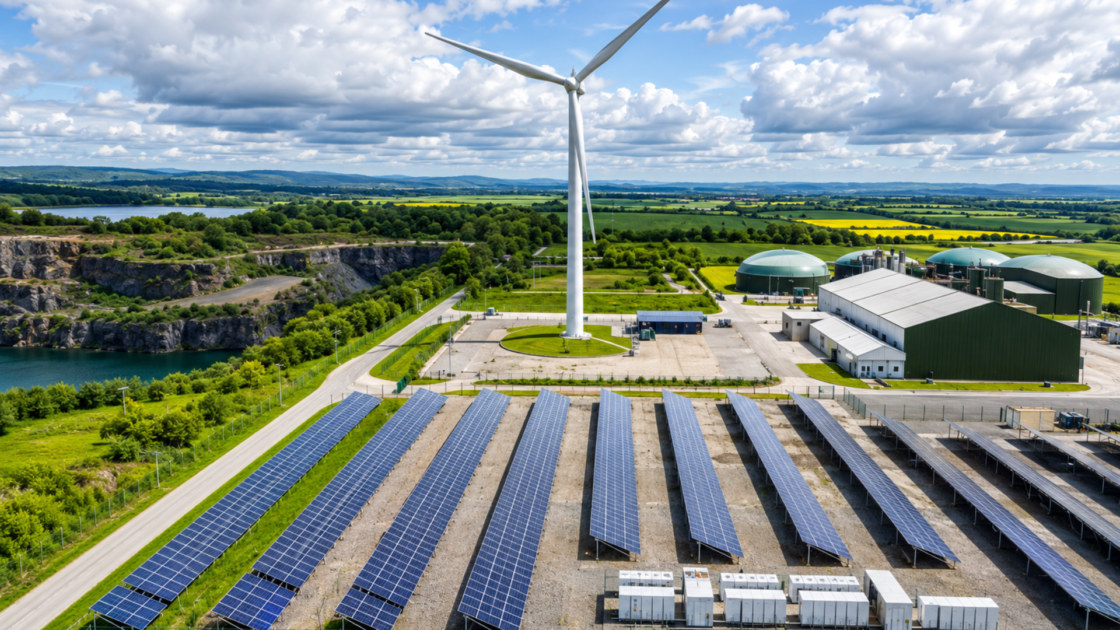
The featured photograph is for representation only.