RRECL proposes BESS monitoring rules for C&I renewable projects in Rajasthan
The Rajasthan Renewable Energy Corporation Limited (RRECL) has released a Draft Standard Operating Procedure (SOP) for monitoring the installation of Battery Energy Storage Systems (BESS) alongside renewable energy projects developed by Commercial & Industrial (C&I) consumers on the state transmission utility and distribution company network in Rajasthan.
Issued under the Rajasthan Integrated Clean Energy Policy, 2024, the draft SOP sets out a uniform framework for monitoring, verification and compliance with mandatory BESS installation requirements. RRECL has been designated as the nodal agency for the process following a decision taken at the 37th Meeting of the Coordination Committee of Rajasthan State Power Sector Companies on 5 December 2025.
Applicability
The SOP covers C&I consumers developing solar, wind or hybrid renewable energy generating facilities under captive, group captive, third-party sale or green energy open access arrangements on the STU/DISCOM network.
For new renewable energy projects, excluding hydro, on the state transmission utility (STU) network with installed capacity exceeding 5 MW, BESS must have a minimum storage duration of two hours and be sized at 5% of the renewable energy capacity.
For renewable energy-based captive power plants with capacity above 100% and up to 200% of the consumer’s contract demand, BESS must cover a minimum of 20% of the energy generated by the additional capacity beyond 100% of contract demand.
Compliance in both cases will be assessed on an energy basis in MWh. The SOP requires separate meters for renewable energy generation and BESS charging and discharging, with monthly meter reading data forming the primary basis for verification.
Monitoring
C&I consumers will have to declare the stored energy at the time of commissioning and maintain it throughout the project’s lifecycle. Annual BESS performance reports must be submitted to RRECL by 31 May of the succeeding financial year.
RRECL will establish a dedicated BESS monitoring and compliance portal. Until the portal becomes operational, consumers will submit the required data and reports through email. RRECL will maintain consolidated monitoring records and carry out annual verification of BESS capacity, performance and stored energy.
Any change in installed renewable energy capacity or contracted demand must be reported to RRECL within 10 days. The corresponding BESS obligation will also have to be adjusted.
Non-compliance
The draft SOP divides non-compliance into two categories.
Category A covers non-installation, prolonged unavailability of mandated BESS exceeding 30 consecutive days or more than 45 days in a quarter, and unauthorised removal of mandated BESS. Consequences can include denial of commissioning certificates, suspension of approvals for open access, banking, wheeling and captive status, withdrawal of adjusted wheeled energy, and potential cancellation of renewable energy project registration.
Category B covers a proportionate BESS capacity shortfall where the installed renewable energy capacity is lower than the approved capacity, resulting in non-compliance with the prescribed renewable energy-to-BESS ratio.
Separate performance penalty mechanisms linked to power purchase agreements will not be covered under the SOP.
Stakeholder input
RRECL has placed the draft SOP in the public domain and invited comments, suggestions and feedback from renewable energy developers, industry associations, captive consumers, open access consumers, EPC contractors and consultants.
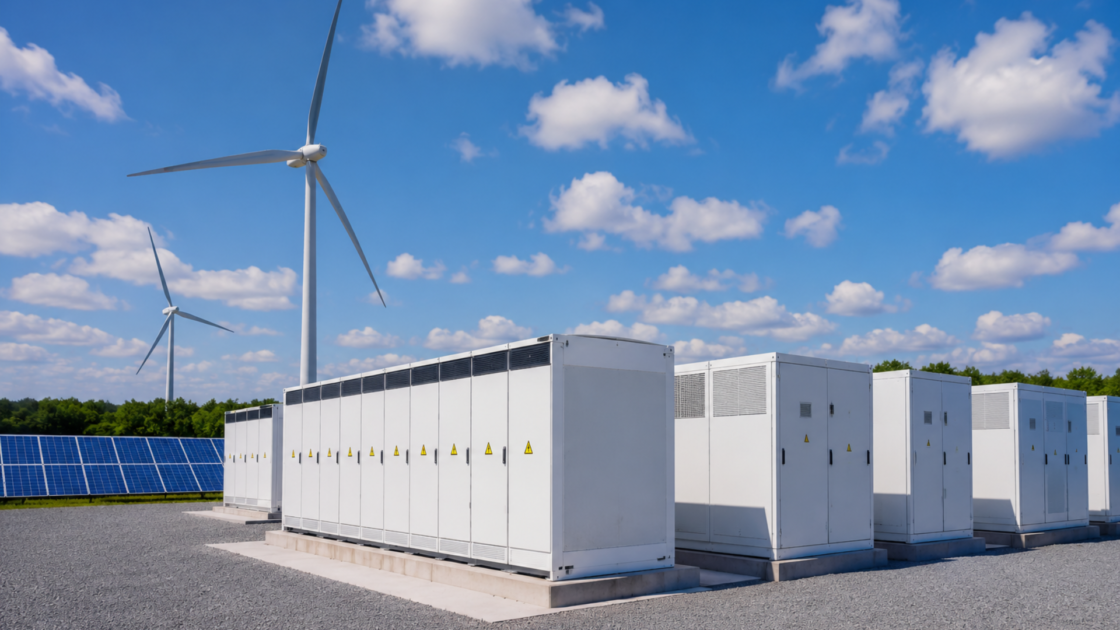
The featured photograph is for representation only.