NERPC finalising SOP for regional spare transformers, private TSPs seek role
The North Eastern Regional Power Committee (NERPC) is finalising a National Power Committee (NPC)-approved Standard Operating Procedure (SOP) for the diversion of regional spare transformers and reactors, with private transmission service providers (TSPs) seeking formal participation in the framework.
The revised draft SOP was discussed during the recent Operation Coordination Sub-Committee (OCC) meeting.
Framework for diversion of regional spares
The SOP, approved in principle by the NPC, seeks to establish uniform guidelines for diverting Regional Power Committee (RPC)-approved spare transformers and reactors to constituent utilities and State Transmission Utilities (STUs). The objective is to improve the utilisation of critical equipment while ensuring emergency preparedness across the grid.
The framework is based on recommendations of the Central Electricity Regulatory Commission (CERC) committee. Under these recommendations, the 28th Transmission Coordination Committee (TCC)-28th NERPC meeting approved 11 regional spare transformers and reactors. According to Power Grid Corporation of India Limited (PGCIL), six NERPC-approved regional spare transformers and reactors are currently available in the North Eastern Region.
Private TSPs seek inclusion
One of the key issues discussed during the meeting was the participation of private TSPs.
Clause C(ii) of the draft SOP states that diversion of regional spares to utilities other than STUs is generally not envisaged under normal circumstances. However, it allows such diversion in exceptional cases with the approval of the RPC forum.
NERPC informed the meeting that private TSPs have been asked to submit their views on this provision. The committee noted that the NERPC forum would retain the authority to decide on any exceptional diversion of regional spares to private entities.
PGCIL flags operational challenges
PGCIL informed the committee that periodic rotation of cold spare transformers and reactors poses significant operational and commercial challenges.
According to the utility, replacing installed equipment with cold spares would require prolonged outages to carry out oil draining, dismantling of bushings, fire-fighting systems, radiators and associated cabling before transportation.
The utility also pointed to the time and cost involved in shifting equipment to storage yards and commissioning replacement units. It noted that one-to-one replacement is often not possible because spare transformers and reactors are manufactured by different vendors, requiring civil modifications, reconstruction of foundations, and changes to electrical schemes and protection systems.
PGCIL clarified that cold spare equipment is intended primarily for emergency or breakdown situations and that regular inspection, testing and Hot Oil Circulation (HOC) are already undertaken to maintain operational readiness.
The OCC requested PGCIL to prepare a detailed techno-commercial study to substantiate the operational constraints associated with rotating cold spare transformers and reactors.
If the study confirms these challenges, the issue will be referred to the NPC for further consideration.
Meanwhile, all STUs and TSPs have been asked to submit comments on the revised SOP circulated by the NPC on June 25, 2026. The deadline for comments was June 28, 2026.
The Mizoram Power & Electricity Department has accepted the draft SOP but requested the removal of the penalty provision contained in Paragraph E(e).
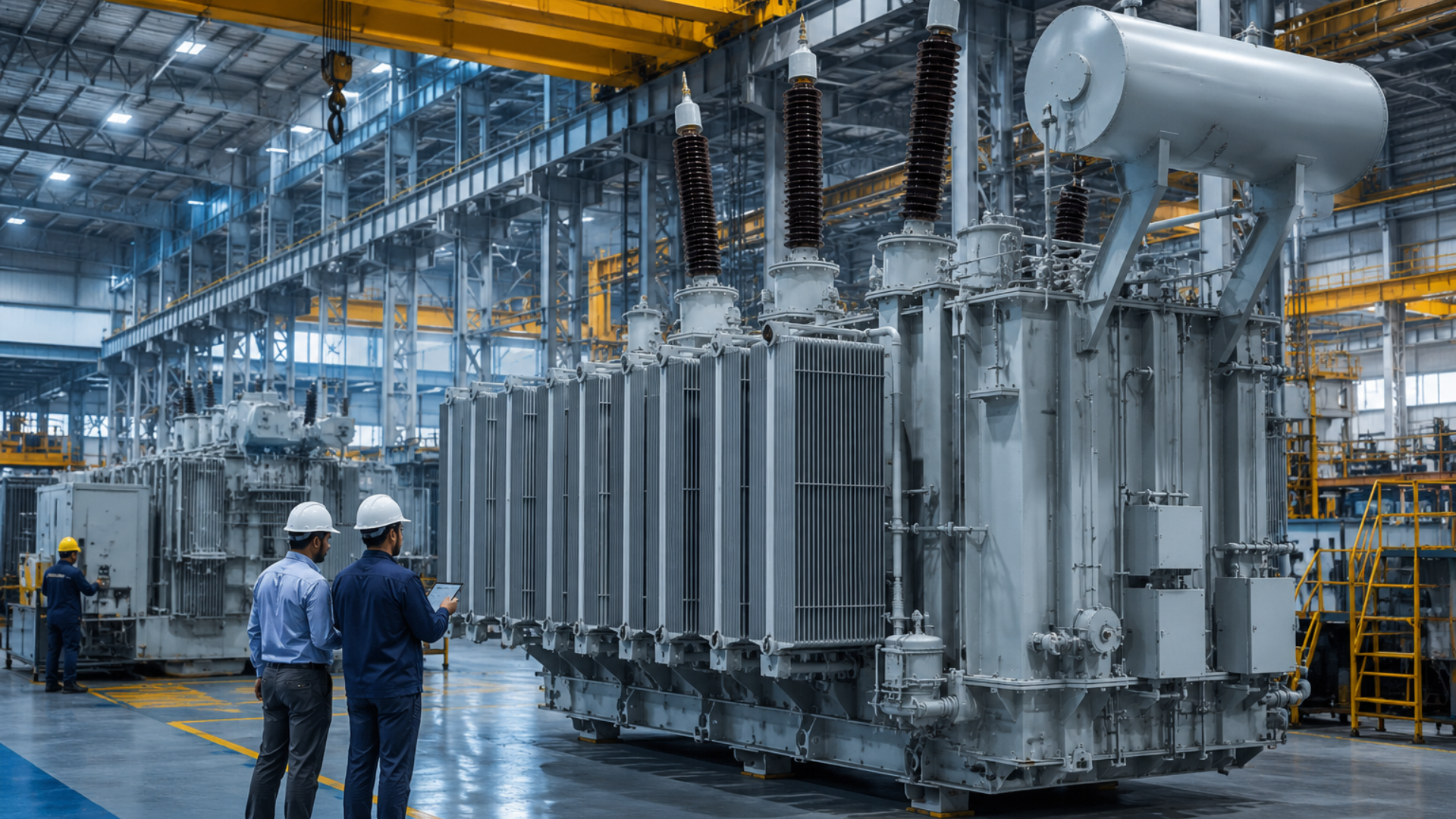
The featured photograph is for representation only.