Transmission stability vs distribution risk in upcoming PSU IPOs
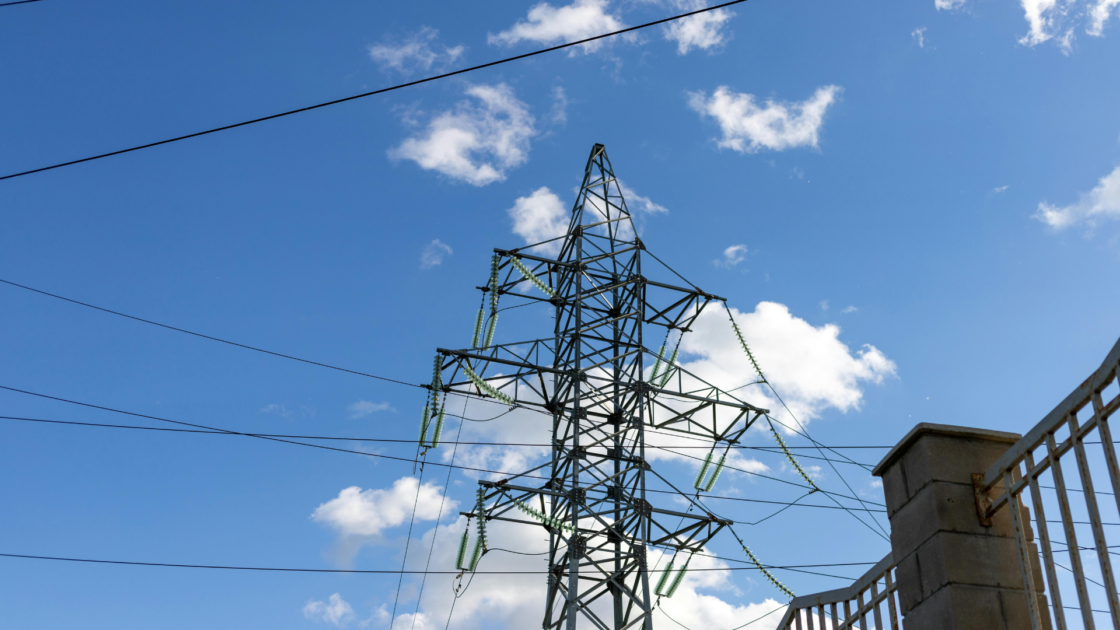
The adage “if a business is profitable, why share profits by going public” does not fully apply to 100% government-owned entities such as Bihar State Power Transmission Company (BSPTCL) and Maharashtra State Power Distribution Company (MSEDCL), both of which are planning initial public offerings (IPOs). In simple terms, this involves offloading a portion of equity to the public. Unlike privatisation, the controlling stake will remain with the respective state governments.
As per information in the public domain, MSEDCL plans to clean up its balance sheet by spinning off agricultural tube-well consumers into a separate entity. The remaining business, comprising commercial and industrial (C&I) and residential consumers, will form the entity targeted for an IPO by December 2026. The offering is expected to raise between Rs 4,700 crore and Rs 9,500 crore through dilution of around 10% equity, potentially including both fresh issuance and an offer for sale.
BSPTCL is pursuing a similar path, although the scale differs. The proposed public issue is estimated at around Rs 16,000 crore. The company has invited expressions of interest from merchant bankers for book-running and valuation advisory.
Despite these similarities, the risk profile and nature of operations of MSEDCL and BSPTCL differ materially. MSEDCL is a distribution and retail supply licensee operating under the Electricity Act, 2003 and the terms of the distribution licence granted by the Maharashtra Electricity Regulatory Commission (MERC). It supplies electricity across consumer categories, including commercial, industrial, and residential segments at tariffs determined by the regulator. Its direct interface with a large consumer base exposes it to risks related to receivables management, defaults, theft, and maintenance of overhead lines, bays, and substations.
In contrast, BSPTCL operates a transmission business with a lower risk profile. Its consumers are primarily distribution companies and a limited number of open access users. High-voltage transmission systems are less prone to theft or pilferage, and transformer failure rates are lower compared to distribution transformers. Transmission losses are also significantly lower. In Bihar, transmission losses stand at 2.56%, compared to distribution losses exceeding 21%. MSEDCL reports distribution losses above 16% against a benchmark of 12%.
MSEDCL’s financial position remains stressed. Its liabilities are estimated at around Rs 96,000 crore, of which nearly 80% is linked to agricultural consumers, now proposed to be carved out. In addition, more than Rs 33,000 crore of liabilities are proposed to be restructured through long-term bonds. In contrast, BSPTCL has reported consistent profitability, with profit after tax (PAT) rising from Rs 91 crore in FY21 to Rs 145 crore in FY26.
In both cases, revenues are determined through regulated tariffs that allow recovery of prudently incurred costs along with a normative return on equity. However, regulatory and political risks remain significant. Government interventions, particularly in the form of subsidised tariffs or delayed tariff revisions, can impact financial viability. Public resistance to tariff increases further complicates the distribution business.
Valuation in both cases is complex. For MSEDCL, the presence of regulatory assets amounting to Rs 40,188 crore, representing revenue recognised but not yet recovered through tariffs, adds to the challenge. Its aggregate revenue requirement (ARR) for FY26 is estimated at Rs 1,33,356 crore. For BSPTCL, the ARR stands at Rs 1,891.66 crore, excluding Rs 30.30 crore for the State Load Dispatch Centre. Over the asset life, projected revenue streams can be discounted using the weighted average cost of capital (WACC) to estimate present value.
For large IPOs, companies typically adopt a book-building process rather than a fixed-price issue. Both MSEDCL and BSPTCL are in the process of appointing merchant bankers as book runners to collect investor bids and determine the final price and allocation. Such issues are generally supported by underwriters, who subscribe to any unsubscribed portion. Key terms include the red herring prospectus filed with the Securities and Exchange Board of India (SEBI), which outlines financials, risks, and price bands. Other mechanisms may include a green shoe option (overallotment option) and, in certain contexts, the Swiss Challenge method used in public infrastructure bidding.
Recent sectoral developments add context to these capital-raising plans. Increasing integration of renewable energy, particularly intermittent sources such as solar and wind, and rising peak demand have created new system requirements. Peak demand reached 256.11 GW up to April 2026, surpassing 245.44 GW recorded in 2025. At the same time, relatively stable base load demand has led to “duck curve” challenges during solar hours.
These trends require significant investment in transmission and distribution infrastructure. BSPTCL has planned capital expenditure of Rs 16,194 crore to expand and modernise its network, targeting a peak demand of 13,000 MW by 2030. MSEDCL’s planned investments focus on distribution modernisation and renewable energy integration, aligned with an estimated 6% annual demand growth. The utility projects peak demand of 45,000 MW by 2031–32, with emphasis on solar capacity of 25.5 GW, hybrid systems, and 6.5 GW of storage. Additional investments are planned for smart metering, digital billing, and integration of high-load segments such as data centres, projected at 1.5 GW by 2030.
For both MSEDCL and BSPTCL, an IPO provides access to capital markets for equity funding and future issuances. It also signals a shift towards market-based financing, with potential benefits including reduced financing costs, balance sheet restructuring, and improved operational transparency. Listing may also drive higher standards of governance, including environmental, social, and governance (ESG) practices.
From an investor perspective, the performance of public sector undertakings (PSUs) in secondary markets has improved in recent years, with periods of increased market capitalisation and returns. However, performance remains uneven, with a larger number of PSU stocks underperforming the Sensex over extended periods.
About the author
Sanjay Varma is an experienced power sector professional with expertise across tariff regulation and utility economics. He served as Director (Tariff) at the Haryana Electricity Regulatory Commission. His career also includes senior roles in investment banking and business economics at leading firms.