
KERC notifies new DSM regulations for wind and solar generators
The Karnataka Electricity Regulatory Commission (KERC) has notified the Karnataka Electricity Regulatory Commission (Forecasting, Scheduling, Deviation Settlement Mechanism and related matters for Sellers of Wind, Solar and WS-Hybrid Generation sources) Regulations, 2026, replacing the 2015 regulations governing forecasting, scheduling and deviation settlement for renewable energy generators.
The regulations, notified on June 24, 2026, introduce changes to schedule revision timelines, deviation settlement, tolerance bands, open access transactions and forecasting requirements for wind, solar and wind-solar hybrid generators.
Major regulatory changes
Under the new regulations, wind and solar generators will no longer be permitted to revise their schedules from the fourth time block. Instead, they will follow the seventh/eighth time block revision framework prescribed under the Karnataka Electricity Grid Code, 2025, which has been aligned with the Indian Electricity Grid Code, 2023.
The Commission said retaining a separate revision timeline for renewable generators would create scheduling imbalances and affect Load Generation Balance Report preparation, deviation settlement and market operations.
KERC has also reduced the deviation tolerance band for solar generators from ±10% to ±5%. The Commission noted that the Central Electricity Regulatory Commission’s (CERC) Deviation Settlement Mechanism and Related Matters Regulations, 2024 prescribe a 5% volume limit from April 1, 2026, while improved forecasting is expected through the Central Electricity Authority’s (CEA) Automatic Weather Station guidelines issued on July 7, 2025.
Under the revised framework, no deviation charge will apply for deviations up to 5%. Deviations exceeding 5% will attract graded charges of Rs 0.25 per unit, Rs 0.50 per unit and Rs 0.75 per unit depending on the deviation range.
KERC has also capped the total deviation charges payable by wind and solar generators in a financial year at 3 paise per unit multiplied by the annual generation at the respective pooling substation or Qualified Coordinating Agency (QCA). The cap will be reviewed after three years, and any excess amount paid will be adjusted in subsequent bills without interest.
To prevent misuse of the deviation settlement mechanism, the regulations provide that where scheduled generation is declared as zero but actual generation is injected into the grid, a deemed scheduled generation of 1 MW will be considered for calculating deviation percentage and applicable charges.
The Commission has excluded buyers from the deviation settlement mechanism after concluding that applying DSM to buyers would not be operationally feasible.
For generators undertaking inter-State sales through short-term open access (STOA), KERC has permitted energy accounting based on generator-end metering where separate feeders with dedicated metering are unavailable. In such cases, the State Load Dispatch Centre (SLDC) will account for applicable losses up to the interface point. The Commission also clarified that deviation settlement for inter-State transactions will continue to be governed by the CERC DSM Regulations, 2024.
Applicability and implementation
The regulations apply to wind generators with contracted capacity of 10 MW and above, and to solar and wind-solar hybrid generators with contracted capacities of 5 MW and above, with or without energy storage systems (ESS). Where ESS is installed, the battery capacity cannot exceed the MW connectivity granted at the interface point.
Every QCA will be required to register with SLDC based on authorisation from the majority of generators or sellers. SLDC has been directed to submit detailed registration procedures, including qualifying criteria and fees, within 60 days of the notification. Multiple QCAs will not be permitted for a single pooling substation.
Generators choosing not to appoint a QCA may opt for forecasting and scheduling services from SLDC, while remaining responsible for all other QCA functions and applicable service charges.
Deviation charges must be paid within 10 days of issuance of the statement, failing which simple interest at 0.04% per day will apply. Continued non-compliance may result in revocation of registration and encashment of bank guarantees or revolving letters of credit for recovery of dues.
The Commission has also retained powers to initiate proceedings against any generator, seller or QCA found to be engaging in gaming. If established, KERC may disallow deviation charges for the relevant period without prejudice to any other action under the Electricity Act.
Amounts collected in the Deviation Pool Account will be utilised, with Commission approval, for transmission and distribution system strengthening, congestion relief, reactive power compensation, protection schemes, technical studies and capacity building.
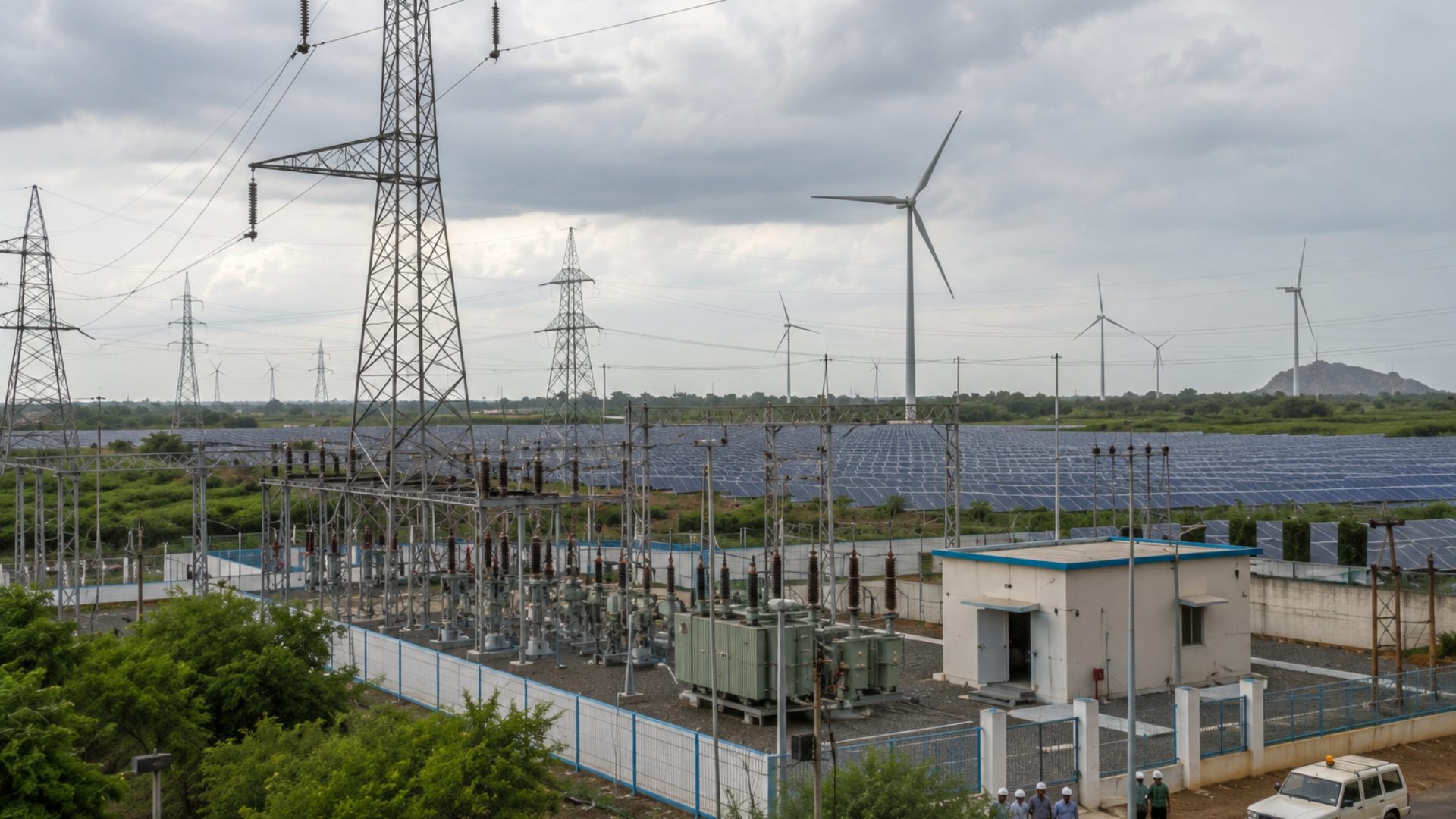
The featured photograph is for representation only.