
HPERC notifies new Himachal Pradesh Grid Code after 18 years
The Himachal Pradesh Electricity Regulatory Commission (HPERC) has notified the Himachal Pradesh Electricity Grid Code Regulations, 2026, replacing the existing 2008 Grid Code with a framework aligned to the Central Electricity Regulatory Commission’s (CERC) Indian Electricity Grid Code (IEGC) Regulations, 2023. The regulations were notified on June 18, 2026, following a public consultation process involving Himachal Pradesh State Electricity Board Limited (HPSEBL), Himachal Pradesh State Load Despatch Centre (HPSLDC), Himachal Pradesh Power Transmission Corporation Limited (HPPTCL) and the Directorate of Energy.
The new regulations came into force on the date of their publication in the Rajpatra, Himachal Pradesh, and repeal the Himachal Pradesh Electricity Grid Code Regulations, 2008 along with all subsequent amendments.
Consultation and key changes
During the consultation process, the Directorate of Energy proposed that the Himachal Pradesh Energy Management Centre (HPEMC), established by the state government in May 2025, be recognised in the Grid Code for functions relating to power procurement, renewable energy forecasting, market operations and data analytics.
The Commission declined the proposal, noting that the constitution and functions of HPEMC are currently under adjudication before the Himachal Pradesh High Court in CWP No. 13458 of 2025. It also observed that the State Grid Code is framed under the Electricity Act, 2003, and therefore did not incorporate the proposed provisions.
The Commission also removed the definition of “Area Load Despatch Centre” from the regulations, clarifying that it is an internal wing of the distribution licensee. References to the Area Load Despatch Centre in the draft have been replaced with “distribution licensee.”
Among the accepted changes, the Commission revised the definitions of “Share”, “State Sector Generating Station”, “Time Block”, “Qualified Coordinating Agency” and “User”. The voltage threshold for the definition of “User” has been fixed at 33/22 kV and above. A new definition of “State Entity” has also been introduced for entities whose metering and energy accounting are carried out at the state level.
The Commission rejected proposals to shift responsibility for resource adequacy from the distribution licensee to intermediary agencies, reduce the voltage threshold for users to 11 kV and include HPEMC in operational provisions of the Grid Code.
Operational provisions
The new Grid Code introduces stricter requirements for telemetry and real-time data reporting. All users, including Independent Power Producers and Distributed Energy Resources, must provide real-time operational data to the HPSLDC. Failure to maintain reliable data for 15 consecutive days may attract penalties, while open access users failing to restore data reporting within the prescribed timeline may have their No Objection Certificate (NOC) withdrawn until compliance is restored.
The regulations also prescribe fault clearance times of 100 milliseconds for 400 kV systems, 160 milliseconds for 220 kV and 132 kV systems, and 300 milliseconds for 66 kV systems. Protection schemes for transmission lines, interconnecting transformers and substations must comply with applicable Central Electricity Authority (CEA) regulations and the IEGC, 2023.
The code adopts the national operating frequency band of 49.90 Hz to 50.05 Hz and specifies permissible voltage ranges for 400 kV, 220 kV, 132 kV, 66 kV and 33 kV systems. It also retains the existing under-frequency load shedding scheme beginning at 49.40 Hz.
Detailed commissioning requirements have been prescribed for hydro, solar, wind, battery energy storage systems (BESS) and pumped storage projects. The regulations also introduce mandatory cyber security frameworks, periodic audits and reporting requirements in accordance with the Information Technology Act, 2000, and the CEA Cyber Security Guidelines, 2021.
Compliance framework
The regulations assign responsibility for monitoring compliance to both HPPTCL and HPSLDC. HPPTCL will oversee compliance with planning, connectivity, protection, commissioning and operating provisions, while HPSLDC will monitor protection, commissioning, scheduling and despatch requirements. For certain provisions, monitoring responsibilities will be shared with the distribution licensee.
Transmission licensees and users failing to comply with directions issued under the regulations may face penalties of up to Rs 5 lakh. The Commission may also direct independent third-party compliance audits where considered necessary.
The Grid Code also prescribes timelines for annual outage planning. Users are required to submit proposed outage programmes and Load Generation Balance Reports by September 30 each year. HPSLDC will prepare the annual outage programme by October 31 and communicate the final schedule to all users and transmission licensees by December 31.
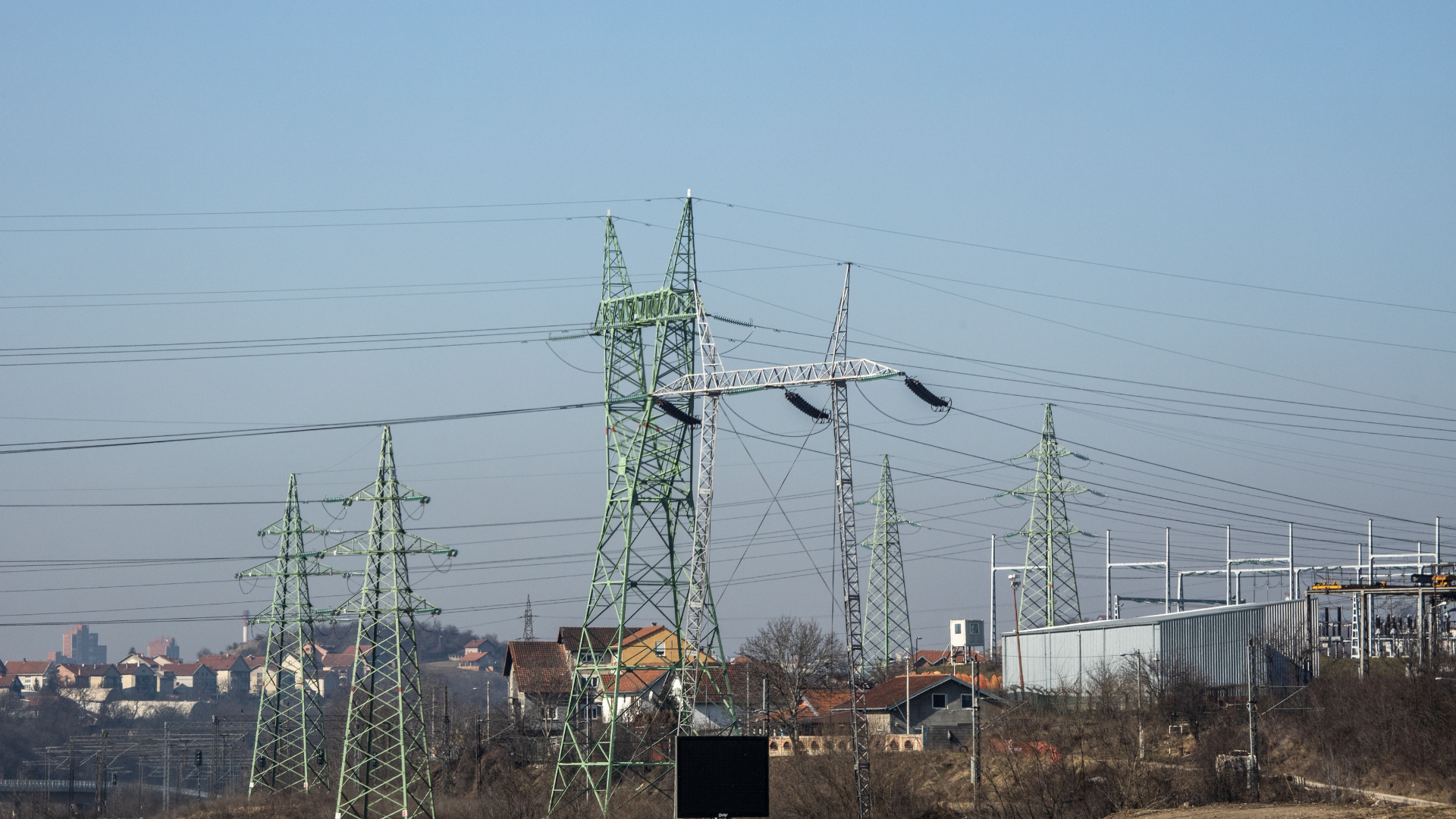
The featured photograph is for representation only.