India’s transmission and distribution policy wrap 2025
Author: PPD Team Date: January 2, 2026

The year 2025 began with significant momentum in planning and regulatory clarity for India’s power transmission and distribution landscape. The Central Electricity Authority (CEA) took a decisive step in January by proposing amendments to its Transmission Planning Criteria manual to establish regional standing committees for reviewing intrastate and interstate transmission systems. This move, aimed at decentralizing and strengthening the planning process, envisioned five regional committees to address constraints, examine new proposals, and assess systems linked to upcoming generating stations. This procedural refinement was part of a broader effort to institutionalize short-term (up to five years) and perspective (ten years) planning cycles, ensuring stakeholder consultation and adaptive grid development.
Concurrently, the Ministry of Power (MoP) focused on streamlining critical infrastructure development. A key intervention was the revision of right of way (RoW) compensation rules for transmission projects. Introducing a two-part compensation structure, 100% for the tower base area and proportional compensation for the affected corridor, the framework aimed for greater uniformity and fairness. Land value was to be determined using the higher of the circle rate or the previous year’s average sale deed rate. A Market Rate Committee chaired by the District Collector was instituted, particularly for urban areas, to determine fair market rates. Compensation was stratified at 30% of land value in rural areas, 45% in other urban areas, and 60% in municipal corporation and metropolitan areas. This update, applicable only to future projects, sought to mitigate land acquisition delays, a perennial bottleneck, while treating any additional compensation as a Change in Law under CERC provisions for tariff adjustment.
Financial engineering in transmission project development received substantial attention. In June, the Ministry of Power revised its Standard Bidding Documents (SBDs) for Inter-State Transmission Services under the Tariff-Based Competitive Bidding (TBCB) framework. A critical change was the expansion of acceptable financial instruments for bid security and performance guarantees. Beyond traditional bank guarantees, bidders could now submit Insurance Surety Bonds (ISBs) issued by IRDAI-authorised insurers and Payment on Order Instruments (POIs) issued exclusively by IREDA, PFC, or REC. The POI, formally defined as a Letter of Undertaking functioning like a bank guarantee, aimed to ease the working capital burden on developers. The contract performance guarantee amount was standardized at 5% of the project cost, with validity extended to three months post the Scheduled Commercial Operation Date. This liberalization was intended to accelerate project awards and improve liquidity in the sector.
The quest for grid digitalization and cybersecurity emerged as a central theme. The Central Electricity Authority (CEA) issued comprehensive guidelines for the usage and sharing of fiber cores in Optical Ground Wire (OPGW) and Underground Fiber Optic (UGFO) cables. Advocating uniform fiber allocation, dedicated cores for critical grid operations and commercial leasing of excess fiber, the guidelines mandated an 18-month termination clause in commercial leases to allow reclaiming fibers for grid needs. State Transmission Utilities (STUs) were required to assess grid communication needs five years ahead before leasing. This framework aimed to enhance data exchange, real-time monitoring, and support advanced metering and smart grid integration. Furthermore, in a move to address interoperability challenges in Advanced Metering Infrastructure (AMI), the CEA issued guidelines for standardization and interoperability. The framework mandated a unified Head End System (HES) with standardized interfaces, prescribing specific communication protocols (IS 15959, IEC 61968) for WAN and RF-connected meters to ensure seamless data flow between smart meters, HES, and Meter Data Management Systems (MDMS).
Consumer-side infrastructure and tariff reforms saw pivotal developments. The CEA released the draft CEA (Installation and Operation of Meters) (5th Amendment) Regulations, 2025. Key revisions included updating the definition of interface meters and mandating the use of smart meters per Indian Standards for open-access consumers connected at voltages not exceeding 650 volts (excluding prepayment mode). For higher voltage connections, metering requirements were left to the discretion of the Appropriate Commission. The draft also ensured AMI systems comply with the new interoperability guidelines. On the tariff front, the most significant legislative proposal of the year was the Draft Electricity (Amendment) Bill, 2025, circulated by the Ministry of Power. The Bill’s cornerstone was the enforcement of cost-reflective tariffs to address the distribution sector’s financial distress. It empowered Regulatory Commissions to set tariffs suo motu if utilities failed to file petitions, ensuring new rates took effect at the start of the financial year. It also proposed a five-year phase-out of cross-subsidies for large consumers (Manufacturing Enterprises, Railways) and introduced provisions for a ‘supplier of last resort’.
Transmission access and planning underwent significant rationalization. The Ministry of Power eased siting rules for load-serving substations under the Interstate Transmission System (ISTS) for TBCB projects. Load-serving substations could now be located within 5 km of the Bid Process Coordinator’s proposed site, relaxed from the previous 3 km limit, aiming to reduce land acquisition constraints. In a delegation move, the MoP notified the Electricity (Transmission System Planning, Development and Recovery of Inter-State Transmission Charges) Amendment Rules, 2025, allowing the Central Government to delegate its approval powers for ISTS projects to the National Committee on Transmission (NCT) and the Central Transmission Utility (CTU), subject to cost limits. This was aimed at reducing bureaucratic delays. Furthermore, the Central Transmission Utility of India Limited (CTUIL), in December, released a draft “Detailed Procedure for Grant of Connectivity and General Network Access” to replace the 2022 procedure, formalizing monthly regional consultation meetings and setting clear timelines for in-principle approvals (60-90 days).
The cross-border electricity trade framework was also updated. The Central Electricity Regulatory Commission (CERC) released the draft CERC (Cross Border Trade of Electricity) (Second Amendment) Regulations, 2024, replacing “long-term access” with General Network Access (GNA) and introducing Temporary GNA for short-term needs. Connectivity and GNA applications were assigned to CTU, while Temporary GNA would be handled by the National Load Despatch Centre. The regulations clarified terms, introduced application fees and bank guarantees, and outlined provisions for using spare capacity in dedicated cross-border links.
Asset monetization and efficiency became a strategic focus to bridge the massive funding gap in transmission expansion. The CEA proposed an Acquire, Operate, Maintain and Transfer (AOMT) model to help states monetize existing intra-state transmission assets. Under this, state utilities would transfer operational assets to an SPV, which a private investor would acquire for a 10-15 year concession, paying an upfront amount and recovering costs through tariffs. The CEA later addressed state concerns by proposing a tariff determination framework for revenue certainty, advising a demerger structure for tax efficiency, and highlighting the newly notified late payment surcharge rules for payment security.
Safety, quality, and standardization received renewed emphasis. The CEA issued draft revised guidelines for type tests and a Model Quality Assurance Plan (MQAP) for major power equipment, standardizing validity periods for test reports and aiming to reduce redundant testing. In a practical outreach move, the CEA launched the first-ever Electrical Safety Handbook and a mascot, ‘Suraksha Shakti’, to promote safety awareness around new technologies like BESS, rooftop solar, and EV charging.
Operational and procedural clarity was enhanced across the board. Grid-India released a draft procedure for scheduling, metering, and deviation settlement for ISTS-connected ESS, outlining transmission charge waivers (e.g., full waiver for 12 years for BESS commissioned by June 2028 if charged 51% from renewables). The CTU notified indicative capital costs for dedicated transmission systems (e.g., 220 kV lines, shunt reactors) to aid planning and cost-sharing discussions.
Finally, the year saw the launch of ambitious digital infrastructure initiatives. The Ministry of Power set up a task force to develop the India Energy Stack (IES), a digital public infrastructure framework for the power sector. It envisions unique digital IDs for consumers and assets, consent-based data sharing, and open APIs. A pilot Utility Intelligence Platform was initiated in Mumbai, Gujarat, and Delhi. The CEA launched STELLAR (State of the Art Totally Indigenously Developed Resource Adequacy Model), a free power planning software for states and discoms to prepare resource adequacy plans and optimize system expansion.
In summary, 2025 has been a year of reforms for India’s transmission and distribution sector aimed at building a more resilient, flexible, transparent, and financially sustainable grid network. By addressing long-standing hurdles in land acquisition, financing, and planning, while simultaneously laying the groundwork for digital integration, cybersecurity, and large-scale renewable and storage integration, the policy landscape has been meticulously reshaped to shoulder the monumental task of India’s clean energy transition. The effectiveness of these intricate policy calibrations will now be tested in their implementation, as the sector moves from blueprint to reality in the coming years.
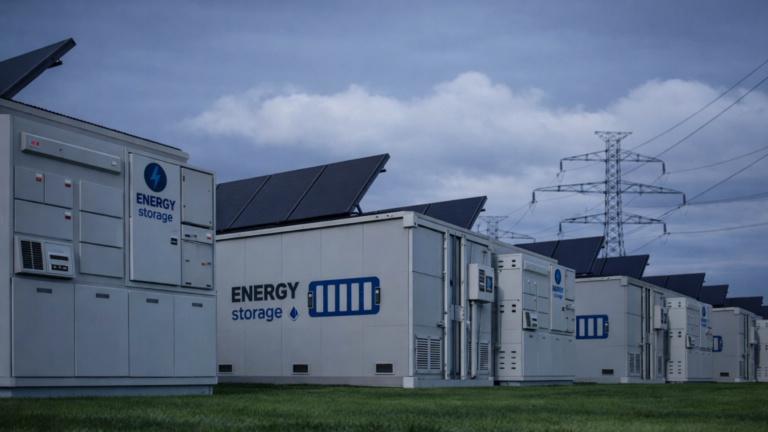
The featured photograph is for representation only.