Spain-Portugal blackout 2025: ENTSO-E factual report reveals causes

On 28 April 2025, at 12:33 Central European Summer Time (CEST), the power systems of Spain and Portugal suffered a complete blackout. This event disrupted electricity supply for millions and briefly affected a small area of France near the Spanish border. According to the Expert Panel established by the European Network of Transmission System Operators for Electricity (ENTSO-E), this incident represents the most significant disturbance in the European power system in over twenty years.
A sequence of cascading failures
The blackout originated in Spain’s 400 kV transmission network, which experienced increasing voltage instability and oscillations during the morning hours. While voltages remained mostly below 435 kV before the incident, small oscillations in power, voltage, and frequency were observed starting from around 12:03 CEST. These included a local oscillation in the Iberian system with a frequency of 0.63 Hz and a broader inter-area oscillation in the Continental Europe synchronous area with a frequency of 0.21 Hz between 12:19 and 12:22.
Despite mitigation measures by the control room operators, such as reducing exports to France, coupling internal power lines in southern Spain, and adjusting the HVDC link operation between France and Spain, these interventions inadvertently increased the voltage in the Iberian system. By 12:32, generation losses began in earnest, starting with small distributed wind and solar facilities, causing a net load increase of approximately 317 MW in distribution grids.
Between 12:32:57 and 12:33:18, large-scale trips occurred across Spain, totaling over 2.5 GW of lost generation. This included photovoltaic, wind, and thermo-solar facilities in Granada, Sevilla, Badajoz, Segovia, Huelva, and Cáceres. A critical transformer in Granada tripped due to overvoltage protection, which triggered a cascade of further disconnections. High-voltage conditions above 435 kV contributed to additional generator trips.
Simultaneously, Spain and Portugal began losing synchronism with the rest of the Continental Europe synchronous area. Automatic load shedding and system defense plans, designed to stabilize the network, were unable to prevent the collapse. By 12:33:23, the Iberian system was fully electrically separated from Continental Europe, with the tripping of HVDC lines to France completing the blackout.
Impact on citizens and society
The blackout affected the entirety of continental Spain and Portugal. According to the ICS (Incident Classification Scale) criteria used by ENTSO-E, Spain lost 25,638 MW, representing 100% of its demand, while Portugal lost 5,900 MW, also 100% of its demand. France, which experienced only minor disruptions, lost 7 MW. The simultaneous loss of voltage and load classified the event as a scale 3 blackout (OB3), the highest severity level under European regulations.
The societal impact was severe. Millions of citizens experienced sudden power outages, affecting homes, hospitals, transport systems, and critical infrastructure. The blackout underscored the vulnerability of highly interconnected and renewable-heavy grids to rapid generation fluctuations.
Restoration process
The transmission system operators (TSOs) REN (Portugal), RE (Spain), and RTE (France) activated their system restoration plans immediately, in line with the EU network code on electricity emergency and restoration. Restoration relied on black-start procedures, utilization of interconnections with France and Morocco, and systematic reconnection of electrical islands.
By 15:30 CEST, eight black-start islands were operational in Spain, allowing partial reconnection to Continental Europe. In Portugal, black-start islands facilitated grid restoration, with the Portuguese transmission system fully restored by 00:22 CEST on 29 April 2025. The Spanish system was fully restored by 04:00 CEST the same day. Despite challenges, including unsuccessful initial black-start attempts and repeated trips of certain lines, the restoration demonstrated the resilience and coordination of the Iberian TSOs.
Root causes and technical analysis
The Expert Panel’s factual report identifies multiple contributing factors, although a definitive root cause awaits the final report. Key elements include:
- Generation losses: Sudden trips of over 2.5 GW from wind, solar, and thermo-solar plants created overvoltage conditions. Some of these trips were linked to protection systems; others remain unexplained.
- Voltage instability: Overvoltage above 435 kV in the 400 kV transmission network triggered further generator disconnections.
- Frequency deviations: Loss of generation led to frequency decline, further destabilizing the system and accelerating the blackout.
- Loss of synchronism: Spain and Portugal were disconnected from Continental Europe’s synchronous area within seconds, rendering local defense measures ineffective.
The RCC (Regional Coordination Centre) analysis confirmed that the Iberian grid was considered secure before the incident, with no outage incompatibilities or violations of N-1 criteria detected during operational planning. Short-term adequacy and coordinated security assessments indicated that production capacity was sufficient to meet expected demand. The blackout thus emerged from rapid, cascading failures rather than pre-existing grid deficiencies.
Communication and coordination
During the incident, TSOs and regional coordination centres maintained structured communication, using direct calls, ENTSO-E Awareness System notifications, and email. Coordination with unaffected TSOs and support from interconnectors enabled alignment on cross-border actions and prioritization of restoration measures.
Classification and implications
The blackout is classified as a scale 3 OB3 event, meeting the criteria of complete loss of voltage and demand for over three minutes. Secondary violations included voltage excursions (OV1) and loss of generation (G) incidents. France experienced only minor OV1 violations and small generation trips.
The incident has prompted a thorough investigation by ENTSO-E’s Expert Panel, which includes 45 experts from TSOs, regulatory authorities, and coordination centres across Europe. The factual report, published on 3 October 2025, outlines the sequence of events, system conditions, and initial analysis, while the final report, expected several months later, will examine root causes, voltage control, actor behaviour, and recommendations for preventing similar blackouts across Europe.
Lessons for Europe’s power system
The Iberian blackout highlights the growing challenges of managing grids with high renewable penetration and significant interconnection reliance. Sudden generation losses, even if temporary, can cascade rapidly when voltage and frequency conditions are stressed. Coordinated protection systems, advanced real-time monitoring, and contingency planning are essential to prevent total system collapse.
As Europe continues integrating variable renewable energy, the 28 April 2025 blackout serves as a stark reminder of the delicate balance between reliability, system complexity, and cross-border interdependence. The final ENTSO-E report will provide critical guidance for TSOs, regulators, and policymakers to strengthen grid resilience, safeguard citizens, and ensure stability in a rapidly evolving energy landscape.
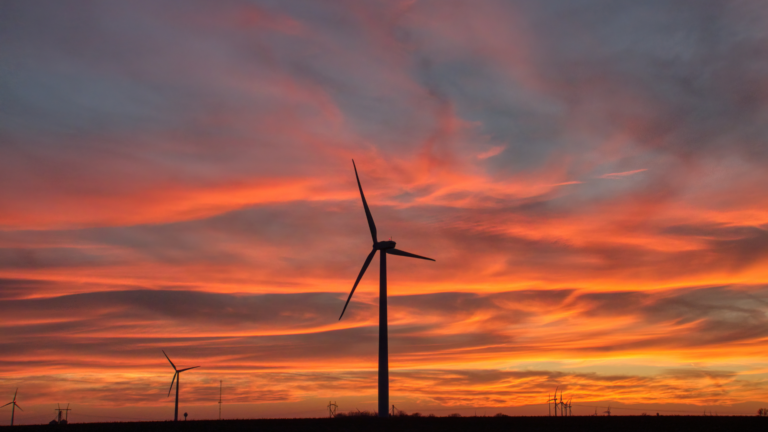
The featured photograph is for representation only.