IEA sees India investing $170 billion in energy sector in 2026
India is expected to invest a record $170 billion in its energy sector in 2026, according to the International Energy Agency’s (IEA) World Energy Investment 2026 report. The report states that India has recorded an average annual growth of 11% in energy investment over the past five years, making it the largest contributor to global energy demand growth outside China.
Solar expansion
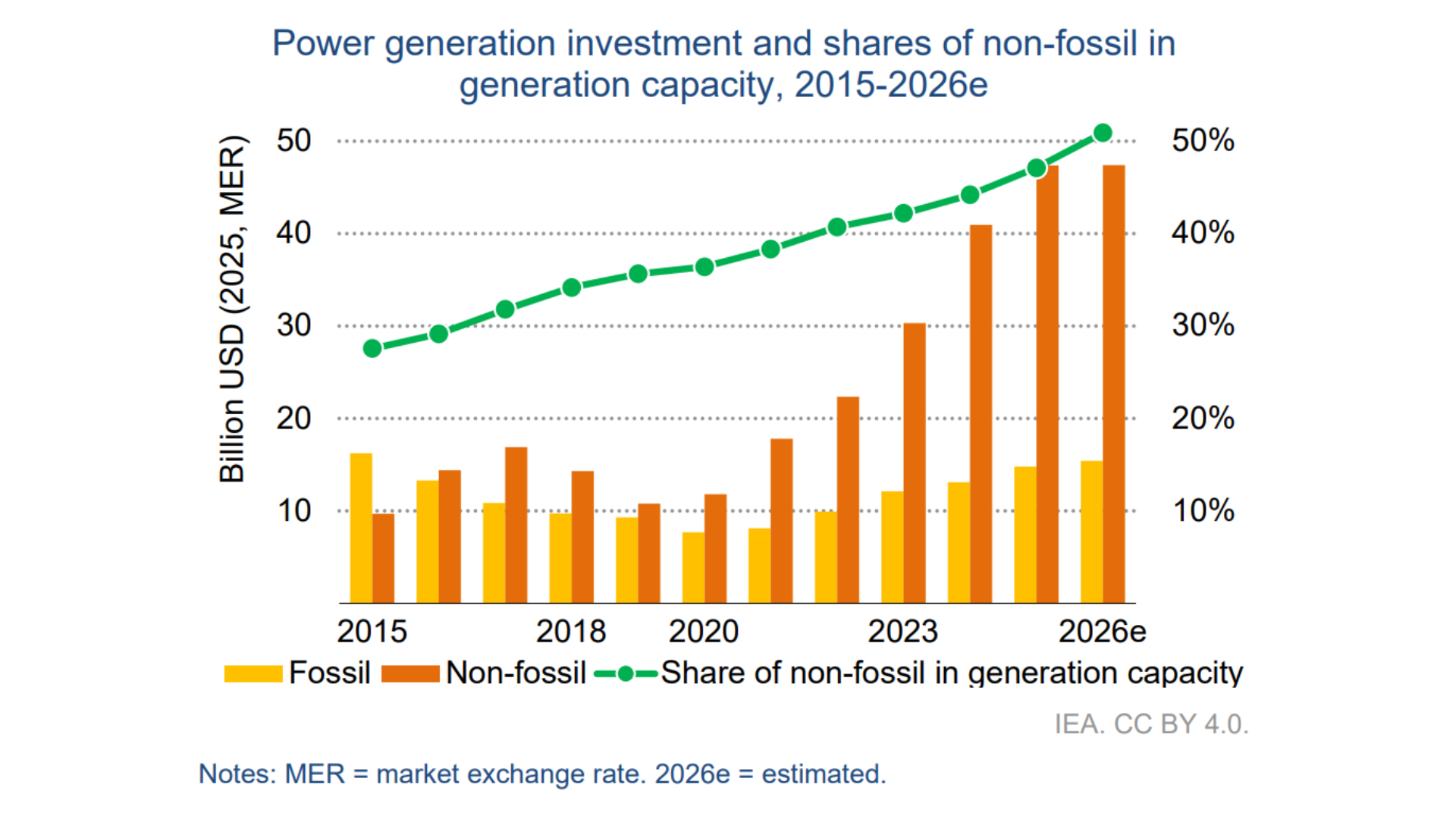
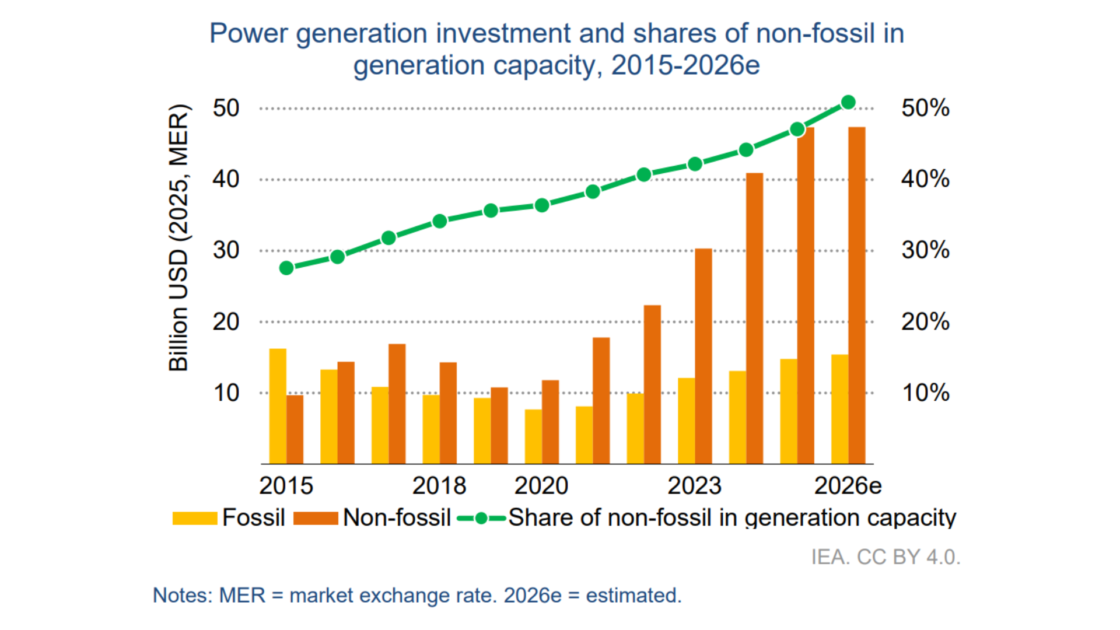
India achieved its Nationally Determined Contribution (NDC) target of installing 50% of its power generation capacity from non-fossil sources in 2025, five years ahead of schedule. The growth has been driven primarily by solar photovoltaics (PV), where investment has increased at an annual rate of 25% over the last five years, reaching $20 billion in 2025.
According to the IEA, India now invests three dollars in renewables and nuclear power for every dollar invested in fossil fuel-based power generation. The ratio has doubled compared to five years ago.
Despite the expansion in renewable capacity, fossil fuels, particularly coal, continue to dominate actual electricity generation. The report noted that the rapid increase in solar and wind capacity has created a need for major grid infrastructure upgrades to manage intermittency and reduce renewable energy curtailment.
Storage and nuclear
To address balancing requirements, India has significantly increased investment in dispatchable clean energy sources and storage technologies. Investment in nuclear and hydropower projects tripled between 2021 and 2025.
The report also noted that the government ended the state monopoly on nuclear power in 2025, allowing private companies with up to 49% foreign equity participation to build and operate reactors and small modular reactors (SMRs), with a target of achieving 100 GW of nuclear capacity by 2047.
The IEA highlighted a sharp decline in battery storage tariffs in India. Battery storage project tariffs fell from Rs 14,700 per MW per month in 2023 to below Rs 3,000 per MW per month in 2025. As a result, Energy Storage System (ESS) tenders crossed 100 GWh in 2025, more than ten times the level recorded in 2023.
Hybrid renewable energy projects combining wind, solar and storage accounted for more than half of the 63 GW capacity awarded during the year.
Grid investment
Transmission and distribution investment is projected to reach $26 billion in 2026, supported by annual growth of 15%. The report cited projects such as the Green Energy Corridor, which are being financed through blended models involving 30% equity and 70% debt from multilateral financial institutions.
Coal and refining
At the same time, coal investment continues to rise. Investment in coal supply is expected to reach $13 billion in 2026 as India works toward its target of producing 1.5 billion tonnes of coal annually by 2030, compared to around 1 billion tonnes at present.
The report also stated that India is expanding its oil refining capacity. Refining investment has grown by 23% annually over the past five years, putting the country on track to increase refining capacity by 15% by 2030. Although India remains a net exporter of refined petroleum products, it continues to depend heavily on imported crude oil.
To address declining upstream investment, the government has introduced a new licensing framework following a 7% annual decline in exploration and production investment since 2020.
Middle East impact
The IEA noted that geopolitical tensions in the Middle East have affected India’s energy supply chain. Disruptions in the Strait of Hormuz impacted crude supplies, and Mangalore Refinery and Petrochemicals Ltd (MRPL) declared force majeure due to supply disruptions linked to the conflict.
The report added that Oil and Natural Gas Corporation (ONGC) has proposed a $20 billion deepwater drilling programme as part of India’s broader target of attracting $100 billion in investment to reduce import dependence.
EV adoption
On the demand side, electric vehicle (EV) investment remains relatively low at $2 billion, accounting for around 5% of total vehicle sales. However, the report observed that Liquefied Petroleum Gas (LPG) supply disruptions led to higher sales of induction cookstoves, indicating that energy security concerns are influencing household electrification trends.
Outlook
Looking ahead to 2035, the IEA expects India to contribute more than half of the increase in energy investment across emerging markets and developing economies (EMDEs). However, the report cautioned that high financing costs remain a major challenge for India’s energy transition, particularly for capital-intensive renewable energy and storage projects.
Graph source: IEA, World Energy Investment 2026 (CC BY 4.0)