
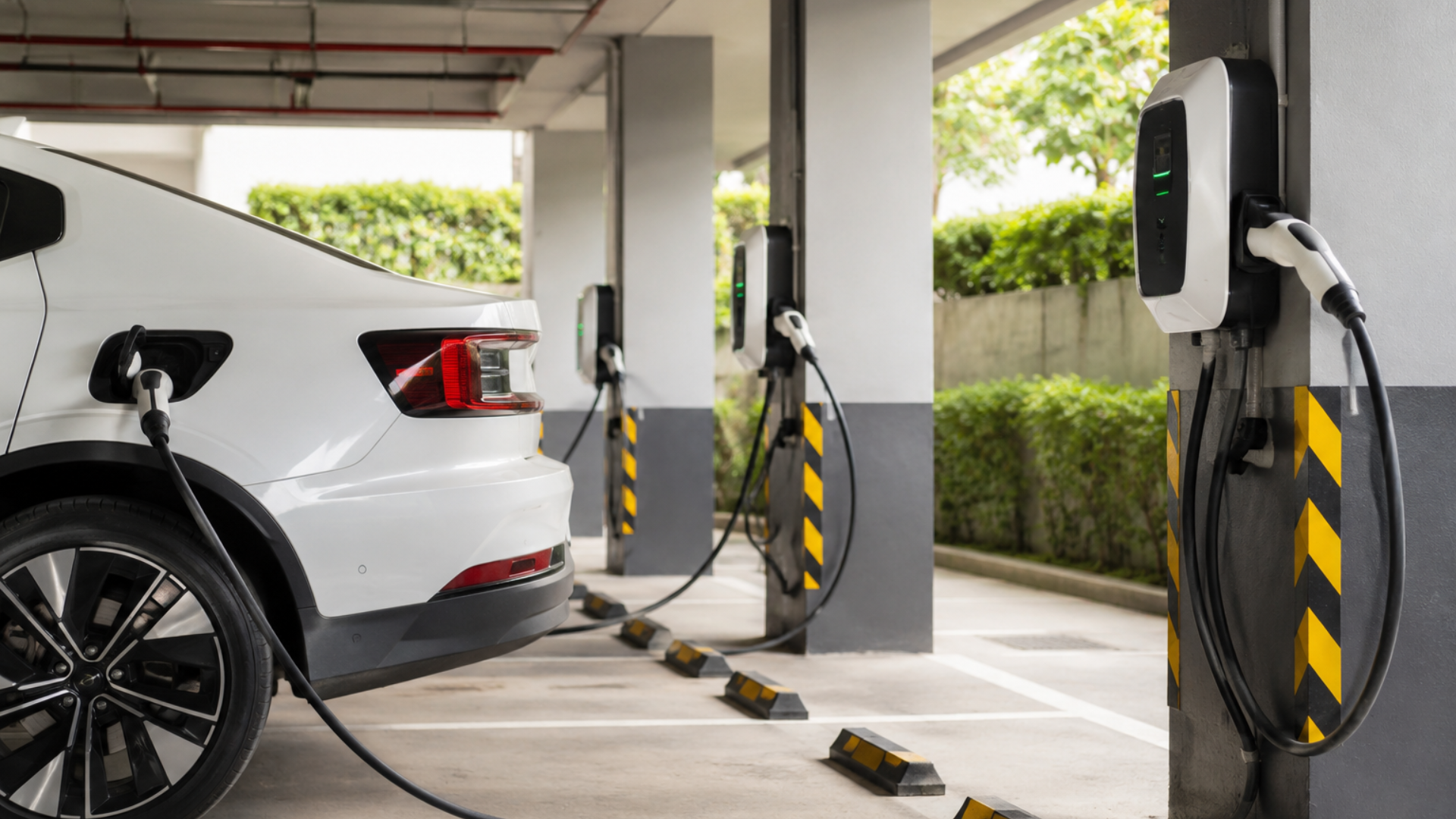
Haryana mandates EV charging infrastructure in buildings
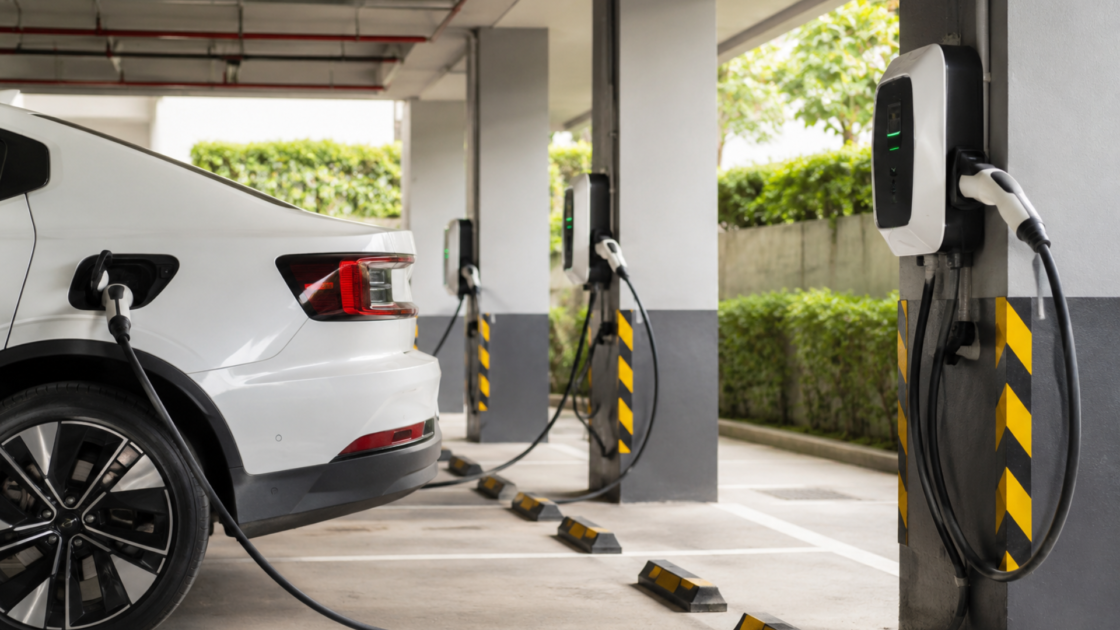
The Haryana Government has amended the Haryana Building Code, 2017, to mandate electric vehicle (EV) charging infrastructure in residential and non-residential buildings with parking capacity for at least 10 cars. The Town and Country Planning Department issued the amendment on June 5, 2026.
The revised provisions require residential and commercial developments to create dedicated EV charging spaces and ensure that new and renovated buildings are EV-ready through pre-installed conduits.
Residential buildings
The amendment applies to cooperative housing societies, group housing projects, and residential complexes managed by Resident Welfare Associations (RWAs).
Under the revised norms, residential developments with parking for at least 10 cars are required to provide at least one EV charging spot for every five parking spaces. The rules also require all new and renovated residential buildings to include 100% EV-ready conduits.
The amendment further permits individual allottees in existing buildings to install EV charging infrastructure in their allocated parking spaces, subject to compliance with electrical and fire safety norms certified by the Fire Department and the concerned power distribution company (DISCOM).
Commercial buildings
The revised provisions also apply to non-residential establishments, including shopping complexes, malls, hotels, and office spaces.
Such developments with parking for at least 10 cars are required to provide at least one EV charging spot for every three parking spaces. New and renovated non-residential buildings are also required to install 100% EV-ready conduits.
The amendment additionally provides exemption for EV charging infrastructure from Floor Area Ratio (FAR) calculations.
Safety and compliance
EV charging spots may be installed in basement or stilt-floor parking areas, subject to compliance with applicable fire safety and electrical safety norms certified by the Fire Department. The amendment also mandates disclosure of EV charging spot allocation in relation to parking spaces while applying for an occupation certificate.
The Haryana Government has directed the Director General of Fire and Emergency Services, in consultation with the electricity department, to formulate detailed fire safety guidelines for EV charging infrastructure. The Haryana Vidyut Prasaran Nigam Limited (HVPNL) has also been asked to assist in framing electrical safety norms.
The amendments form part of Chapter 6 of the Haryana Building Code, 2017, and apply to new and renovated buildings as part of the state’s EV readiness measures.
The featured photograph is for representation only.