From SMRs to battery storage: Tata Power’s multi-sector expansion plan laid out in annual report
Tata Power has outlined plans to expand across pumped storage, hydropower, artificial intelligence (AI), battery storage, nuclear energy, and solar manufacturing, according to its seventh Integrated Annual Report released yesterday.
The developments form part of the company’s strategy to strengthen its clean energy portfolio and digital infrastructure while expanding grid flexibility and energy security capabilities.
Solar manufacturing plans
Tata Power stated that it is progressing with plans to enter the upstream solar photovoltaic (PV) ingot and wafer manufacturing segment with a planned 10 GW capacity to be developed in two phases of 5 GW each.
The company has committed around Rs 6,500 crore for the expansion, which is aimed at reducing import dependence and strengthening supply chain integration for its solar business. The investment aligns with the government’s Approved List of Models and Manufacturers (ALMM) roadmap.
According to the report, Tata Power’s 4.3 GW solar cell and module manufacturing facility in Tirunelveli achieved production yields exceeding 95% and produced more than 3.8 GW of modules during FY26.
Pumped storage expansion
Tata Power is scaling up its Pumped Storage Projects (PSPs) to support round-the-clock renewable energy supply.
The 1,000 MW Bhivpuri PSP in Maharashtra is under construction and forms part of a combined investment of about Rs 13,000 crore along with the 1,800 MW Shirwata PSP. The Bhivpuri project is targeted for commissioning in calendar year (CY) 2029, while the Shirwata project is in advanced stages.
Bhutan hydro pipeline
The company is also progressing hydropower projects in Bhutan through its partnership with Druk Green Power Corporation (DGPC).
In addition to the ongoing 600 MW Khorlochhu project, work has commenced on the 1,125 MW Dorjilung Hydropower Project, which Tata Power stated will become Bhutan’s second-largest hydropower project. The project is backed by a $515 million financing agreement with the World Bank.
According to the report, Tata Power’s clean energy pipeline with DGPC now exceeds 5,000 MW.
AI and digital systems
Tata Power’s R&D expenditure stood at Rs 73.61 crore in FY26, equivalent to 0.12% of turnover.
The company stated that AI and machine learning (ML)-based systems are being deployed across generation, transmission, and distribution operations. Key initiatives include AI/ML-enabled boiler digital twins for thermal plants, predictive maintenance systems for solar assets, and AI-based safety monitoring using computer vision.
The company also launched the Energy Insights and Innovation Lab (EIIL) in partnership with the London School of Economics (LSE) and the International Growth Centre (IGC). The initiative focuses on consumer behaviour, data analytics, demand-side management, and energy system modelling.
Battery storage and EV charging
Tata Power secured its first standalone 30 MW/120 MWh Battery Energy Storage System (BESS) project in Kerala under a 12-year agreement.
The company’s R&D programme also includes development of wireless EV charging systems with 11 kW charging capability and over 90% DC-DC efficiency.
Its AI-powered Energy-as-a-Service (EaaS) platform, ‘EnerUni’, is designed for commercial and industrial (C&I) consumers to support real-time demand-supply balancing and energy optimisation.
According to the report, Tata Power’s EV charging network crossed 2 lakh home charger installations and more than 5,800 public charging points during FY26.
Grid modernisation and cybersecurity
The company stated that it is deploying Advanced Distribution Management Systems (ADMS) and Distributed Energy Resource Management Systems (DERMS) for real-time grid monitoring and management.
A 24/7 Security Operations Centre (SOC) has also been established to secure information technology (IT) and operational technology (OT) systems using a zero-trust architecture framework.
SMR plans
Tata Power is also progressing plans to enter the nuclear energy segment in partnership with Nuclear Power Corporation of India Limited (NPCIL).
The company stated that land has been identified across three states and detailed project reports (DPRs) are under preparation for proposed 2×220 MW small modular reactors (SMRs).
Operational performance
The report stated that Tata Power’s 4.3 GW solar cell and module manufacturing facility in Tirunelveli achieved production yields exceeding 95% and produced more than 3.8 GW of modules during FY26.
Its rooftop solar business installed 1.7 GWp during the year, taking cumulative rooftop installations beyond 4.8 GWp.
Tata Power also reiterated its commitment to achieving Net Zero by 2045 under its validated Science Based Targets initiative (SBTi) framework.
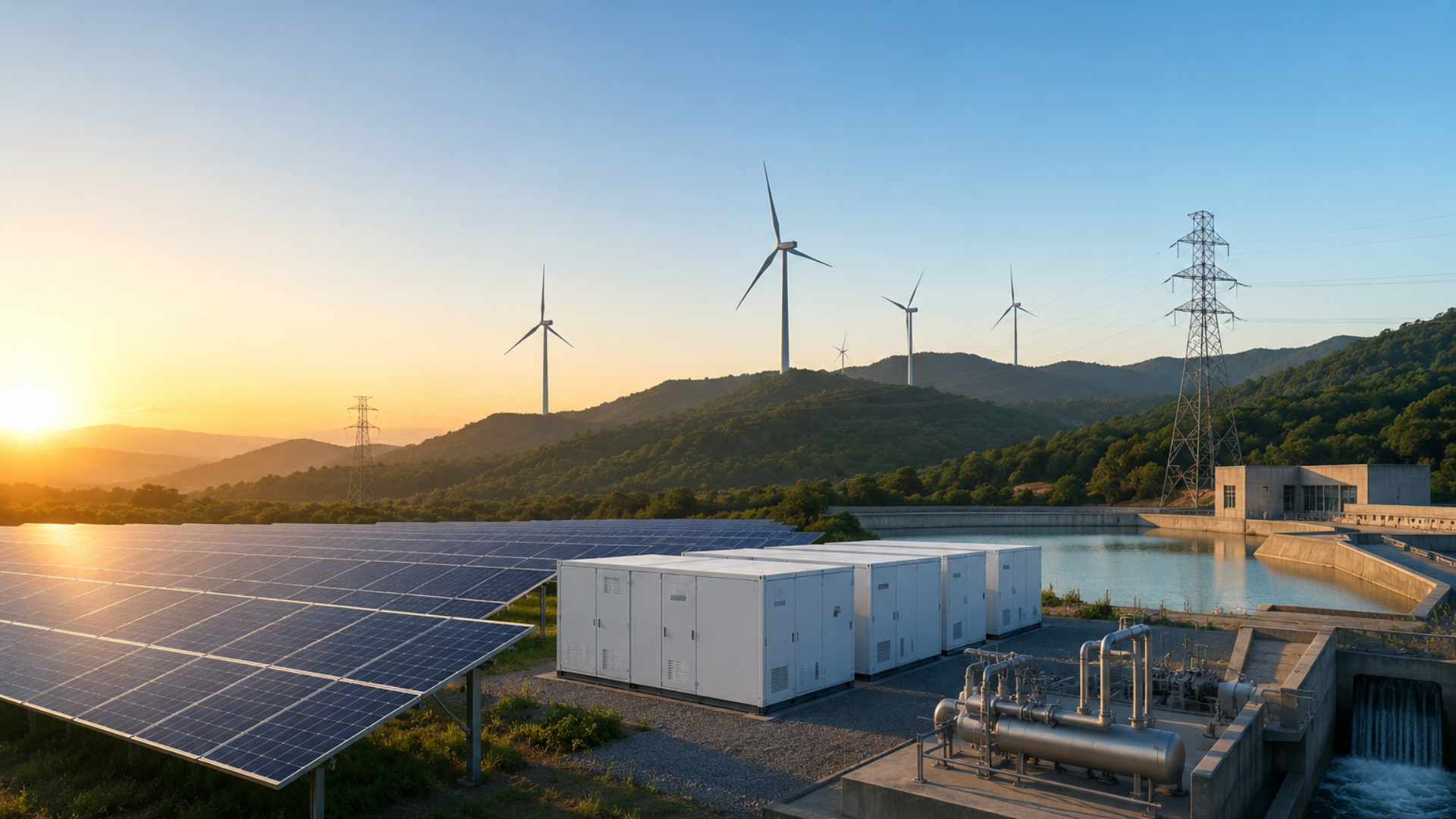
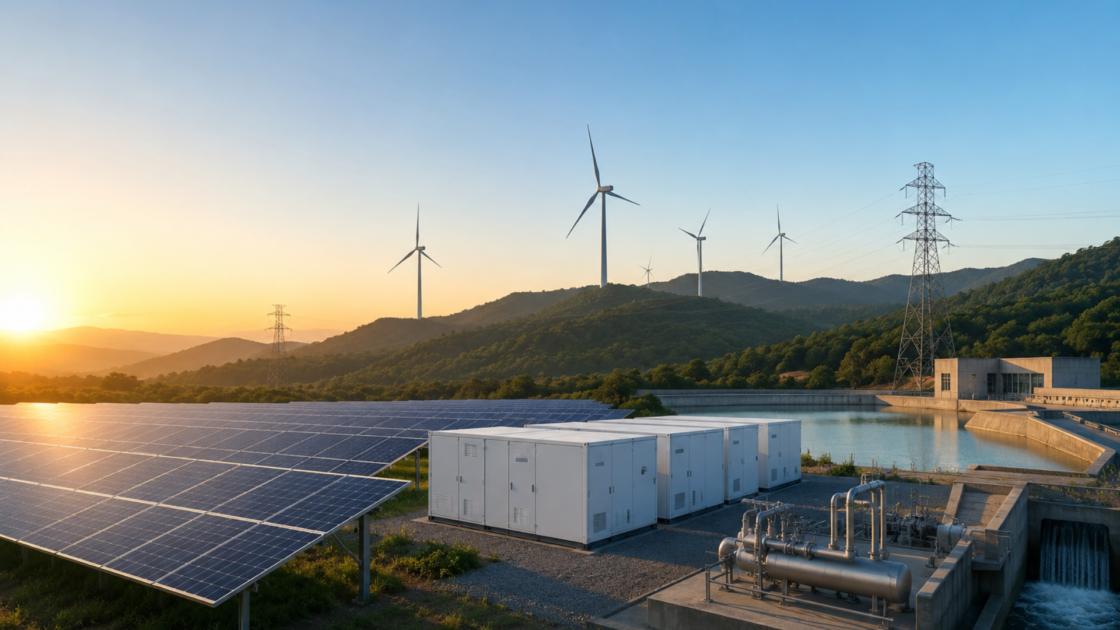
The featured photograph is for representation only.