Karnataka opens solar net metering to all consumers, raises cap to 1,000 kW
The Karnataka Electricity Regulatory Commission (KERC) has notified the Karnataka Electricity Regulatory Commission (Grid Interactive Distributed Solar Photovoltaic (DSPV) Plants) Regulations, 2026, replacing the 2016 regulations governing solar rooftop photovoltaic systems. The new framework allows all consumer categories in Karnataka to use net metering, net billing and gross metering, with DSPV capacity under net metering permitted up to 1,000 kW or the sanctioned load/contracted demand, whichever is lower.
The regulations take effect from the date of notification in the Official Gazette of Karnataka and apply to distribution licensees and eligible consumers across the state. The Commission had earlier, through an order dated July 9, 2025, permitted facade-integrated solar panels, mono-facial and bi-facial panels on rooftops and elevated ground-mounted structures. It subsequently expanded the terminology from “Solar Rooftop PV” to “Distributed Solar PV” plants.
The new regulations provide six metering arrangements covering conventional rooftop systems as well as group, virtual and behind-the-meter installations.
Six metering options
Under net metering, all consumer categories can install DSPV plants from 1 kW up to 1,000 kW or their sanctioned load/contracted demand, whichever is lower. Surplus electricity exported to the distribution licensee will be purchased at the Power Purchase Agreement (PPA) tariff, with settlement undertaken monthly.
Net billing is also available to all consumer categories for systems with a minimum capacity of 1 kW, subject to the sanctioned load or contracted demand. Exported electricity will be credited at the PPA tariff, while imported electricity will be billed at the applicable retail tariff. The net amount will be settled monthly.
Under gross metering, all consumer categories can install systems from 1 kW up to their sanctioned load or contracted demand. The distribution licensee will purchase the entire generation at the determined tariff, while the consumer’s electricity consumption will continue to be billed at the applicable retail tariff.
Group Net Metering (GNM) is available to consumers with multiple service connections registered in the same name and belonging to the same category. The minimum DSPV capacity is 5 kW, subject to the combined sanctioned load or contracted demand. At least 20% of generated electricity must be consumed at the source connection. Surplus electricity remaining after the priority list is exhausted will be purchased at 75% of the generic DSPV tariff. Smart meters are mandatory and must be installed at the consumer’s cost.
Virtual Net Metering (VNM) is available to domestic consumers, residential apartments, group housing societies, charitable institutions, government bodies, local authorities and schools. The minimum capacity is 5 kW, subject to the combined sanctioned load or contracted demand of participating consumers. Surplus electricity beyond consumption will be purchased at 75% of the generic DSPV tariff, with smart meters mandatory at the consumer’s cost.
Behind-the-Meter (BTM) systems are available to all consumer categories without a minimum capacity requirement, subject to sanctioned load or contracted demand. These systems cannot inject electricity into the grid, and reverse power flow relays are mandatory. Inadvertent injection will not be compensated and will attract penalties.
Grid capacity
The cumulative capacity of DSPV and Solar PV (SPV) plants connected to a distribution network cannot exceed the hosting capacity specified under the KERC Distribution Code/Grid Code.
DSPV and SPV plants below 150 kW must be connected to the existing distribution transformer, with their aggregate capacity limited to 80% of the transformer’s rated capacity.
All systems must comply with the safety and technical standards of the Central Electricity Authority (CEA), the KERC Grid Code and relevant IEEE, IEC and Indian Standards (IS) requirements for inverters.
Application process
For systems up to 150 kW, submission of an online application will be deemed approval to begin the work. The consumer must upload a work completion report within 150 days.
The distribution licensee must inspect and commission the plant within five working days of receiving the completion report. Failure to do so will attract a penalty of Rs 1,000 per day, while the consumer will be entitled to deemed generation benefits.
For systems above 150 kW and up to 1,000 kW, the process includes site verification and issuance of a Letter of Approval within 10 working days, followed by execution of the PPA within five working days.
Tariff framework
KERC will determine generic tariffs for DSPV and SPV projects from time to time. The tariff parameters include a Capacity Utilization Factor (CUF) of 19% and a tariff period of 25 years.
Capital cost will include all capital works, financing and evacuation infrastructure. The prescribed debt-equity ratio is 70:30, while Operation and Maintenance (O&M) expenses will be calculated at 1% of capital cost and escalated at 5.72% per annum.
Return on Equity will be determined by KERC from time to time. Interest on Working Capital will be based on State Bank of India’s one-year Marginal Cost of Funds based Lending Rate (MCLR) plus 250 basis points.
RPO accounting
Electricity purchased by distribution licensees from DSPV and SPV plants under gross metering, net metering, net billing, VNM and GNM will qualify towards their Renewable Purchase Obligation (RPO) and Renewable Consumption Obligation (RCO).
For Designated Consumers, Open Access consumers and Captive Users, the entire renewable energy generated will be accounted for meeting their RPO or RCO. For non-obligated consumers using net metering, electricity consumed from the DSPV system will qualify towards the distribution licensee’s RPO or RCO.
Other provisions
The regulations allow up to 10% DC capacity tolerance for DSPV plants serving sanctioned loads of up to 10 kW, provided the AC inverter capacity does not exceed the sanctioned load.
Eligible consumers can use hybrid grid-tied inverters with batteries. Integration with diesel generators is also permitted through zero-export devices, subject to safety approval from the Chief Electrical Inspector to Government (CEIG).
Multiple DSPV units can be installed at the same premises within the applicable combined capacity limits. If additional capacity is added to an existing system, the existing PPA must be cancelled and a new PPA executed at 90% of the existing tariff or the prevailing tariff, whichever is lower.
Consumers can also shift their DSPV systems to a new location within the jurisdiction of the same distribution licensee while continuing the existing PPA for its remaining term.
PPAs for DSPV plants under net metering, net billing and gross metering will be deemed approved by KERC. PPAs for VNM and GNM systems below 1,000 kW will also be deemed approved.
Grid charges
KERC may determine a Grid Support Charge on electricity generated by DSPV and SPV plants. Eligible consumers can also claim applicable subsidies under Ministry of New and Renewable Energy (MNRE) and State Government notifications and guidelines.
Renewable Energy Certificate (REC) issuance will be governed by the Central Electricity Regulatory Commission (CERC) (Terms and Conditions for Renewable Energy Certificates for Renewable Energy Generation) Regulations, 2022, and subsequent amendments.
Transition
The KERC (Implementation of Solar Rooftop Photovoltaic Power Plants) Regulations, 2016, have been repealed. Actions taken under the earlier regulations will be deemed to have been taken under the 2026 regulations.
Consumers with existing agreements will continue under their existing terms and conditions. Applications that were under process when the new regulations came into force will be processed under the 2026 framework.
The regulations follow a public hearing held on July 7, 2026, during which stakeholders sought net metering access for all consumer categories and capacity limits of up to 1,000 kW. KERC has incorporated these provisions in the new framework.
As of March 31, 2026, Karnataka had 21,961.67 MW of installed renewable energy capacity, including approximately 899.53 MW of DSPV capacity.
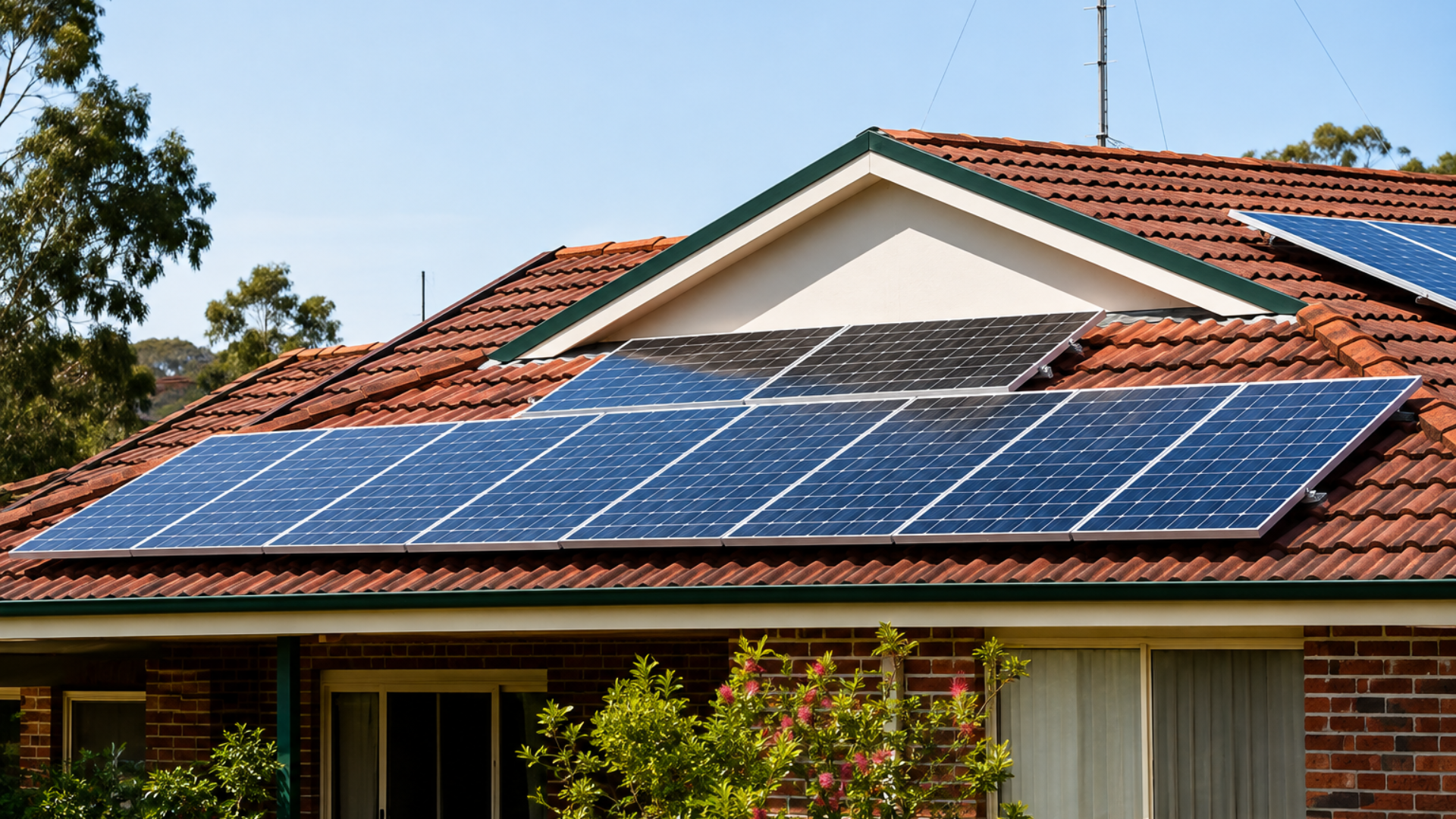
The featured photograph is for representation only.