
India’s BESS capacity grows 11-fold to 8.5 GWh in a year: IESA report
India added 7.9 GWh of Battery Energy Storage System (BESS) capacity in the first half of 2026, taking the country’s cumulative operational capacity to 8.5 GWh, according to the India BESS Market Review H1 2026 released by the India Energy Storage Alliance (IESA). The report states that installed capacity has increased 11-fold over the past year despite rising battery prices and supply chain volatility.
Of the 8.5 GWh of operational BESS capacity, 6.9 GWh is operating in merchant mode, indicating a growing shift towards market-based revenue models beyond government-backed contracts. The report highlights rapid growth in deployment supported by policy measures and an expanding project pipeline.
Policy support
According to the report, the central government has mandated a 10% energy storage component with 2 hours of capacity for all new solar installations. It has also extended incentives including inter-state transmission system (ISTS) waivers and viability gap funding (VGF).
Two rounds of VGF support have been approved. The first covers 13.2 GWh of standalone BESS with 30% support, while the second supports 30 GWh with 16% funding and requires 20% domestic value addition.
Several states have also introduced or are preparing dedicated energy storage policies. Rajasthan has set a target of 10 GWh of storage by 2028-29. Andhra Pradesh plans 25 GWh of BESS and 22 GWh of pumped storage by 2029. Telangana targets 3.8 GW of combined BESS and pumped storage by 2030, increasing to 7.9 GW by 2035, while Bihar has set a 6.1 GWh energy storage target by 2030.
Tender pipeline
The report says 281 GWh of energy storage system (ESS) capacity has been tendered as of H1 2026. Of this, 105 GWh is under execution, 110 GWh is in the tendering stage, and 53 GWh of tenders have been cancelled.
An additional 2-3 GWh of BESS capacity is expected to become operational by December 2026, taking India’s installed operational capacity to between 12 GWh and 15 GWh by year-end.
The report also notes that standalone BESS tariffs have declined significantly over the past two years, although rising cell prices could affect future tariff trends.
Manufacturing outlook
India’s current lithium-ion cell manufacturing capacity is about 2 GWh. Based on announced projects, this is expected to increase to around 110 GWh by 2030. Total cell, pack and container manufacturing capacity is projected to reach 180-200 GWh by 2030.
According to the report, India will require 888 GWh of energy storage capacity by 2035-36, highlighting the scale of future investment and deployment needed to support the country’s energy transition.
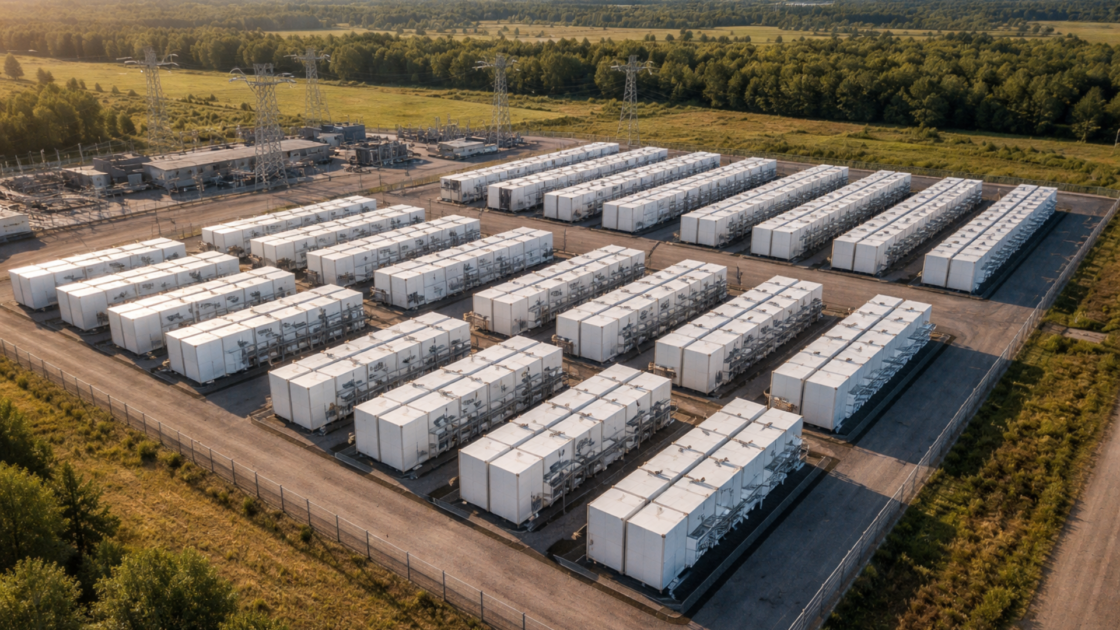
The featured photograph is for representation only.