
Haryana approves Rs 402.41 crore solar micro-irrigation projects
Author: PPD Team Date: February 20, 2026
The Haryana State Level Sanctioning Committee (SLSC) has approved four Community-Based Solar-Powered Integrated Micro-Irrigation Projects with a total investment of Rs 402.41 crore. The projects will cover 61 canal outlets across 20 blocks in Bhiwani, Jhajjar, Kurukshetra, and Mahendragarh districts and are scheduled for completion between 2026–27 and 2028–29.
The projects are expected to bring 11,040 hectares of culturable command area under advanced micro-irrigation, benefiting 8,926 farmers across 94 villages. Approval was granted by Chief Secretary Anurag Rastogi under the Micro Irrigation and Command Area Development Authority (MICADA). District-wise allocations include Rs 95.78 crore for Bhiwani, Rs 114.68 crore for Jhajjar, Rs 77.17 crore for Kurukshetra, and Rs 114.78 crore for Mahendragarh. The benefit-cost ratio ranges from 1.21:1 to 1.65:1, indicating projected economic viability. The projects will deploy drip and sprinkler systems within canal command areas to improve water-use efficiency, reduce transmission losses, and increase crop productivity.
During the meeting, Chief Secretary Rastogi highlighted the importance of integrated water supply and demand management to address climate variability and declining groundwater levels. He stated that solar-powered irrigation is expected to reduce operating costs and support environmentally sustainable agriculture. Officials were directed to conduct field visits and share implementation practices with farmers.
The committee reviewed and approved a reform package comprising 16 items related to registration of manufacturers and suppliers under the Per Drop More Crop (PDMC) Guidelines, 2025. Out of 165 applications examined, 147 manufacturers and suppliers were approved for registration for the period 2025–26 to 2029–30. Vendors agreed to align pricing with approved State and PDMC norms to prevent overpricing.
The scheme will continue under a beneficiary-driven Direct Benefit Transfer (DBT)/Kind-through model, allowing farmers to choose suppliers while subsidies are released within approved cost ceilings. To improve transparency, the MICADA portal will be integrated with the Goods and Services Tax (GST) portal for digital invoice verification. A component-wise bank guarantee mechanism has been introduced to strengthen vendor accountability, with GST included in the admissible subsidy as per norms.
Quality assurance measures include State-level review of laboratory testing reports, defined penalty provisions for non-compliance, and independent monitoring of at least 20% of projects each year. The committee also discussed a cluster-based implementation approach and a pilot Public-Private-Corporate Social Responsibility (CSR) model to expand coverage and support long-term maintenance, particularly for Scheduled Caste, small, and marginal farmers.
Between 2022–23 and 2024–25, MICADA implemented 99 National Bank for Agriculture and Rural Development (NABARD) funded Micro Irrigation Fund schemes across 18 districts at a cost of Rs 563.43 crore. Supporting infrastructure has been completed, and micro-irrigation systems have been installed over nearly 40% of the targeted area. The newly approved projects extend this programme as part of Haryana’s focus on climate-resilient and technology-enabled agricultural development.
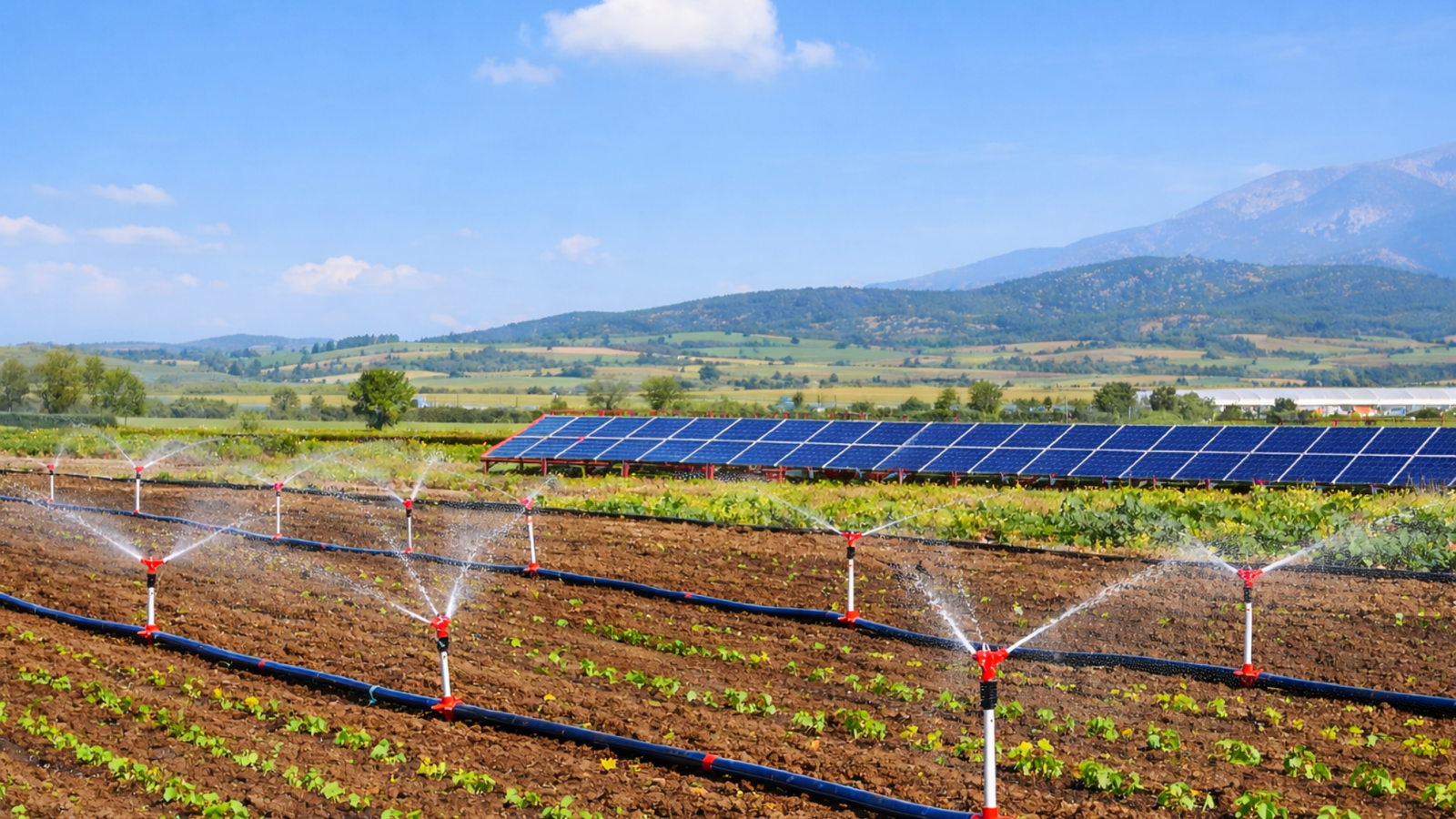
The featured photograph is for representation only.