
GERC sets Rs 1/unit transitional banking charge for green open access
The Gujarat Electricity Regulatory Commission (GERC) has notified the GERC (Terms and Conditions for Green Energy Open Access) (Sixth Amendment) Regulations, 2026, introducing a revised framework for banking charges applicable to Green Energy Open Access (GEOA) consumers in Gujarat.
Published in the Gujarat Government Gazette on August 19, 2026, the amendment sets a transitional banking charge of Rs 1.00 per unit from September 1, 2026, to March 31, 2027. From April 1, 2027, banking charges will be determined annually using a cost-reflective methodology based on actual 15-minute block data covering energy injection and consumption, market prices, variable generation costs, and applicable transmission charges and losses.
Transition period
Under amended Regulation 1(4), the Rs 1.00 per unit charge will apply during the transition period. GERC may, through a separate order, continue the existing charges if the annual determination under Regulation 17.6 cannot be completed on time for reasons beyond the control of stakeholders.
The amended Regulation 17.6(viii) requires all distribution licensees to submit complete, accurate and sufficient data through a sworn affidavit for the computation of banking charges. The Commission will specify the format and timelines for submission.
If a distribution licensee fails to provide the required data, its banking charge will be considered ‘Nil’. A deemed revenue adjustment of 1 paisa per unit per annum will then be calculated on a pro-rata basis for the period of non-compliance and adjusted in the Aggregate Revenue Requirement.
GERC has also prescribed a floor of Rs 0.50 per unit and a ceiling of Rs 1.50 per unit for the computed banking charge.
Cost methodology
The amendment inserts a new Annexure-I setting out the methodology for calculating banking charges based on the actual net cost incurred by the distribution licensee.
The calculation uses 15-minute time-block data and provides separate treatment for periods involving net surplus injection and net drawl, including peak and off-peak periods.
The methodology considers the Indian Energy Exchange (IEX) Market Clearing Price (MCP), variable costs of marginal thermal generating stations, backing-down costs, intra-state and inter-state transmission charges and losses, Battery Energy Storage System (BESS) charges, and probability-based percentages for exchange sale or purchase and BESS utilisation.
The banking charge will be derived from the ratio of the aggregate net revenue impact on the distribution licensee to the total banked energy for each billing period.
Stakeholder consultation
The amendment follows a consultation process during which GERC received written comments and suggestions from 16 stakeholders, including renewable energy developers, industry associations, distribution licensees and consumer representatives.
A public hearing was held on July 21, 2026, with 15 stakeholders participating. Issues raised included the representativeness of sample data, complexity of the proposed methodology, data submission timelines, treatment of lapsed energy, and the proposed floor and ceiling rates.
The Commission has addressed these issues in its detailed Statement of Reasons issued alongside the notification.
Legacy charges
GERC has clarified that the Rs 1.00 per unit transitional charge is a forward-looking determination and does not apply retrospectively to periods during which the Rs 1.50 per unit charge was in force.
The Commission held that the earlier Rs 1.50 per unit charge was a concluded determination for its applicable period and is not subject to truing-up or retrospective adjustment following subsequent determinations.
GERC also noted that the Rs 1.00 per unit transitional rate was derived from limited data submitted by state-owned distribution licensees. From FY 2027-28, the full methodology will be based on mandatory submission of comprehensive data for the immediately preceding calendar year.
Implementation
The Sixth Amendment Regulations take effect from the date of publication in the Official Gazette. The Rs 1.00 per unit transitional banking charge will apply from September 1, 2026, through March 31, 2027.
The first annual determination under the new methodology, applicable for FY 2027-28, will use data from the preceding calendar year or another period specified by GERC.
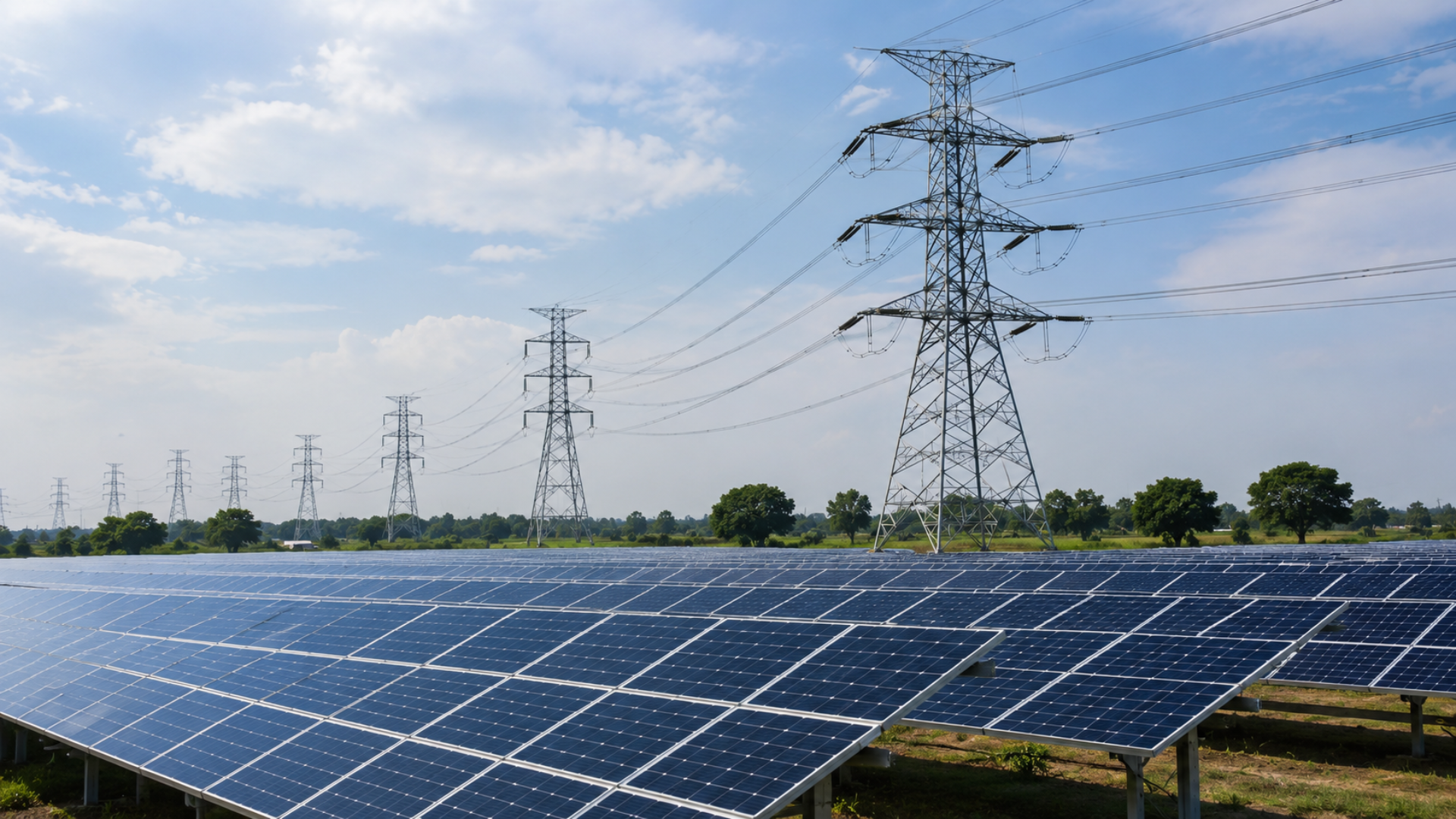
The featured photograph is for representation only.