Energy storage: Bridging the 5.5 GW to 61 GW gap
Author: PPD Team Date: March 4, 2026
India’s renewable energy expansion is increasing the need for large-scale energy storage to balance electricity supply and demand. The Central Electricity Authority (CEA) estimates that India will require 60.63 GW of energy storage capacity by 2029-30, compared with about 5.5 GW currently installed. India will need to add roughly 55 GW of new storage capacity within four years to support rising renewable penetration and maintain grid stability. Without sufficient storage, solar and wind generation can create surpluses during low-demand periods while leaving shortages during peak demand hours.
Battery energy storage systems (BESS) have become a primary focus of government policy in this area. To support deployment, the government introduced Viability Gap Funding (VGF), which provides financial assistance to bridge the difference between market revenues and the cost required to make storage projects financially viable. In September 2023, the first VGF round approved Rs 3,760 crore to support 13.22 GWh of BESS capacity. The support was structured at Rs 27 lakh per MWh.
Following strong interest in the first round, the Ministry of Power approved a second VGF round in June 2025. This round provides Rs 5,400 crore from the Power System Development Fund (PSDF) to support 30 GWh of BESS capacity. The subsidy level was reduced to Rs 18 lakh per MWh, reflecting improvements in battery cost structures and expected project economics. Of the total capacity under this round, 25 GWh will be deployed across 15 states, while 5 GWh will be installed at a generating station operated by NTPC.
In addition to direct financial support, policy measures have been introduced to improve revenue visibility and reduce project costs. BESS projects that are co-located with renewable energy generation and commissioned on or before June 30, 2028 are eligible for a 100 per cent waiver of Inter-State Transmission System (ISTS) charges. This provision reduces the cost of transmitting stored electricity across states and improves the commercial viability of such projects.
The CEA has also recommended integrating storage requirements into future solar procurement. Under the proposal, upcoming solar tenders would include a minimum two-hour co-located energy storage system sized at 10 per cent of the solar project’s installed capacity. Such provisions are intended to gradually incorporate storage into renewable procurement frameworks, ensuring that new solar capacity includes a degree of built-in flexibility.
Market design reforms have also expanded the potential revenue streams available to storage operators. The Central Electricity Regulatory Commission (CERC) introduced provisions under the Ancillary Services Regulations 2022 that allow energy storage systems to provide Secondary and Tertiary Reserve services. These services support grid stability by responding to fluctuations in system frequency or unexpected changes in generation and demand. Participation in ancillary service markets provides an additional source of income beyond energy arbitrage.
While battery storage is receiving significant policy attention, pumped storage projects (PSPs) continue to represent the most established option for large-scale, long-duration energy storage. PSPs operate by pumping water from a lower reservoir to an upper reservoir during periods of low electricity demand and releasing it through turbines to generate power during peak demand periods.
As of December 2025, ten PSPs with a combined capacity of 11,870 MW were under construction in India. This represents a substantial increase compared with the country’s existing operational pumped storage capacity. The government has issued dedicated guidelines to support PSP development and streamline the approval process for such projects.
To encourage investment in this segment, the government has extended a 100 per cent waiver of ISTS charges for pumped storage projects whose construction contracts are awarded on or before June 30, 2028. This measure is intended to improve project viability by lowering transmission-related costs.
Despite their advantages, pumped storage projects are geographically constrained. Suitable sites require specific topographical conditions, adequate water availability and proximity to transmission infrastructure. India nevertheless has significant untapped potential in several regions, including the Himalayan states, the Western Ghats and the Deccan Plateau. Projects currently under development typically involve long construction timelines, making early identification and planning of future sites important for maintaining a steady pipeline.
In parallel with capacity deployment, India is also focusing on strengthening domestic battery manufacturing. Storage expansion depends not only on project development but also on the availability of battery cells and related components. To support this objective, the National Programme on Advanced Chemistry Cell Battery Storage includes provisions for manufacturing capacity dedicated to stationary storage applications.
Under this programme, 10 GWh of manufacturing capacity has been earmarked specifically for grid-scale stationary storage. This initiative aims to build domestic supply chains for advanced battery technologies and support the growth of India’s storage ecosystem.
Reducing reliance on imported battery components has both economic and strategic implications. While the energy transition is expected to reduce India’s dependence on imported fossil fuels such as oil and natural gas, storage technologies rely on minerals including lithium, cobalt and nickel. Expanding domestic manufacturing capacity is therefore viewed as a step towards improving supply chain resilience as storage deployment increases.
India’s energy storage expansion will involve a combination of battery systems, pumped storage projects and domestic manufacturing initiatives. Together, these measures are intended to support the integration of growing renewable energy capacity while maintaining grid reliability and operational flexibility.
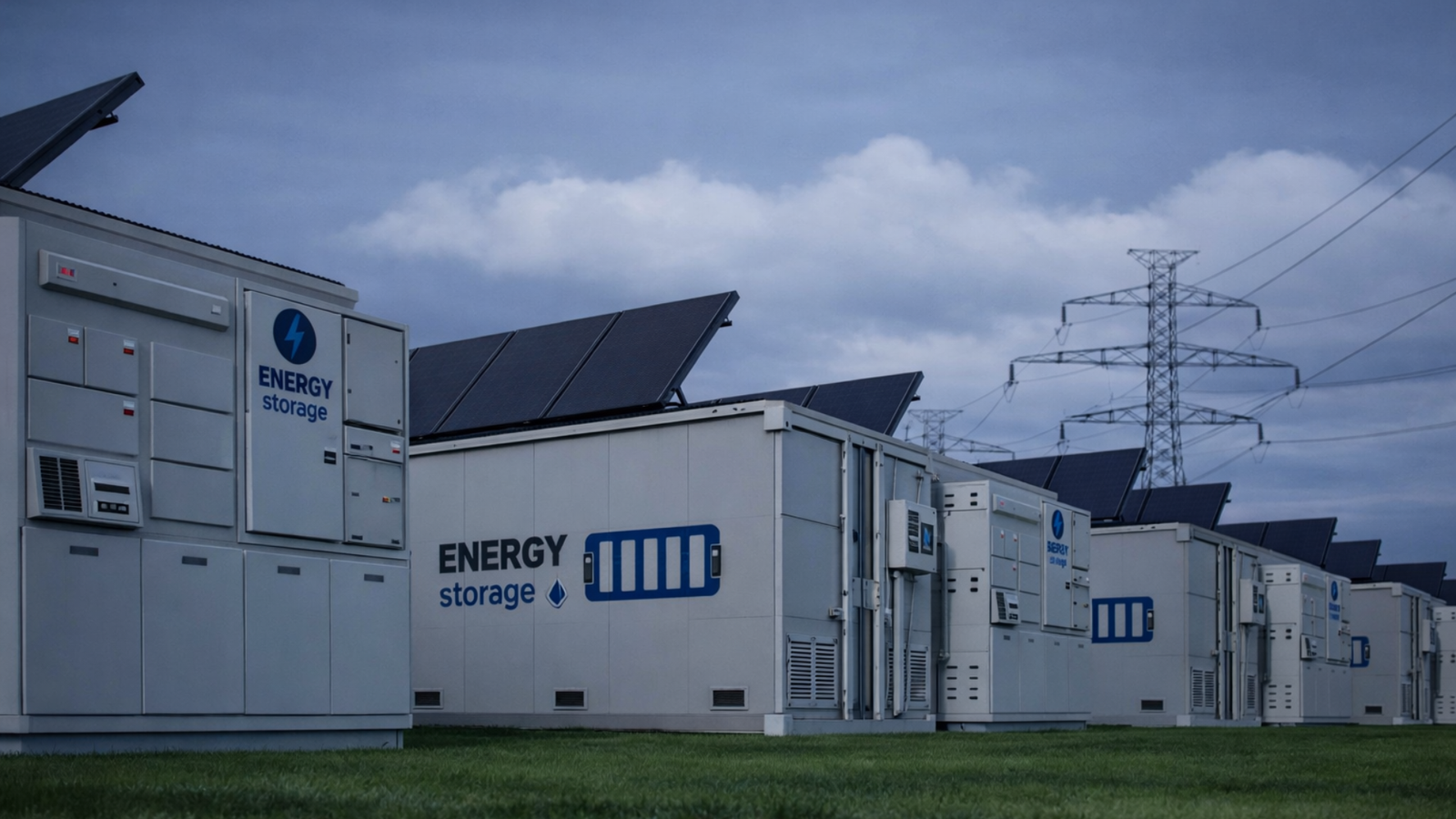
The featured photograph is for representation only.