
CERC proposes shorter 50-minute timeline for real-time power market

The Central Electricity Regulatory Commission (CERC) has issued a discussion paper proposing to reduce the scheduling timeline in India’s real-time electricity market (RTM) from 75 minutes to 50 minutes. The change is intended to improve demand-supply matching, reduce forecasting errors, and limit renewable energy curtailment.
The paper, published in April 2026 and notified through a public notice on May 6, 2026, comes as renewable capacity continues to expand. As of January 2026, solar capacity stood at 140.60 GW and wind capacity at 54.65 GW, increasing grid management complexity due to variability in generation.
India’s RTM, introduced in June 2020, operates as a half-hourly market designed to balance load and generation closer to delivery. At present, gate closure occurs 60 minutes before the delivery time block, with the full sequence from schedule revision to delivery taking about 75 minutes. This period includes market clearing, congestion checks, unit commitment, and ancillary services procurement, involving power exchanges, the National Load Dispatch Centre (NLDC), State Load Dispatch Centres (SLDCs), and generators.
The staff paper outlines two measures to reduce the timeline by 25 minutes. The RTM bidding window would be shortened from 15 minutes to 5 minutes, based on the use of automated bidding systems. In parallel, post-clearing processes currently completed in 45 minutes would be reduced to 30 minutes, supported by automation tools such as the National Open Access Registry.
Under the proposed framework, schedule revision for bilateral transactions would close 50 minutes before the delivery time block, compared to the current 75 minutes. The RTM bidding window, market clearing, ancillary services price discovery, and dispatch preparation would then be completed within the revised timeline.
CERC noted that stakeholders, including distribution companies and renewable energy developers, have flagged challenges in demand forecasting and schedule management under the current framework. Wind and solar generators have indicated that the existing eight-time-block revision window limits responsiveness to sudden weather changes, leading to deviation settlement mechanism penalties and renewable energy curtailment.
The Commission clarified that the discussion paper reflects staff views and is not binding. Stakeholders can submit comments by May 28, 2026, before further regulatory action is considered.
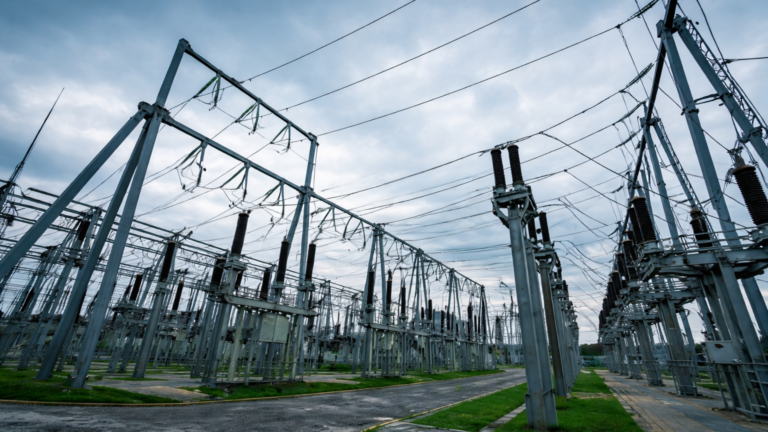
The featured photograph is for representation only.