

CEA, AIDA release standard transformer specifications for DISCOM procurement
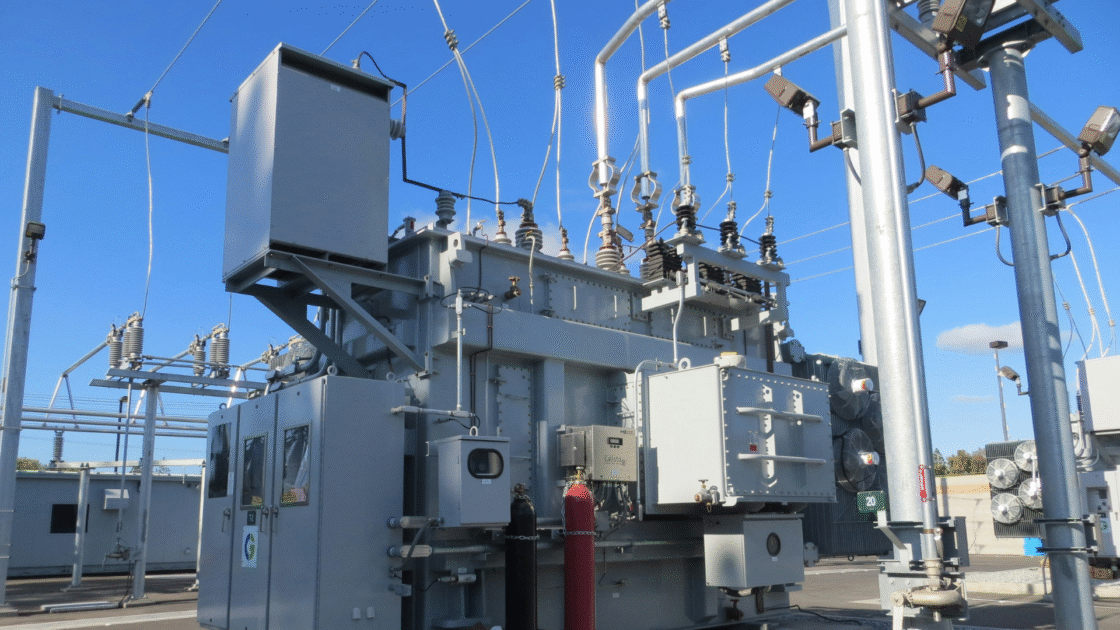
The Central Electricity Authority (CEA), in collaboration with the All India Discoms Association (AIDA), has released Standard Technical Specifications for Single-Phase and Three-Phase CRGO Core Distribution Transformers (Part I). Issued on May 14, 2026, the document seeks to standardise procurement practices and improve the quality, efficiency and reliability of distribution transformers used across India’s power distribution network.
The specifications were prepared by a committee constituted by AIDA under the chairmanship of its Director General, with participation from CEA, distribution companies (DISCOMs), the Indian Electrical and Electronics Manufacturers’ Association (IEEMA), the India Smart Grid Forum (ISGF) and other stakeholders. The document is intended to provide a common benchmark for tenders floated by AIDA for rate contracts, which member DISCOMs may adopt for commonly used transformer ratings and designs.
National context and deployment scale
CEA stated that distribution transformers form one of the largest equipment categories in India’s electricity network. Around 18.2 crore distribution transformers are currently installed nationwide, with a combined transformation capacity of more than 9.44 lakh MVA.
Demand for transformers is expected to increase with growth in generation capacity, including renewable energy additions, rising electricity consumption and the expansion of electric vehicle charging infrastructure. Replacement of ageing transformers with energy-efficient models is also expected to contribute to future demand.
The document noted that uninterrupted 24×7 power supply remains a key priority for the Government of India and highlighted the importance of reliable transformer operation for maintaining supply quality and reducing outage-related revenue losses.
Applicable standards and certification requirements
All transformers covered under the specifications are required to comply with IS 1180 (Part I): 2014 and subsequent amendments. Under the Electrical Transformers (Quality Control) Order, 2015, issued by the Ministry of Heavy Industries, transformers that do not conform to applicable Indian Standards or do not carry the Bureau of Indian Standards (BIS) certification mark cannot be manufactured, sold or distributed.
Accordingly, ISI marking has been made mandatory. Bureau of Energy Efficiency (BEE) star labelling is also compulsory.
Maximum allowable losses at rated voltage and frequency at 75°C are to be selected by DISCOMs from the limits prescribed under IS 1180, with no positive tolerance permitted. CEA has recommended Level 1 energy efficiency standards for transformers below 100 kVA and Level 2 standards for transformers of 100 kVA and above.
Single-phase transformer specifications
The specifications cover oil-immersed, naturally cooled (ONAN) outdoor single-phase transformers of 11 kV/250 V or 11/√3 kV/250 V configuration. Standard ratings include 10 kVA, 16 kVA and 25 kVA. Aluminium windings and cold-rolled grain-oriented (CRGO) steel cores of M3 grade or higher have been specified.
The document prescribes a maximum nominal flux density of 1.69 Wb/m² at rated voltage and frequency. Under 12.5% over-fluxing conditions, the limit increases to 1.9 Wb/m². No-load current cannot exceed 3% of full-load current.
CEA has also mandated detailed traceability and inspection requirements for CRGO material, including surveillance testing from mother coil to finished laminations.
Winding, oil and temperature standards
High-voltage and low-voltage windings are required to use double-paper-covered aluminium conductors. Current density in aluminium conductors cannot exceed 1.30 A/mm².
Insulating oil is required to comply with relevant Indian Standards, with recycled oil prohibited. Before filling, oil should demonstrate a minimum breakdown voltage of 70 kV and moisture content not exceeding 5 ppm.
The specifications also prohibit positive tolerance for no-load and load losses. Temperature rise limits have been fixed at 35°C for top oil and 40°C for windings over an ambient temperature of 50°C.
Bushings, tanks and painting requirements
Porcelain-clad bushings with a minimum creepage distance of 31 mm/kV are required for transformers covered under the specifications. HV bushings are to be mounted on the top cover, while LV bushings are to be fixed on the sides.
Transformer tanks are required to withstand 1 kg/cm² pressure and 760 mm Hg vacuum for 30 minutes without permanent deformation. Welding operations are required to comply with applicable ASME standards.
The painting system includes epoxy primer and polyurethane coating with a minimum dry film thickness of 110 microns. An additional micaceous iron oxide coating has been specified for coastal and heavily polluted areas. Suppliers are required to guarantee painting performance for at least five years.
Three-phase transformer ratings and design
For three-phase transformers with aluminium windings and CRGO cores, standard ratings include 16 kVA, 25 kVA, 63 kVA and 100 kVA. Copper winding transformers have been standardised for ratings from 160 kVA to 2500 kVA.
The specified vector group is Dyn11. Off-load tap changers are not required up to 100 kVA. Above this level, transformers are required to have multiple tap positions with 2.5% voltage variation and padlocking arrangements.
For transformers above 200 kVA and up to 2500 kVA, the no-load current cannot exceed 2% of the full-load current.
Tank plate thicknesses have also been standardised across different rating categories. Conservators are mandatory for plain tank transformers of 63 kVA and above.
Testing and inspection framework
All transformers are required to undergo type testing under IS 1180 and IS 2026 standards. Type test reports conducted within the previous five years are required to be submitted with bids.
Routine tests before dispatch and acceptance testing on at least 10% of each lot are mandatory. Short-circuit and impulse withstand tests are also required to validate thermal and dynamic performance.
The purchaser retains the right to order fresh short-circuit or impulse testing, with findings binding on the supplier. Failure in such tests can result in rejection of the entire lot.
The specifications also prescribe stage inspections during manufacturing, covering CRGO verification, winding dimensions, clearances, tank integrity and oil quality. Only vendors approved by Power Grid Corporation of India Limited with valid BIS certification for the offered CRGO grade will be eligible.
Guarantee and compliance provisions
Manufacturers are required to provide a 60-month guarantee from the date of receipt at the purchaser’s site or store. If failures are attributable to the supplier, repairs or replacement are to be completed within two months of joint inspection.
Bidders are also required to submit Guaranteed Technical Particulars (GTP) and a Schedule of Deviations. Deviations from principal technical requirements are not permitted.
Next phase: amorphous core transformer standards
CEA stated that Part II of the specifications, covering single-phase and three-phase amorphous core distribution transformers, is currently under preparation and will be released separately. Both CRGO and amorphous core technologies are permitted under Indian Standards and the Revamped Distribution Sector Scheme (RDSS).
The document also highlighted the importance of regular operation and maintenance practices, including checks for overloading, damaged connectors and fire risks, along with compliance with ISO 9001:2015 and ISO 45001:2018 standards.
The featured photograph is for representation only.