WRPC issues corrective measures after 8,963 MW Khavda grid trip
The Western Regional Power Committee (WRPC) has mandated a set of corrective measures covering data logging, inverter controls, restoration procedures and communication protocols following the May 13, 2026 grid disturbance at the Khavda Renewable Energy Complex in Gujarat.
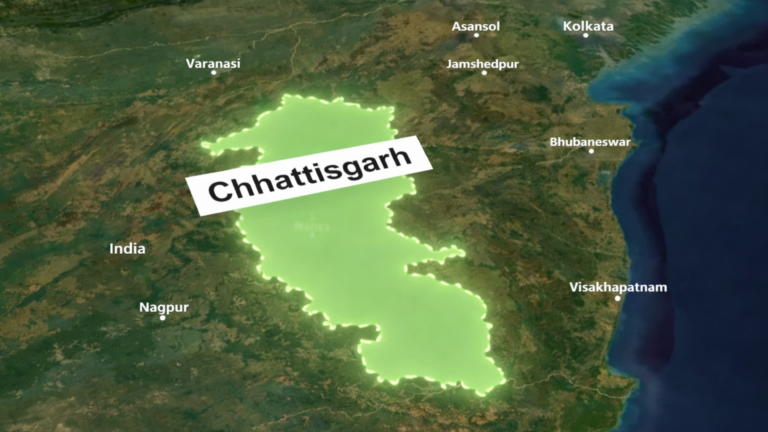
The disturbance resulted in the sudden disconnection of nearly 8,963 MW of renewable generation and caused system frequency to fall to 49.39 Hz. The incident has also exposed gaps in the ability of renewable energy plants to record and reconstruct grid events, respond correctly to voltage disturbances and restore generation after a major outage.
Khavda event
The disturbance occurred at approximately 2:10 PM on May 13, when 17 high-voltage transmission lines operating at 765 kV and 400 kV tripped on overvoltage protection. The cascading trips led to generation collapse across all three major pooling stations at Khavda.
Nearly 8,963 MW of renewable generation, primarily wind and solar, was disconnected from the Western Regional grid. The sudden loss of generation caused system frequency to decline sharply to 49.39 Hz, triggering Under Frequency Relays (UFRs) across the country. Emergency control mechanisms subsequently operated to arrest the frequency decline and maintain grid stability.
Data gaps
The investigation faced difficulties in reconstructing the sequence of events because data recorders at different plants showed different timestamps for the same event. This time-synchronisation drift made it difficult to establish a consistent timeline.
The duration of recorded data was another limitation. Many disturbance recorders were configured for short-duration events, while the voltage depression during the Khavda disturbance lasted approximately five seconds, exceeding the recording window of several devices.
The investigation also found that plants were using different naming conventions for data channels, making it more difficult to correlate information from different equipment and facilities.
WRPC has consequently mandated a uniform data-logging framework for renewable plants. Power Plant Controllers (PPCs), Disturbance Recorders (DRs), Phasor Measurement Units (PMUs) and inverter data recorders must be time-synchronised using GPS.
The required DR settings provide for one second of pre-fault recording and 10 seconds of post-fault recording. The trigger mechanism will be based on Low Voltage Ride Through (LVRT) and High Voltage Ride Through (HVRT) thresholds of 0.9 pu and 1.1 pu, respectively.
Uniform nomenclature will also be required for analog and digital channels across devices. Renewable Energy Generators (REGs) must additionally submit monthly self-certification to Western Region Load Despatch Centre (WRLDC) confirming periodic review of time synchronisation.
Inverter controls
The investigation identified an issue in inverter logic governing reactive current response during voltage disturbances. Inverters are required to inject reactive power during voltage dips to support the grid.
However, the analysis found that several inverters had their pre-fault reactive current baseline parameter (Iq0) incorrectly set to zero in the field logic, which suppressed the cumulative reactive support required by the grid.
WRPC has directed developers and Original Equipment Manufacturers (OEMs) to modify inverter logic so that the pre-fault current baseline is correctly incorporated. NTPC REL has already initiated the modification for its FIMER inverters at PSS-1 and PSS-2. GIPCL has also confirmed implementation.
Restoration delays
The investigation also identified delays in restoring generation after the disturbance. While voltage was restored at the pooling substations within the required timeframe, generation restart and breaker closing were delayed at several facilities.
At PSS14, breaker closing was delayed by 1 hour 2 minutes, while PSS9 recorded a 47-minute delay. Generation restart at PSS3 took 1 hour 40 minutes and at PSS6 took 1 hour 33 minutes. GSECL recorded a 30-minute delay in breaker closing and a 45-minute delay in generation restart.
WRPC has directed all REGs to formulate and enforce Standard Operating Procedures (SOPs) for restoration following a blackout. WRLDC will also prepare a separate SOP in consultation with developers.
Communication protocols
The review found another operational gap in the form of outdated communication matrices. These matrices contain control room telephone numbers, email IDs and escalation contacts used during grid disturbances.
WRLDC found that the information was often outdated, creating potential delays in communication during the event. All REGs have therefore been directed to regularly update their communication matrices and include them with every First Time Charging (FTC) application submitted through the portal.
Controller settings
The committee has also reiterated that controller settings must be maintained in consultation with OEMs and submitted to WRPC and WRLDC for validation.
This requirement is particularly relevant in areas with low Short Circuit Ratio (SCR), such as Khavda, where inappropriate controller settings can amplify the effects of grid disturbances.
The measures following the Khavda event cover the ability to record disturbances accurately, ensure correct inverter response, restore generation systematically and maintain reliable communication with grid operators. The framework is intended to address the operational gaps identified during the May 13 event as the share of inverter-based renewable generation in the grid continues to increase.
The featured photograph is for representation only.