MNRE issues guidelines for water-related emissions under GHCI
The Ministry of New and Renewable Energy (MNRE) has issued final guidelines for quantifying greenhouse gas (GHG) emissions associated with offsite water drawal and treatment under the Green Hydrogen Certification Scheme of India (GHCI).
Issued on June 18, 2026, the guidelines establish a framework for calculating emissions linked to water used in hydrogen production through electrolysis. The methodology aligns with the ISO 19870:2023 standard and will be used to determine compliance with India’s green hydrogen certification requirements.
The final guidelines follow a stakeholder consultation process that began with the release of draft guidelines on February 25, 2026.
Five water sourcing scenarios
The guidelines classify water sourcing into five categories, each with a specific methodology for emissions accounting.
These include captive offsite treatment facilities owned and operated by hydrogen producers; water supplied by municipal or state agencies; common or shared treatment infrastructure serving multiple users; recycled or tertiary-treated wastewater requiring additional treatment; and hybrid supply arrangements involving multiple water sources.
For captive treatment facilities, producers are required to use primary metered energy data. Municipal and state utility supplies can use prescribed default emission benchmarks. Shared infrastructure requires volume-based allocation of emissions, while recycled water accounts only for the incremental energy used for additional treatment. Hybrid arrangements use a weighted average emission factor.
Default emission factors
The guidelines provide default benchmarks for common water sources where primary data is unavailable.
Seawater reverse osmosis desalination has been assigned an emission factor of 3.017 kgCO₂e/m³, while brackish water reverse osmosis has an emission factor of 1.293 kgCO₂e/m³. Municipal surface water and groundwater supplies have emission factors of 0.603 kgCO₂e/m³ and 0.862 kgCO₂e/m³, respectively. Recycled water requiring polishing treatment has an emission factor of 0.388 kgCO₂e/m³.
These benchmarks are based on the Central Electricity Authority’s (CEA) All-India Grid Emission Factor of 0.710 kgCO₂e/kWh and a transmission and distribution loss factor of 17.63%.
Accounting principles
Under the guidelines, emissions associated with water extraction from natural sources are excluded from calculations. Only emissions from water treatment and conveyance up to the hydrogen production facility gate are considered.
The framework follows a “well-to-gate” boundary, covering emissions from water treatment through hydrogen production, compression and onsite storage.
The guidelines also specify that GHCI provisions will prevail in the event of any conflict with ISO 19870:2023 requirements. In addition, the use of recycled water will not qualify for additional environmental or carbon credits, preventing double counting of benefits.
Compliance timelines
New hydrogen production facilities will be allowed 90 days to establish metering infrastructure, during which default benchmarks may be used. Existing facilities have been granted 180 days to achieve full compliance.
Any metering failures must be reported within seven working days, with default benchmark values applicable until the issue is resolved.
The guidelines also provide force majeure provisions, under which temporary changes in water sourcing due to emergency situations will not attract penalties if timely notification and supporting documentation are submitted.
Implications for producers
The guidelines require green hydrogen producers to incorporate water-related emissions into their Measurement, Reporting and Verification (MRV) plans.
According to MNRE, the framework is intended to establish a standardised and transparent approach to emissions accounting while supporting the implementation of the Green Hydrogen Certification Scheme of India. The ministry has indicated that the benchmark values will be reviewed every three years to incorporate India-specific operating data.
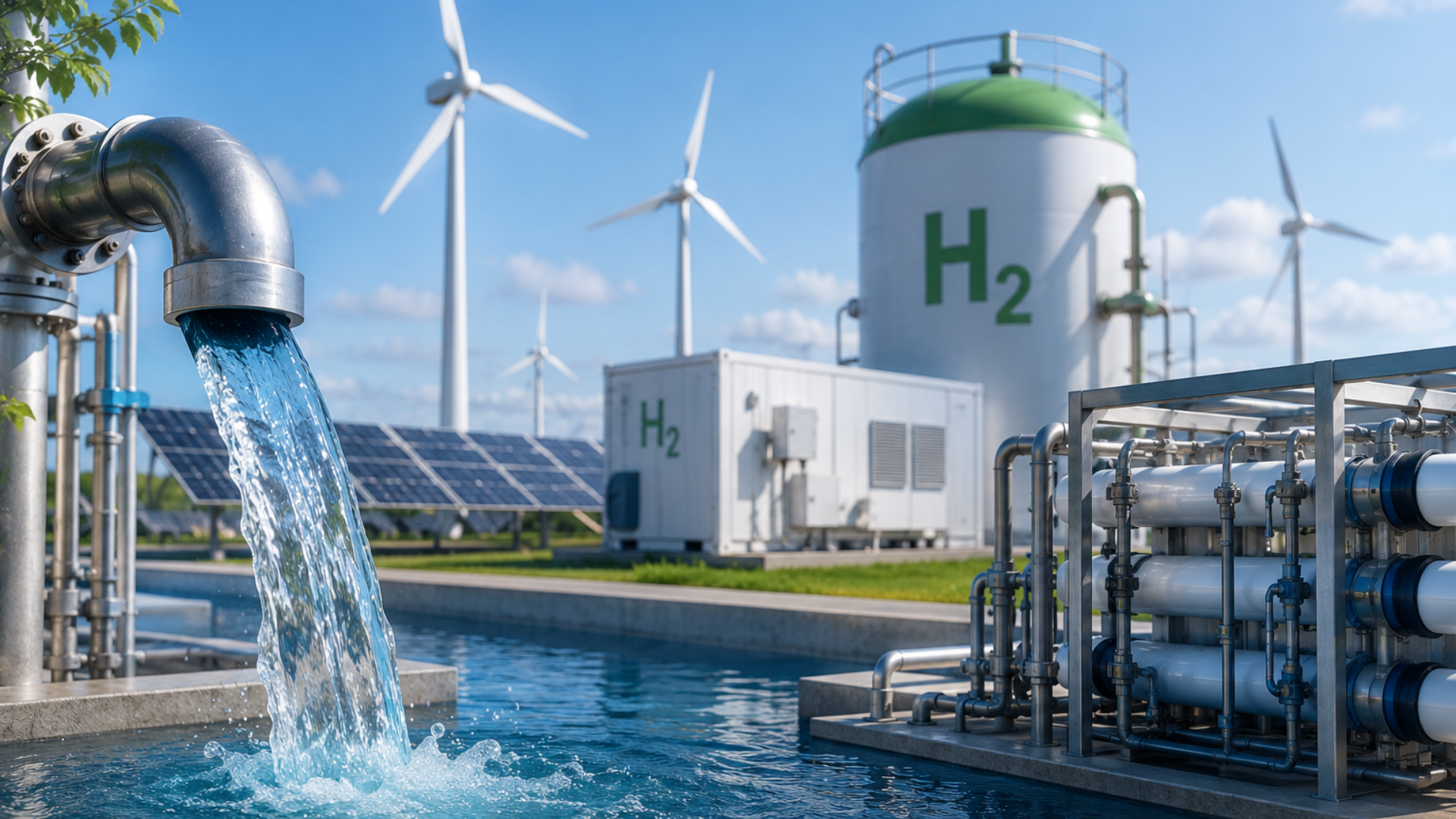
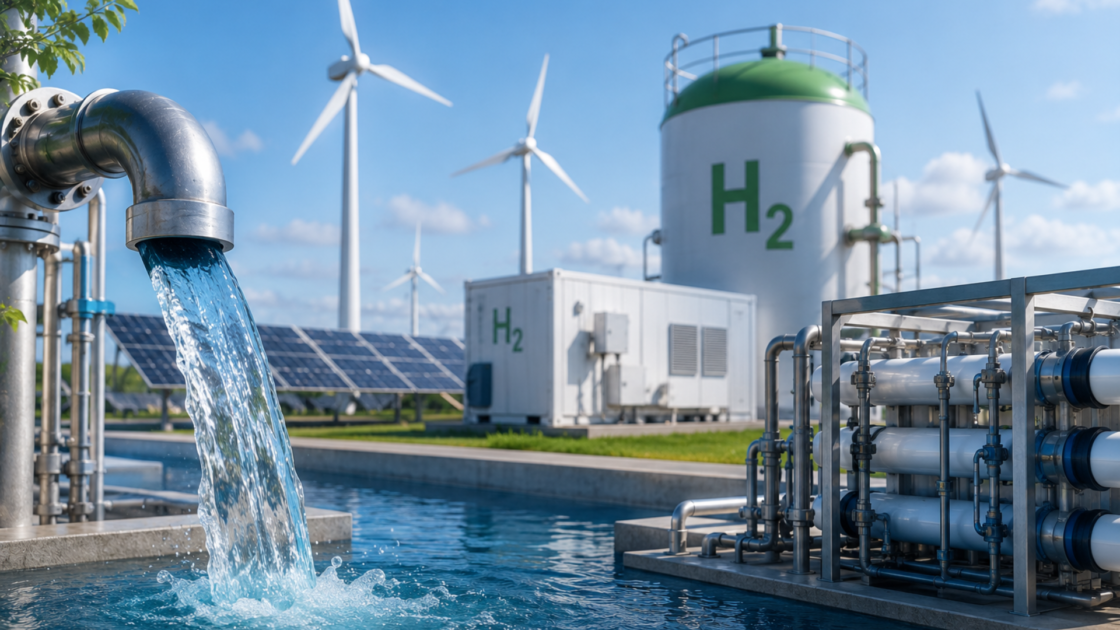
The featured photograph is for representation only.