Fujiyama commissions 2,000 MW solar panel line at Ratlam plant
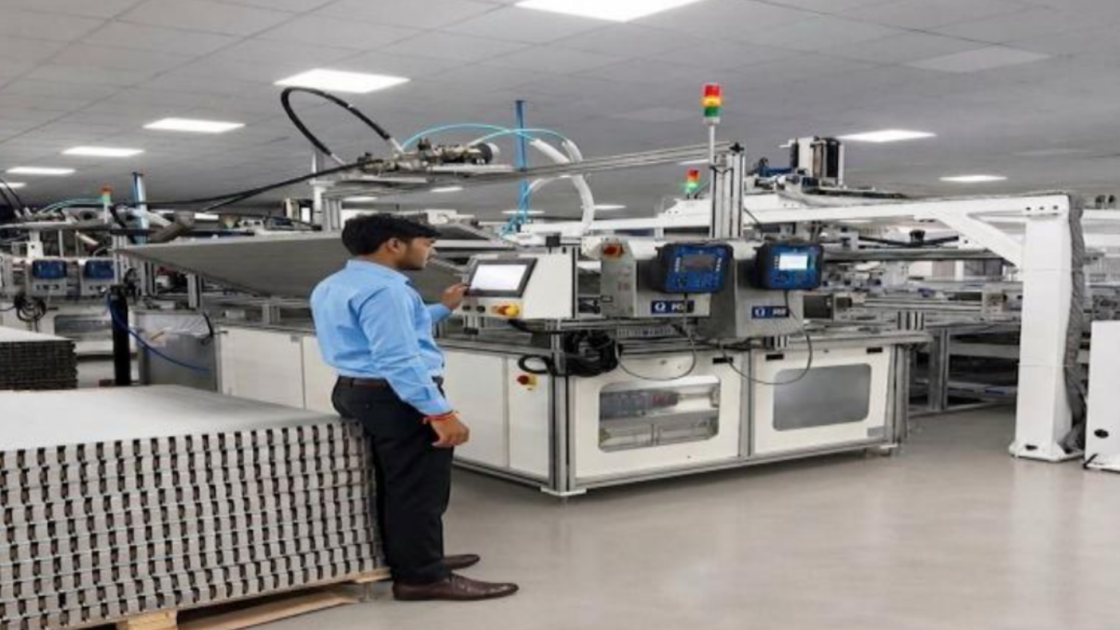
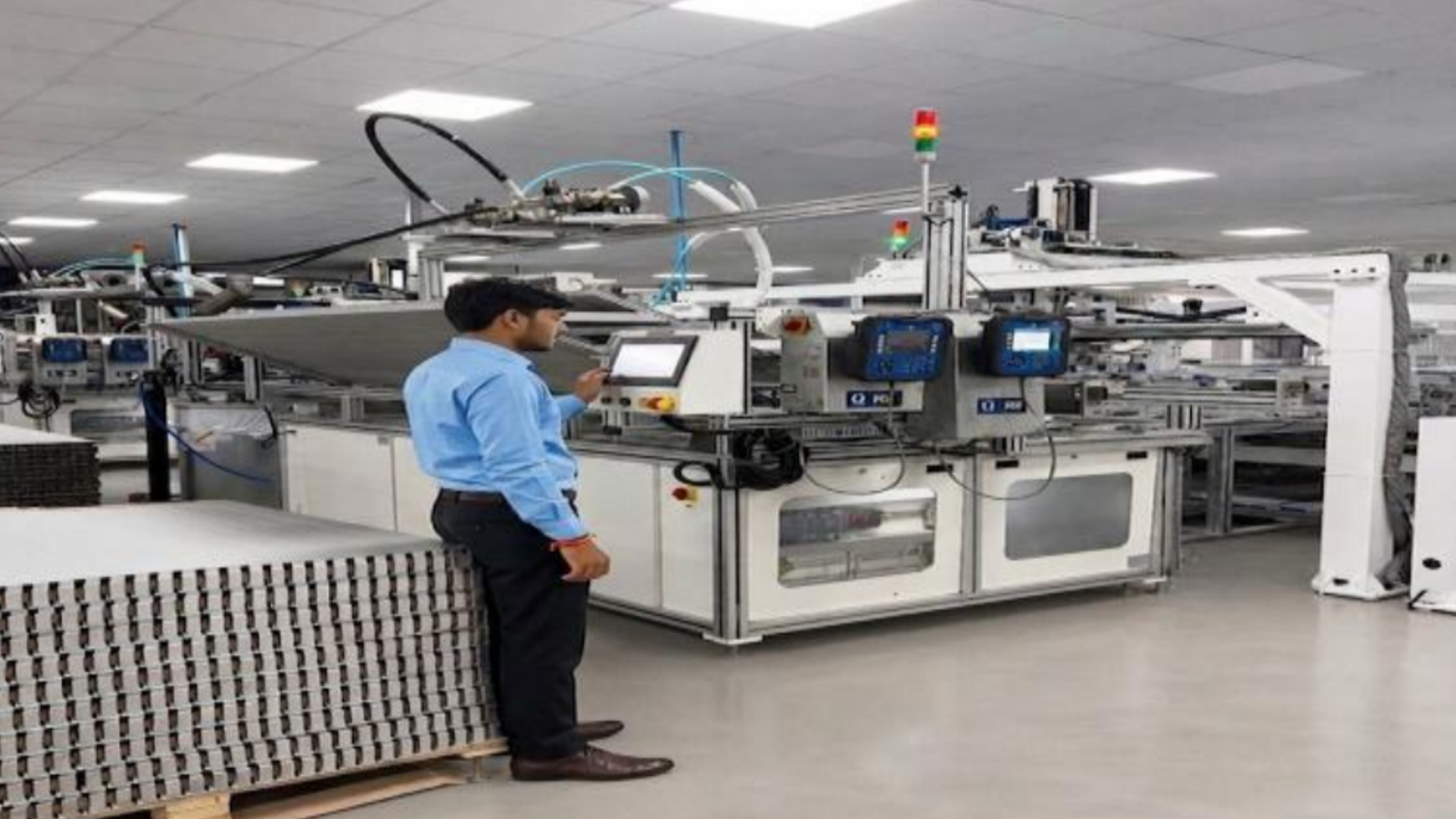
Fujiyama Power Systems Limited, a rooftop solar solutions provider, announced on May 14, 2026, the commissioning of its 2,000 MW solar panel manufacturing line at its Ratlam, Madhya Pradesh facility, alongside its audited annual and limited-reviewed quarterly financial results for the period ended March 31, 2026.
Manufacturing expansion
The Ratlam facility is part of a larger greenfield manufacturing expansion project designed for a total planned capacity of 2,000 MW each for solar panels, batteries, and inverters. The solar panel line will initially operate at an annualized capacity of approximately 1,000 MW under a single-shift schedule, with gradual ramp-up planned in phases. Full capacity utilization is expected by the fourth quarter of FY27 through double-shift operations.
Following the commissioning, Fujiyama’s total solar panel manufacturing capacity has increased to 3,568 MW.
Commissioning timelines for the inverter and battery manufacturing lines at the same facility have experienced delays. The company stated that it incorporated recent advancements in lithium-ion battery technology to maintain product competitiveness, and certain geopolitical developments affected supply timelines. These issues have been largely addressed. The inverter line is now expected to be commissioned in the first quarter of FY27, with machinery already received. Machinery orders for the battery line have been placed, with commissioning expected in the second quarter of FY27.
The company is also setting up a 1,200 MW TOPCon solar cell manufacturing facility at Ratlam with an investment of approximately Rs 350 crore, to support expansion into the on-grid segment and participation in the PM Surya Ghar Muft Bijli Yojana.
Financial performance
For the fourth quarter of FY26, revenue from operations stood at Rs 9,008 million, an 87.5% rise from Rs 4,803 million in the same quarter last year. EBITDA grew 116.9% to Rs 1,715 million, with margin expanding to 19.0% from 16.5%. Profit after tax (PAT) for the quarter doubled to Rs 1,063 million, up 107.5% year-on-year, representing a margin of 11.8%.
For the full fiscal year 2026, revenue from operations reached Rs 26,545 million, a 72.3% increase over FY25’s Rs 15,407 million. EBITDA rose 97.3% to Rs 4,903 million, with margin improving to 18.5% from 16.1%. PAT for the year came in at Rs 3,041 million, up 94.5% compared to Rs 1,563 million in the previous year. Earnings per share (EPS) stood at Rs 10.24 for FY26.
The company added over 80 distributors, 450 dealers, and 30 exclusive Shoppes in Q4 FY26, bringing its total channel partner base to more than 8,900 as of March 31, 2026.
Recent developments
In January 2026, Fujiyama commissioned a 1 GW solar cell manufacturing plant at Dadri with an investment of Rs 300 crore, funded through internal accruals and debt. The entire capacity is intended for captive use to support its module manufacturing operations. The company has a total module manufacturing capacity of 1.6 GW, of which 1.2 GW is located at Dadri.
In February 2026, the Ministry of New and Renewable Energy (MNRE) included Fujiyama in the fifth revised edition of the ALMM List-II for solar cells, enlisting its Gautam Buddha Nagar facility with an approved capacity of 437 MW per year, valid until February 2030. The approved products are bifacial mono-c-Si PERC cells (182.2 mm size, 10 busbars, PID-free) with an average efficiency of 23.41% and a wattage range of 7.46 W to 7.79 W.
Management commentary
Chairman and Joint Managing Director Pawan Kumar Garg said the company’s first full year as a listed entity marked an important step forward. He noted that demand for residential rooftop solar and power backup solutions remained supportive, particularly in Tier-2 and Tier-3 cities, supported by government policies and rising consumer preference.
On the Ratlam commissioning, Garg added that the project strengthens the company’s ability to serve the domestic rooftop solar market with improved operational efficiencies and greater control across the value chain. Going forward, the company will focus on expanding capacity, strengthening backward integration, improving operating efficiencies, and further expanding distribution reach.
Photo credit: Fujiyama Power Systems Limited