
DGTR recommends five-year extension of duty on Malaysian solar glass

The Directorate General of Trade Remedies (DGTR) has recommended extending countervailing duties (CVD) on solar glass imports from Malaysia for another five years, stating that Malaysian producers continue to receive government subsidies and that removing the duty could lead to renewed injurious imports.
The review followed a sunset review (SSR) application filed by Borosil Renewables Limited (BRL) and Vishakha Glass Private Limited (VGPL). The original duties were imposed in March 2021 after an anti-subsidy investigation initiated in September 2019. These duties, 9.71% of the cost, insurance and freight (CIF) value for Xinyi Solar Sdn. Bhd. and 10.14% for other producers, are scheduled to expire on June 8, 2026. The applicants argued that removing the duties could allow subsidised imports to re-enter the Indian market and harm domestic manufacturers.
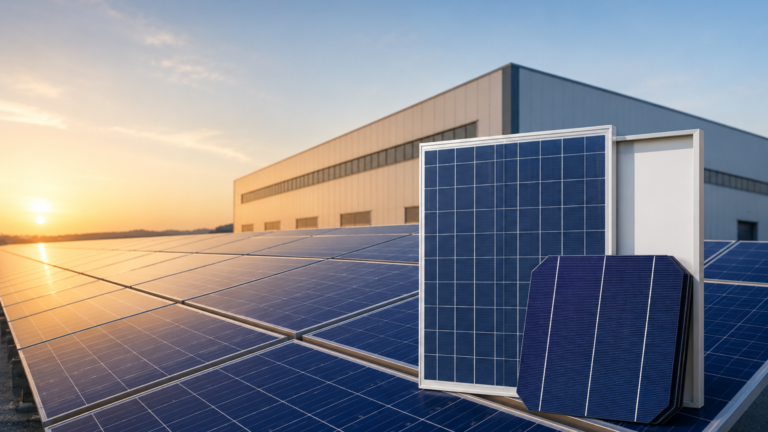
The product under consideration is textured toughened (tempered) glass, commonly referred to as solar glass, solar photovoltaic (PV) glass, or heat strengthened glass. It has minimum light transmission of 90.5%, thickness not exceeding 4.2 mm, and at least one dimension exceeding 1,500 mm. The product is used in solar PV modules and solar thermal systems.
The DGTR initiated the review on June 24, 2025, covering the period of investigation (POI) from January 1 to December 31, 2024. The authority carried out desk and on-site verification of submitted data and conducted oral hearings on October 28 and December 4, 2025. Participants included the Government of Malaysia, exporters Xinyi Solar (Malaysia) SDN BHD and SBH Kibing Solar New Materials (M) SDN BHD, and Indian importers and users including Reliance Industries Limited and Navitas Green Solutions Private Limited.
Of the 26 subsidy programmes examined, the DGTR confirmed countervailable benefits for both exporters. For Xinyi Solar, these included the investment tax allowance (ITA), sales tax exemption, and the licensed manufacturing warehouse (LMW) scheme. For SBH Kibing, additional benefits were identified under the natural gas subsidy programme, where Sabah Energy Corporation supplied gas at less than 10% of Malaysia’s reference price. The authority classified this as supply at less than adequate remuneration (LTAR). The combined subsidy margin for both exporters was assessed within the 0–10% range.
The domestic industry also argued that both exporters are wholly owned affiliates of Chinese parent companies and may shift exports among China, Malaysia and Vietnam depending on the presence of trade remedies in India. The DGTR considered this claim credible based on available import data.
Demand for solar glass in India increased sharply during the injury period, with the trend index rising from 100 in FY2021–22 to 402 during the POI. However, the domestic industry reported negative profitability, cash profits and return on capital employed (ROCE) throughout the period, while inventories reached their highest level during the POI. Price undercutting by Malaysian imports remained positive, with margins of 30–40% during the POI. The injury margin was assessed at 80–90% for SBH Kibing and 40–50% for Xinyi Solar compared with the non-injurious price (NIP) determined by the DGTR.
Imports from Malaysia had fallen to zero in FY2023–24 but resumed at 18,916 metric tonnes (MT) during the POI. Following the imposition of provisional anti-dumping duties on solar glass imports from China and Vietnam in December 2024, shipments from Malaysia rose sharply. Imports increased from 14,832 MT in December 2024 to 29,352 MT in January 2025, 67,908 MT in February 2025, and 67,120 MT in March 2025. The DGTR viewed this pattern as evidence of trade diversion and potential injury if duties are withdrawn.
Solar module manufacturers raised concerns that extending the CVD could raise procurement costs. The DGTR estimated that a full pass-through of a 10% duty would increase the price of a 540 Wp solar module by about 0.94%. The authority considered this impact limited compared with cost fluctuations linked to global polysilicon, wafer and logistics prices.
The DGTR has recommended continuing the duty at 9.71% of CIF value for Xinyi Solar (Malaysia) Sdn. Bhd. and SBH Kibing Solar New Materials (M) SDN BHD, and 10.14% for all other producers, for five years from the date of notification by the Central Government. SBH Kibing received an individual rate due to its cooperation during the review. The 10.14% duty will apply to any producer exporting the product to India through Malaysia.
The final decision on implementing the recommendation rests with the Central Government. Appeals against the findings may be filed before the Customs, Excise and Service Tax Appellate Tribunal (CESTAT).
The featured photograph is for representation only.