Waaree Energies shifts focus to cell integration, U.S. manufacturing and storage
Waaree Energies Limited is accelerating its move towards a more integrated solar and energy storage manufacturing model, with captive cell production, U.S. manufacturing and battery storage emerging as key areas of focus in FY27. Management expects the company’s cell-to-module integration ratio to rise sharply over the next two to three quarters, while its U.S. operations and BESS business are being scaled up.
The company also reaffirmed its operating EBITDA guidance for FY27.
Cell integration
Waaree expects the proportion of modules using its own cells to increase from around 20% to approximately 65% over the next two to three quarters. Captive cell production nearly doubled during Q1, with monthly output reaching around 400 MW.
Its existing 5.4 GW cell facility is being ramped towards quarterly production of 1.3-1.4 GW. The additional 10 GW cell manufacturing facility at Unn, Gujarat, is expected to begin contributing from Q3 FY27, with all equipment already delivered to the plant. Waaree has also applied for ALMM-II certification for the new capacity.
Management expects greater captive cell usage to improve realisations and margins, particularly as DCR (domestic content requirement) modules command higher prices than non-DCR products.
U.S. manufacturing
Waaree’s 1.6 GW module facility in the U.S. is being ramped up, with utilisation expected to reach 75% to 80% in the coming quarters.
Waaree Americas secured its first large-scale HJT order of 125 MW during the quarter for supply from its Arizona facility. Management estimates net EBITDA of around USD 0.07-0.08 per watt peak from local U.S. manufacturing, compared with USD 0.04-0.05 per watt peak for modules exported from India.
Indian exports were affected by shipment and clearance delays in Q1, but the company expects them to normalise from August. Waaree is also pursuing opportunities in Europe, Australia and New Zealand.
Storage
Waaree Energy Storage Solutions has started automated BESS container production at 5.15 GWh, exceeding its earlier planned capacity of 3.5 GWh. The pack line is expected to be operational in around 60 days.
The company is also developing a 3.5 GWh BESS cell manufacturing facility, with commercial production expected during the current financial year. Management said Foreign Entity of Concern (FEOC)-compliant BESS cells can command a 25% to 30% premium over Chinese cell pricing.
Waaree Renewable Technologies has secured a 1,520 MWh BESS EPC order and signed an early contractor involvement agreement for a utility-scale solar-plus-BESS project in New Zealand.
Manufacturing expansion
Waaree commissioned another 3 GW of module capacity at its Samakhiali plant in Gujarat during Q1. Waaree Transpower also commenced commercial production of its 17.6 MVA inverter duty transformer.
Further upstream, the company is constructing a 10 GW ingot and wafer facility in Nagpur, Maharashtra. Its longer-term plans include a 2,500 tonnes-per-day solar glass plant and a 16.5 GWh BESS facility.
The group has also expanded into transmission and distribution through the acquisition of an approximately 55% stake in Associated Power Structures for around Rs 1,225 crore.
Retail business
Waaree’s retail revenue increased 130% year-on-year during Q1, with management targeting Rs 9,000-10,000 crore of revenue from the segment during FY27. Its e-commerce business is expanding its direct reach among households, installers and small businesses.
Customer concentration has also declined, with the top five customers accounting for approximately 27.1% of business in Q1 FY27 compared with 33% in FY26.
The company’s business mix is increasingly diversified geographically, with domestic India accounting for around 40%, domestic U.S. 36% and exports from India 24%.
Commenting on the outlook, Mr. Jignesh Rathod, Whole-Time Director and CEO, said, “Our integration across the entire energy value chain along with structural demand is expected to double our total addressable market from approximately $1 trillion today to approximately $2 trillion by 2030. It is on this trend that we affirm and reaffirm our 2027 operating EBITDA guidance.”
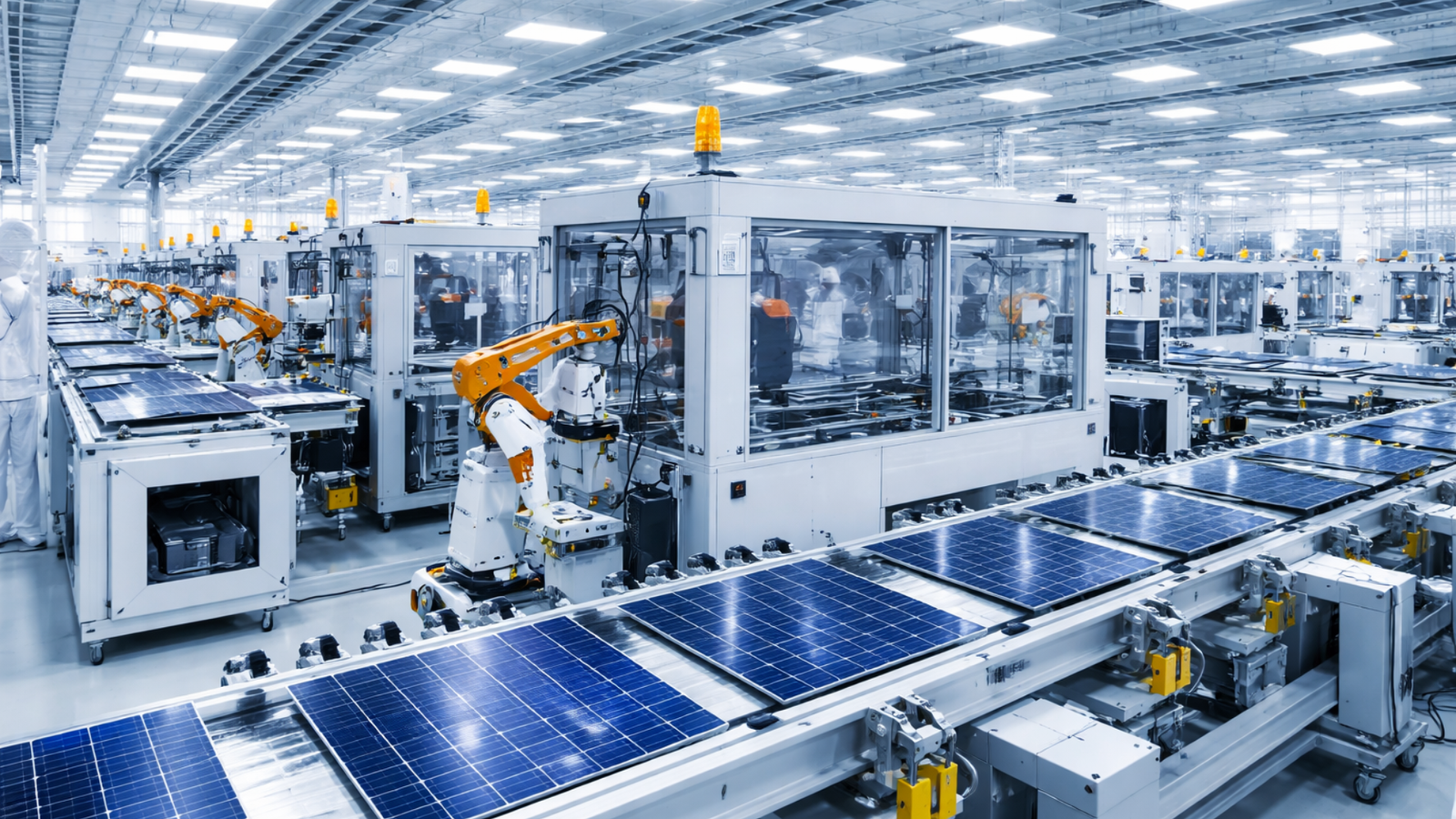
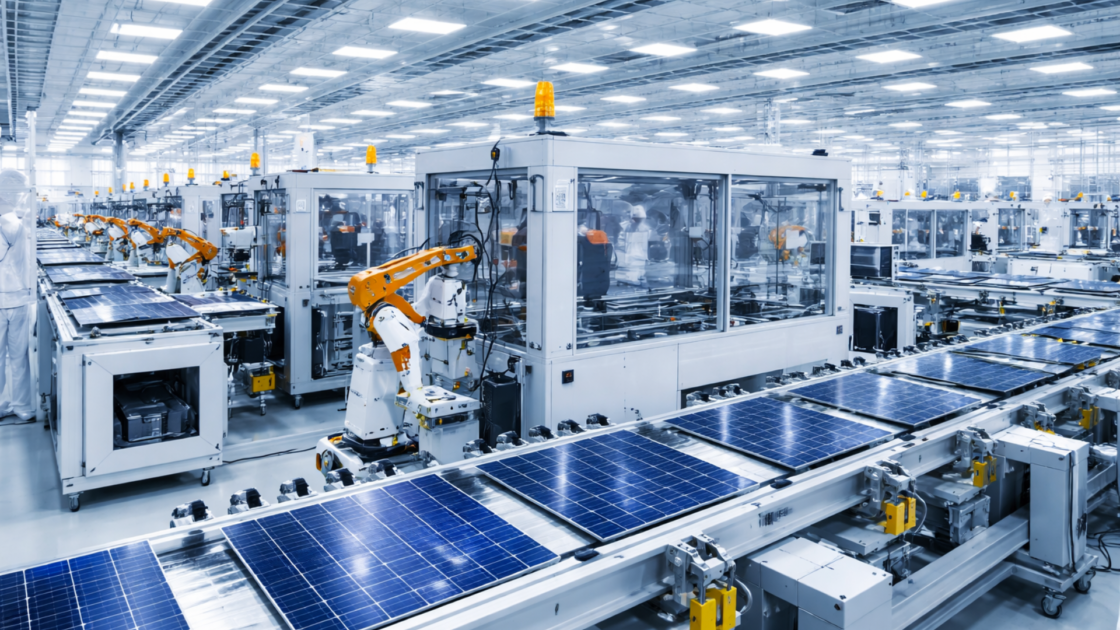
The featured photograph is for representation only.