NTPC achieves head race tunnel breakthrough at Tapovan Vishnugad project
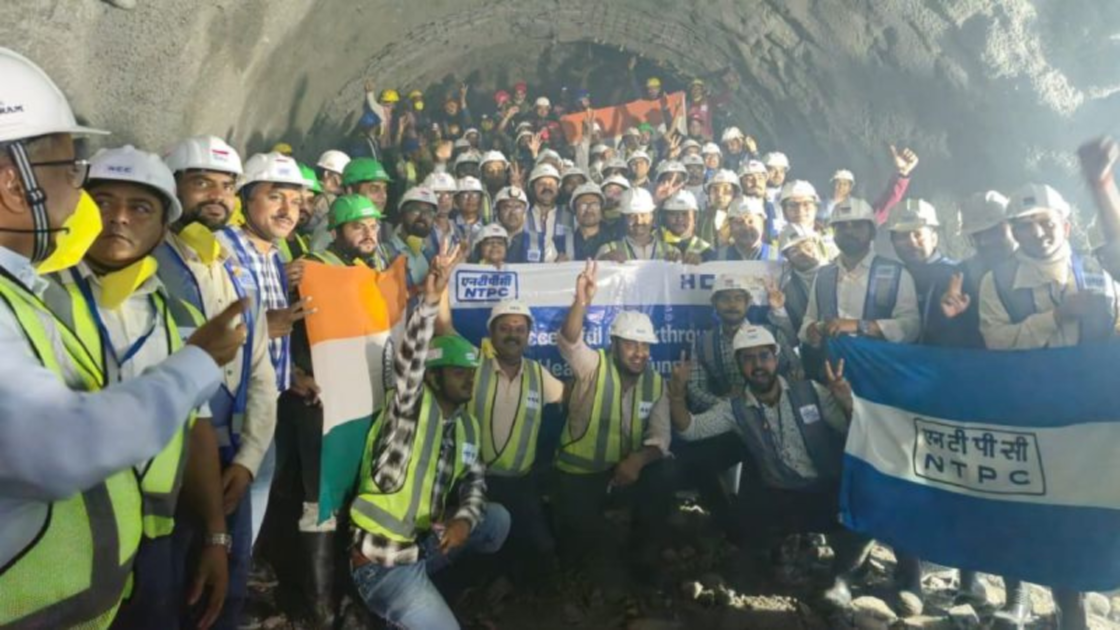
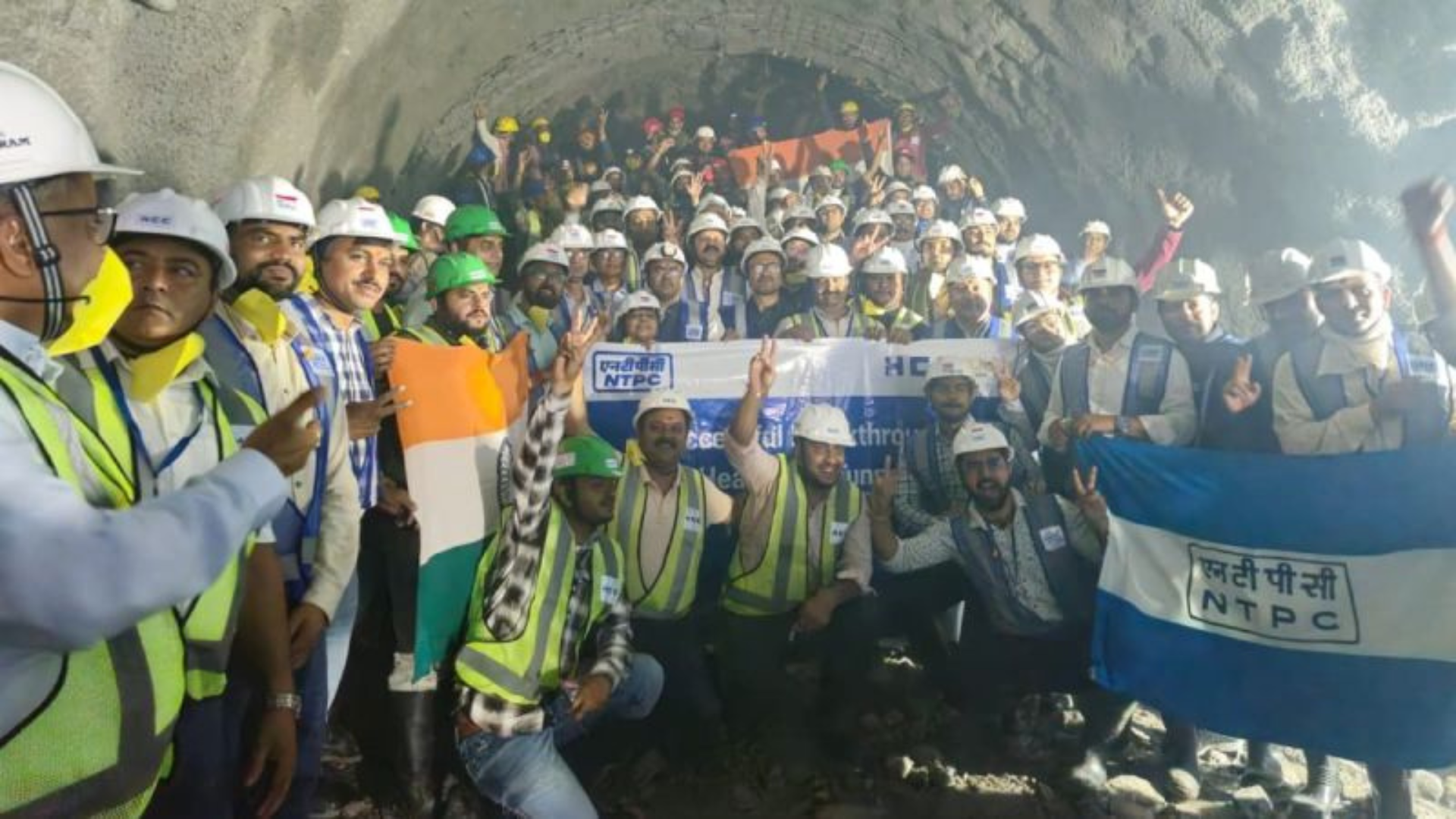
NTPC Limited has achieved the Head Race Tunnel (HRT) breakthrough at its 520 MW Tapovan Vishnugad Hydro Power Project (TVHPP) in Uttarakhand. The milestone was completed on July 8, 2026, through the successful alignment and joining of excavation works progressing from Face-02 and Face-03 of the underground tunnel.
Senior NTPC officials and engineers from Hindustan Construction Company Limited (HCC), the project’s main executing agency, witnessed the breakthrough at the underground project site.
Tunnel excavation reaches 80%
The HRT is designed to carry water from the Dhauliganga River to the powerhouse for electricity generation. Following the breakthrough, total HRT excavation has reached around 9.7 km of the planned 12.1 km alignment, representing about 80% completion.
Excavation from Face-02 has reached 1,748 metres, while Face-03 has completed 981 metres of targeted heading excavation. The project will now move to the concrete tunnel lining stage.
Project progress
NTPC said the breakthrough was achieved despite challenging Himalayan geological conditions, including unpredictable rock formations, difficult underground conditions, structural and safety risks, and limited working space inside the tunnel.
The 520 MW Tapovan Vishnugad Hydro Power Project is a run-of-the-river hydroelectric project being developed on the Dhauliganga River in Chamoli district, Uttarakhand. It is NTPC’s second hydropower project.
The project began with a feasibility study agreement signed with the Government of Uttarakhand in 2002, followed by an implementation agreement in 2004. The foundation stone was laid in February 2005. The project will have four 130 MW Pelton turbine-generators supplied by Bharat Heavy Electricals Limited (BHEL).
Once commissioned, the project is expected to generate more than 2.5 TWh of electricity annually.