Maharashtra notifies RE and storage policy with 65% target by FY36
Author: PPD Team Date: March 19, 2026
The Government of Maharashtra has notified the Maharashtra Renewable Energy and Energy Storage Policy 2025-26 to 2035-36 through a resolution dated March 18, 2026. The policy replaces the Renewable Energy Policy of 2020 and will remain in force until March 31, 2036, following cabinet approval on February 22, 2026.
Targets and storage mandate
The policy targets renewable energy to meet 65% of the state’s electricity demand by FY 2035-36. Electricity demand is projected to rise from 202 billion units in FY 2024-25 to about 350–360 billion units by FY 2035-36, with the incremental demand planned to be met through renewable sources.
Distribution companies are required to procure energy storage capacity equivalent to at least 10% of their demand by FY 2035-36, with at least 85% of stored energy sourced from renewable generation. The estimated requirement to meet these targets is around 100 GW of renewable capacity and about 100 GWh of daily storage capacity.
Storage and hybrid focus
The policy prioritises hybrid renewable projects with co-located storage. It envisages at least 10 GW of such capacity by FY 2029-30 and 25 GW by FY 2035-36. For projects commissioned up to FY 2029-30, storage capacity must be at least 50% of renewable capacity with a minimum two-hour duration. For projects from FY 2030-31 onwards, the minimum storage duration increases to four hours.
Stand-alone storage projects, including pumped storage and battery energy storage systems (BESS), are also promoted. Storage systems drawing power for charging are exempt from transmission charges, wheeling charges, electricity duty, and cross-subsidy surcharge, provided the stored energy is consumed within the state.
Land and infrastructure
Government land can be leased for renewable and storage projects, including at a nominal rate of Rs 1 per annum for 30 years in certain cases. For private land, lease rates are defined as the higher of 6% of land value or Rs 1.25 lakh per hectare, with a 3% annual escalation. Non-agricultural tax and premiums are waived.
The policy proposes at least 10 Renewable Energy Industrial Zones (REIZs) by FY 2029-30 and 15 by FY 2035-36, each with a minimum capacity of 100 MW. Budgetary support of Rs 500 crore is allocated for REIZ development.
Consumer and open access provisions
For small consumers (1–100 kW), the policy introduces differentiated mechanisms: concessional net metering up to 3 kW, net metering for 3–10 kW, and net billing for 10–100 kW systems. Banking provisions vary by system size.
For consumers above 100 kW, the policy targets 5 GW of green open access by FY 2029-30 and 10 GW by FY 2035-36. Captive projects with storage of at least four hours for 50% of capacity are eligible for electricity duty exemption for 10 years.
Institutional measures
The policy includes restructuring of Maharashtra State Power Generation Company Limited to expand into renewable and storage segments, and restructuring of Maharashtra Energy Development Agency.
A Renewable Energy R&D, Innovation and Start-up Centre will be established with funding of Rs 100 crore annually for three years. The policy also mandates allocation of at least 2.5% of salary budgets of power sector institutions toward training and skill development.
Implementation framework
A State-Level Steering Committee chaired by the Chief Minister or Energy Minister will oversee implementation, supported by an Implementation Committee chaired by the Principal Secretary (Energy).
As of January 2026, Maharashtra had 31.3 GW of renewable capacity, with peak demand reaching 30.7 GW in March 2025. The Maharashtra Electricity Regulatory Commission has been tasked with aligning regulations to support the policy.
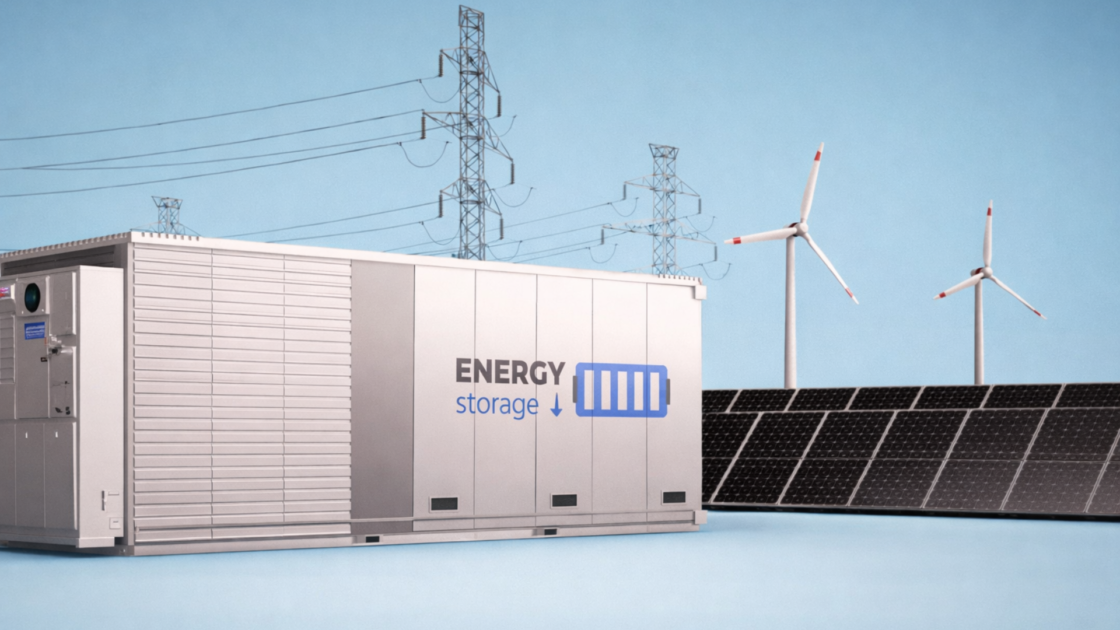
The featured photograph is for representation only.