India’s roadmap to 100 GW nuclear power by 2047
Author: PPD Team Date: October 22, 2025
The Central Electricity Authority (CEA) has outlined a roadmap to expand India’s nuclear power capacity from the current 8.88 GW to 100 GW by 2047. The Ministry of Power, through an office memorandum dated 27 February 2025, constituted a committee to prepare this roadmap.
India’s current installed nuclear capacity stands at 8.88 GW, contributing about 2 per cent of total electricity generation. Achieving 100 GW requires a tenfold expansion over 22 years, averaging approximately 4.14 GW per year. Nuclear energy is among the cleanest sources of power, with life-cycle CO₂ emissions lower than solar photovoltaic (PV) systems.
India operates 25 nuclear reactors with a combined capacity of 8,880 MW across seven sites, comprising 21 Pressurised Heavy Water Reactors (PHWRs) and 4 Light Water Reactors (LWRs). Eight more reactors are under construction, including 4 LWRs, 3 PHWRs, and 1 Fast Breeder Reactor (FBR). In FY 2024–25, the Nuclear Power Corporation of India Limited (NPCIL) generated 56,681 million units (MUs) of electricity, avoiding an estimated 49 million tonnes of CO₂ emissions.
Joint ventures between NPCIL and public sector undertakings (PSUs) such as NTPC Limited and Indian Oil Corporation Limited (IOCL) are strengthening India’s nuclear program. Recognising nuclear power’s role in energy security and sustainability, the government has set a 100 GW target by 2047.
In the Union Budget 2025–26, the government announced the Nuclear Energy 4 Mission for Viksit Bharat, allocating Rs 20,000 crore to develop at least five indigenously designed Small Modular Reactors (SMRs) by 2033. Amendments to the Atomic Energy Act and the Civil Liability for Nuclear Damage (CLND) Act are proposed to enable private sector participation and accelerate advanced nuclear technology deployment.
Nuclear technology and fuel cycle
India’s nuclear energy is produced through fission reactions, where neutrons split unstable nuclei such as uranium-235, releasing energy and triggering a self-sustaining chain reaction. Heat generated is converted into electricity.
India follows the three-stage nuclear programme proposed by Dr Homi Jehangir Bhabha in 1954 to optimise its limited uranium and abundant thorium reserves:
- Stage 1: PHWRs use natural uranium fuel and heavy water (D₂O) as moderator and coolant.
- Stage 2: Spent fuel from Stage 1 is reprocessed to extract plutonium-239 for Fast Breeder Reactors (FBRs), which also use thorium-232 to produce uranium-233.
- Stage 3: Breeder Reactors (BRs) use uranium-233 derived from thorium, creating a self-sustaining thorium fuel cycle.
India’s domestic uranium reserves are insufficient for the 100 GW target. However, reprocessing spent fuel and introducing thorium-based cycles can sustain nuclear power generation for centuries.
Institutional framework
India’s nuclear program is governed by the Atomic Energy Act, 1962. The Atomic Energy Commission (AEC) formulates policy for the Department of Atomic Energy (DAE), which oversees research, technology development, and commercial operations. NPCIL, established in 1987, operates nuclear reactors and implements projects, holding equity in BHAVINI, set up in 2003 to develop FBRs.
The Atomic Energy (Amendment) Act, 2015, allows joint ventures with at least 51 percent government ownership, exemplified by ASHVINI (NPCIL–NTPC JV). DAE supervises research centres, industrial organisations, PSUs, and grant-in-aid institutes, while the Atomic Energy Regulatory Board (AERB) ensures nuclear and radiation safety.
Progress and current status
India’s first nuclear power plant, TAPS 1 & 2 (200 MW Boiling Water Reactors), began operation in 1969. Indigenous PHWRs (RAPS 1 & 2) followed, forming Stage 1 of the programme. Key milestones include nuclear tests in 1974 and 1998, development of 700 MW PHWRs, installation of 1,000 MW Russian VVER units at Kudankulam, and the 2008 US–India Civil Nuclear Agreement enabling civilian nuclear trade.
As of May 2025, India has 25 operational reactors (8,880 MW) and eight under construction (6,600 MW). Ten additional reactors (7,000 MW) are in pre-project stages. Stage 1 PHWRs are commercially mature, Stage 2 FBRs are under deployment, and pilot-scale Stage 3 systems using uranium-233 are in development.
Power capacity projections
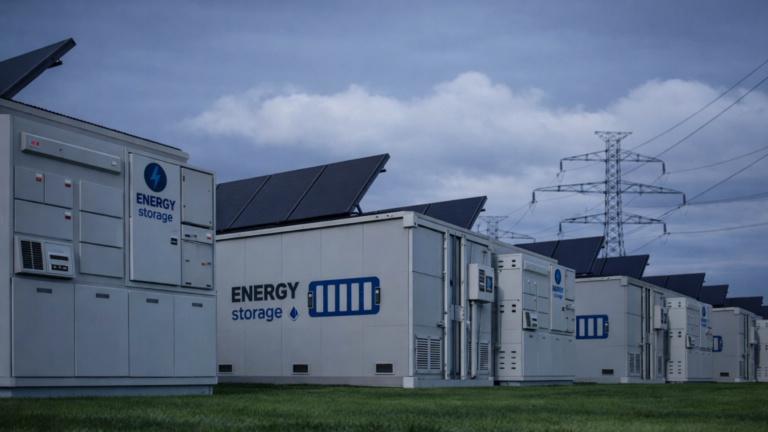
According to the Central Electricity Authority (CEA), India’s total installed capacity is projected to rise from 472.53 GW in April 2025 to 2,089 GW by 2047. Nuclear capacity is expected to reach 100 GW, coal will rise slightly to 235.3 GW, and gas-based capacity will decline to 10.4 GW. Renewables will dominate: solar will reach 1,186.8 GW, wind 434.9 GW, hydro 99 GW, and biomass 23 GW. Energy storage requirements include 116.1 GW/702.9 GWh pumped storage and 359.6 GW/1,983.9 GWh of other storage systems.
Roadmap to 2047
PHWRs will remain the mainstay, supplemented by imported LWRs. Large reactors will meet grid base-load needs, while SMRs will serve industrial or specialized applications. Advanced research in high-temperature reactors and thorium-based fuels is essential. Capital investment is estimated at Rs 19.28 lakh crore, with fuel needs including 8,029 tons/year of natural uranium, 1,045 tons/year of enriched uranium, and 6,352 tons of heavy water. Manpower requirements include 61,000 for operation, 120,000 for construction, and 5,500 for design.
Regulatory and legal reforms
Private sector participation will require amendments to the Atomic Energy Act, CLND Act, and licensing frameworks. Recommended changes include clarifying nuclear fuel handling, capping supplier liability, expanding AERB oversight, and streamlining approvals for faster construction. Construction timelines from consent to criticality average 11–12 years, and land acquisition remains a bottleneck due to safety regulations and public perception. Recommendations include brownfield expansions, incentives for states, and technology-agnostic site selection.
Public perception and financing
Safety is central, with redundancy, diversity, failsafe principles, and defence-in-depth designs. Outreach, transparent communication, and credible disaster management are key to building public trust. Financing challenges arise from high capital costs and long gestation. Current PHWR costs are Rs 15–16 crore/MW, potentially rising to Rs 22–25 crore/MW for indigenized equipment. Cost optimisation measures include phased domestic manufacturing, GST reduction on equipment, fleet-mode procurement, tariff-based competitive bidding, and access to low-cost financing through sovereign guarantees or green financing mechanisms.
Nuclear fuel supply and waste management
By 2047, PHWR uranium demand may reach 8,029 tons/year and enriched uranium 1,045 tons/year. Domestic uranium production is concentrated in Andhra Pradesh, Jharkhand, Karnataka, and Rajasthan, supplemented by imports. Fuel fabrication will need expansion through public or private facilities under strict oversight. India produces heavy water domestically and plans capacity expansion. Spent fuel is reprocessed to recover uranium and plutonium, with high-level waste immobilised and safely stored.
Workforce and supply chain
Achieving 100 GW will require a diverse workforce across design, construction, operation, decommissioning, regulation, and quality assurance. Training facilities under DAE and NPCIL must expand, with postgraduate and PhD programs in nuclear engineering increased. Supply chain constraints can be addressed by ensuring long-term visibility of orders, quality-focused procurement, and vendor development.
Insurance and risk management
Current insurance covers cold zone assets and third-party liability. Expansion to 100 GW requires per-incident coverage, increased domestic reinsurance, and potential foreign participation under intellectual property safeguards. The Nuclear Liability Fund may need reassessment for contributions from multiple operators, and property damage insurance for hot zone assets should be introduced.
Conclusion
India’s target of 100 GW nuclear power by 2047 is ambitious but achievable. It requires coordinated action across technology, regulatory reforms, financing, fuel management, workforce development, and public engagement. Strategic implementation of the roadmap, combined with domestic capability development and private sector participation, can ensure safe, reliable, and sustainable nuclear growth.
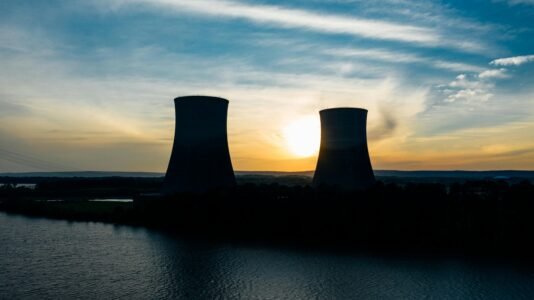
The featured photograph is for representation only.