India reaches 283 GW non-fossil capacity, ranks third globally
Author: PPD Team Date: April 9, 2026


Author: PPD Team Date: April 9, 2026
India’s installed non-fossil fuel power capacity stood at 283.46 GW as of March 31, 2026, with solar contributing more than half of the renewable energy base, according to data shared by the Minister of New and Renewable Energy (MNRE).
Speaking to the media, MNRE Minister Pralhad Joshi said India now ranks third globally in renewable energy capacity, surpassing Brazil. The ranking is based on the International Renewable Energy Agency (IRENA) Renewable Energy Statistics 2026, using data up to December 2025.
The total non-fossil capacity includes 150.26 GW of solar, 56.09 GW of wind, 51.41 GW of large hydro, 11.75 GW of bio-energy, 5.17 GW of small hydro, and 8.78 GW of nuclear. Of this, renewable energy accounts for 274.68 GW.
India added 55.3 GW of non-fossil capacity during the 2025–26 financial year. In June 2025, non-fossil sources crossed 50% of cumulative installed electricity capacity, achieving a key target under its Nationally Determined Contribution (NDC) to the Paris Agreement ahead of schedule.
In July 2025, renewable energy met 51.5% of India’s total electricity demand of 203 GW, marking the highest recorded share in the country’s generation mix.
For the full 2025–26 financial year ending March 2026, total electricity generation reached 1,845.9 billion units (BU). Non-fossil sources contributed 538.97 BU, accounting for 29.2% of total generation.
India has set a target of reaching 500 GW of installed non-fossil capacity by 2030, as announced by Prime Minister Narendra Modi at COP26.
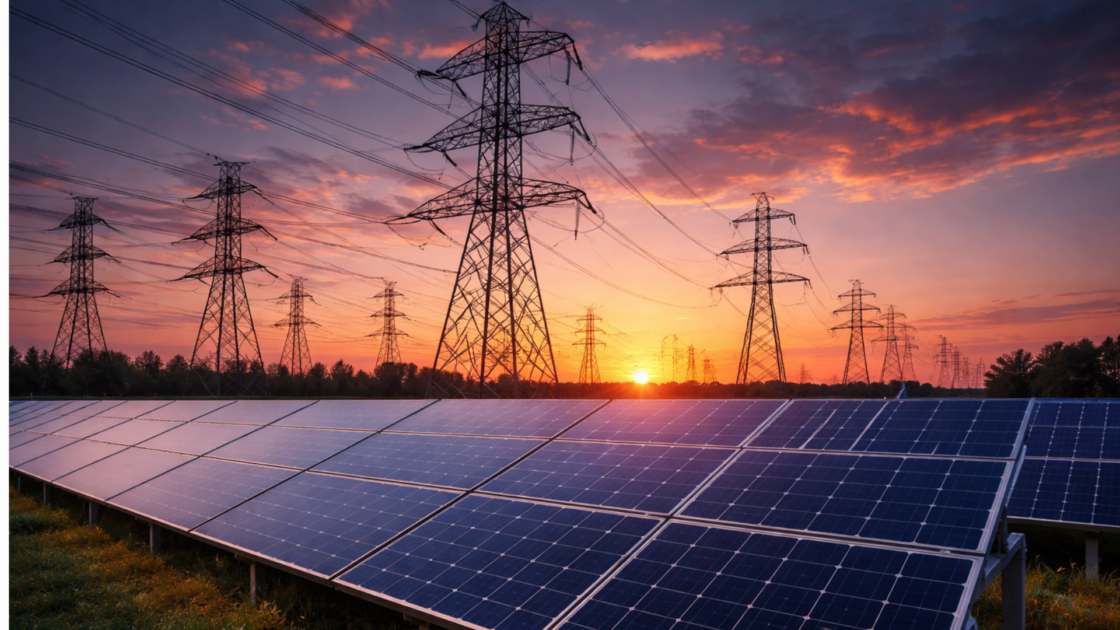
The featured photograph is for representation only.
Author: PPD Team Date: September 15, 2025 ACME Solar Holdings Limited has announced the termination of its planned acquisition of AK Renewable Infra Private Limited. In a regulatory filing on September 14, 2025, the company stated that the share purchase agreement signed on September 5, 2025, with the target company and its existing shareholders has been cancelled. The decision was reached after mutual discussions between the parties. The agreement was formally terminated on September 13,…

Author: PPD Team Date: December 15, 2025 Waaree Energies Limited has reported that its wholly owned subsidiary, Sangam Solar One Private Limited, has started operations at a new solar module manufacturing facility in Samakhiali, Kutch, Gujarat. The plant has an annual production capacity of 1,500 MW through two lines of 750 MW each. The company stated that the facility began operations on 12 December 2025. The company said the addition of 1.5 GW has increased…
Author: PPD Team Date: January 21, 2025 Photo: The LIBRTI facility: illustration with labels. Credit: United Kingdom Atomic Energy Authority. The UK Atomic Energy Authority (UKAEA) has announced a £200 million ($244 million) investment in the Lithium Breeding Tritium Innovation (LIBRTI) programme, a key part of the broader Fusion Futures project. The programme aims to advance fusion fuel development and strengthen industry capacity through global collaboration. One of its main goals is to demonstrate controlled…
Author: PPD Team Date: June 2, 2025 The U.S. Department of the Interior has activated emergency permitting procedures to accelerate geothermal energy projects considered essential for national security and energy reliability. This action follows the national energy emergency declared by President Donald J. Trump on January 20, 2025. The new process reduces environmental review timelines while maintaining safeguards under key federal laws, including the National Environmental Policy Act (NEPA), the National Historic Preservation Act, and…
Author: PPD Team Date: February 3, 2025 AZAD Engineering Limited has secured a six-year contract with Siemens Energy Global GmbH & Co. KG, valued at €90.1 million. The agreement covers the production of combustion commodities, cold blades, vanes, machined parts, and assemblies for advanced turbine systems. In addition, AZAD Engineering has received an order from Bharat Heavy Electricals Limited (BHEL) for high-complex rotating airfoils for supercritical turbines, part of an indigenisation project approved by the…
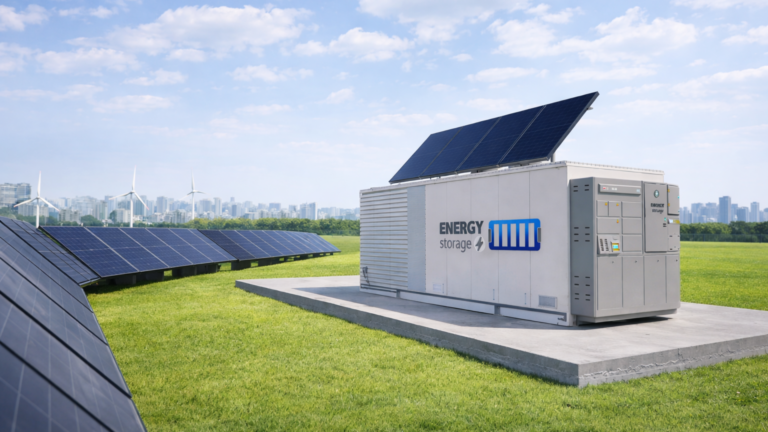
Author: PPD Team Date: March 26, 2026 West Bengal State Electricity Distribution Company Limited (WBSEDCL) has annulled the tender for a 250 MW standalone battery energy storage system (BESS) at Goaltore and withdrawn the letter of award issued to PM Green Private Limited, a wholly owned subsidiary of Power Mech Projects Limited. The letter of award, dated January 8, 2026, covered a 250 MW or 1,000 MWh standalone BESS project. The company informed stock exchanges…