NISE maps 102 GW floating solar potential in India, Maharashtra leads with 16 GW
India has an estimated 102.18 GWp of floating solar photovoltaic (PV) potential across its water bodies, according to a report released by Union Minister for New and Renewable Energy Pralhad Joshi. The assessment, prepared by the National Institute of Solar Energy (NISE), identified approximately 1,946 square kilometres of water surface area as suitable for floating solar installations.
Methodology
The study assessed reservoirs, lakes, and other inland water bodies using hydrological and topographical parameters. Water bodies smaller than 10 hectares were excluded from the assessment. The study assumed that up to 20% of a water body’s total surface area could be utilised for floating solar deployment.
According to NISE, around 0.019 km² of water surface area is required to install 1 MW of floating PV capacity at a tilt angle of 5 degrees. The estimate is based on solar modules with a capacity of 545 Wp and 21% efficiency.
State-wise potential
Maharashtra recorded the highest floating solar potential at 16.28 GW, followed by Madhya Pradesh at 14.89 GW, Karnataka at 13.69 GW, Odisha at 12.81 GW, and Telangana at 10.72 GW. Gujarat was assessed at 6.32 GW.
The report also included a second data set based on different feasibility criteria. Under this assessment, Maharashtra’s potential was estimated at 40.70 GW, followed by Madhya Pradesh at 40.13 GW, Karnataka at 33.22 GW, Odisha at 31.00 GW, and Telangana at 17.53 GW.
Policy and total solar potential
With the inclusion of floating solar resources, India’s total assessed solar potential, combined with previously assessed ground-mounted solar resources, now stands at around 3,445 GWp.
The Ministry of New and Renewable Energy (MNRE) stated that it is working on a dedicated scheme to accelerate floating solar deployment across the country. MNRE Secretary Santosh Kumar Sarangi said the ministry is in discussions with the finance ministry regarding support for floating solar and agri-photovoltaics.
Related announcements
At the same event, MNRE launched an online portal for small hydropower (SHP) projects. Applications and disbursement will be processed through the portal, and projects will be required to adhere to a four-year completion timeline.
The Military Engineering Services (MES) signed a memorandum of understanding (MoU) with NISE for solarisation initiatives in the defence sector.
Sarangi also stated that the Border Security Force (BSF) has approached the ministry for support in solarising its border camps using solar power integrated with battery energy storage systems.
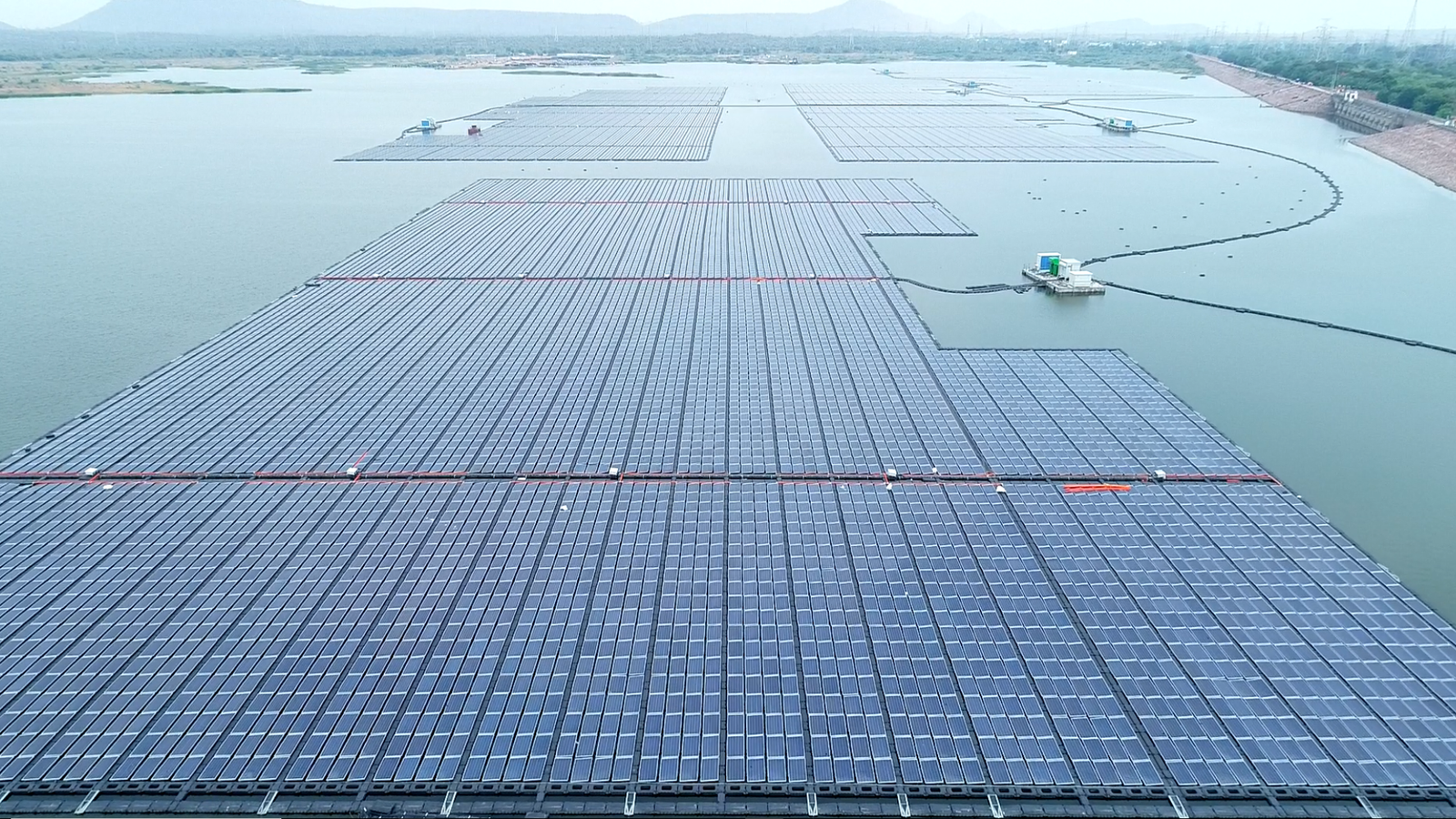
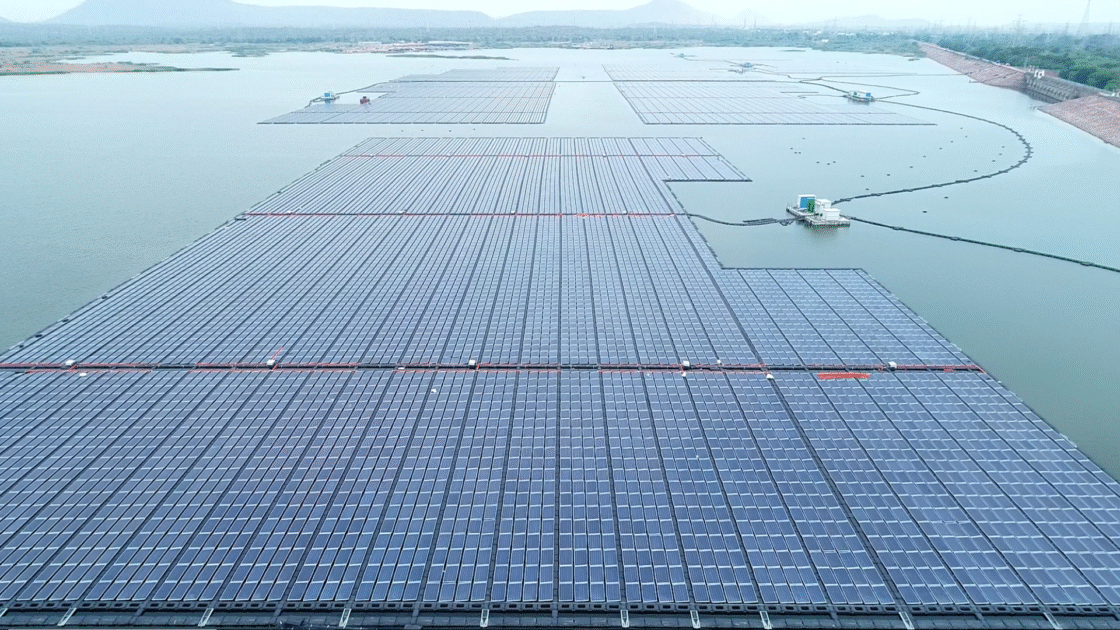
The featured photograph (Source: NTPC) is for representation only.