
Grid bottlenecks threaten pace of India’s renewable transition
India’s target of 500 GW of non-fossil fuel capacity by 2030 faces a structural constraint in transmission infrastructure. A report by InGovern Research Services, The Emerging Grid Bottleneck in India’s Renewable Transition: A Structural and Shareholder Perspective, along with a summary on Power Grid Corporation of India Limited (PGCIL), highlights a paradox. PGCIL, the backbone of India’s transmission network, is also becoming a source of execution risk and financial strain on the clean energy transition.
The analysis points to a widening gap between project awards, execution timelines, and shareholder returns. It indicates that concentration of transmission capacity in a single entity is creating systemic risks that extend beyond corporate performance into national energy security.
High market concentration in transmission
PGCIL holds about 84% of India’s inter-regional transmission capacity, based on Central Electricity Authority (CEA) data. In FY25, it secured 53–57% of tariff-based competitive bidding (TBCB) projects in the interstate transmission system (ISTS) segment. Its lower cost of equity and borrowing cost of around 7.41% provide a structural bidding advantage over private players.
While this has supported grid expansion, the scale of PGCIL’s current capital expenditure program is stretching execution capacity. The report indicates that this concentration is now a structural weakness.
Execution delays and project slippages
PGCIL is executing a capital expenditure plan of Rs 3 lakh crore through FY32, with Rs 32,000 crore allocated for the current fiscal year. Its work-in-hand pipeline stands at about Rs 1.48 lakh crore. This scale has led to delays across multiple projects.
Nine major ISTS schemes, mainly linked to renewable energy zones in Rajasthan and the Khavda solar park in Gujarat, are delayed by 6 to 12 months. Some projects show only 3% physical progress despite using 28% of the scheduled timeline, indicating a sharp mismatch between planning and execution.
Structural causes behind delays
The delays stem from land acquisition challenges, right-of-way disputes, and forest clearance issues. These are common across infrastructure projects, but PGCIL’s large share amplifies their impact at the national level.
The report suggests capping project allocation to a single developer at about 50% annually to distribute execution risk and enable greater private sector participation, similar to the evolution in power generation beyond NTPC.
Financial impact of execution lag
The shift from regulated tariff mechanism (RTM) to TBCB has increased sensitivity to project timelines. Revenues begin only after commissioning, while interest during construction (IDC) accumulates during delays.
A 12-month delay can reduce equity internal rate of return (IRR) by about 200 basis points. With capital work-in-progress (CWIP) at around Rs 1.2 lakh crore, a large portion of capital remains non-productive. Return on net worth (RoNW) has declined from 18.5% in FY23 to about 15.3% annualised for the first nine months of FY26.
Pressure on shareholder returns
Profit after tax (PAT) has remained stable at Rs 15,000–16,000 crore annually, but dividend payouts have declined. Dividend per share fell from Rs 14.75 in FY22 and FY23 to Rs 9 in FY25, with payout ratios reducing as capital is retained for capex.
Market performance reflects these concerns. PGCIL’s stock delivered a CAGR of about 12% between FY20 and FY26, compared to 18% for the Nifty 50 index, indicating investor caution around execution risks and delayed asset monetisation.
Renewable energy curtailment rises
Transmission delays are leading to renewable energy curtailment. In Rajasthan, curtailment rates increased from 8.5% in March 2025 to 51.5% in August 2025, affecting about 4 GW of capacity, with total impact potentially reaching 6–8 GW.
This indicates that generation capacity is outpacing transmission readiness, resulting in clean energy losses while fossil fuel generation continues to meet demand.
Governance and structural concerns
The report raises governance questions around strategy and oversight. It highlights a trade-off between expanding market share and maintaining return ratios.
It also points to the role of Central Transmission Utility of India Limited (CTUIL), a wholly owned subsidiary of PGCIL responsible for planning projects that PGCIL later bids for. While no wrongdoing is alleged, the report calls for greater transparency to ensure competitive neutrality.
Recommendations for course correction
The report suggests improved disclosure on project delays and CWIP through a quarterly dashboard. It also recommends a shift to selective bidding aligned with execution capacity rather than financial capability.
A more disciplined approach could accelerate project completion, improve return ratios, and unlock value tied up in under-construction assets.
Conclusion
The analysis presents a structural issue rather than a capability gap. The transmission bottleneck reflects concentration and scale challenges within the sector. Addressing this imbalance through diversification, transparency, and execution discipline is critical for aligning transmission capacity with India’s renewable energy ambitions.
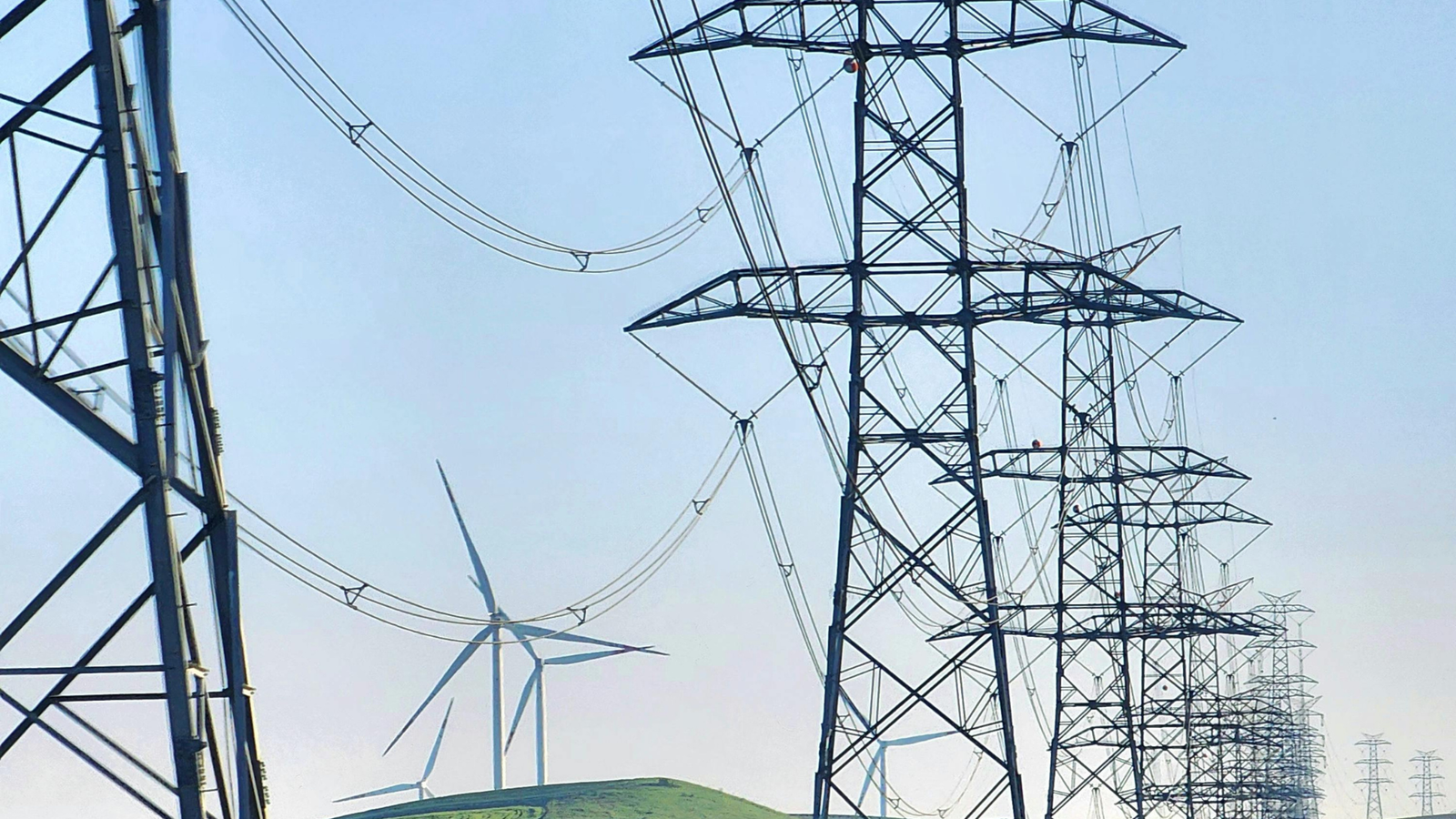
The featured photograph is for representation only.