
Global wind capacity seen crossing 2 TW by 2030: GWEC
Author: PPD Team Date: January 23, 2026
The Global Wind Energy Council (GWEC) announced that worldwide wind power installations are projected to exceed 2 terawatts (TW) by 2030, following a record-breaking year in 2025. The council highlights a direct correlation between wind energy deployment and economic growth, driven by accelerated development across Asia and other emerging markets.
New figures released by GWEC indicate that 2025 was a historic year for the sector, with global new installations forecast revised upward by 8.8% to 150 gigawatts (GW). This growth was largely propelled by activity in Asia. China is on course to install over 100 GW for the year, while India set a new national record with 6.3 GW installed in 2025. Europe also saw significant growth, adding 22.5 GW of new capacity.
GWEC forecasts that by 2030, countries like Vietnam, Australia, and the Philippines will begin to catch up with Europe’s more established markets. The Asia-Pacific region excluding China is expected to contribute 12% of global wind installations by the end of the decade. The council asserts that wind energy has become a foundational technology for countries aiming to decouple economic growth from rising emissions.
The report emphasizes a strong, intrinsic link between GDP growth and wind energy deployment. GWEC CEO Ben Backwell stated that fast-growing economies are driving wind expansion, which in turn powers further economic development. He cited examples including China’s extensive wind fleet, India’s record capacity additions to meet soaring electricity demand, and significant new private investment in the UK.
Girish Tanti, Vice-Chairman of GWEC, noted the world is entering an “energy intensive growth phase,” with wind energy serving as its backbone. He confirmed that global installations are set to cross 150 GW in 2025, a substantial increase from 94 GW in 2021, largely driven by Asia’s economies scaling wind power to meet industrial demand, urbanisation, and electrification goals at competitive costs.
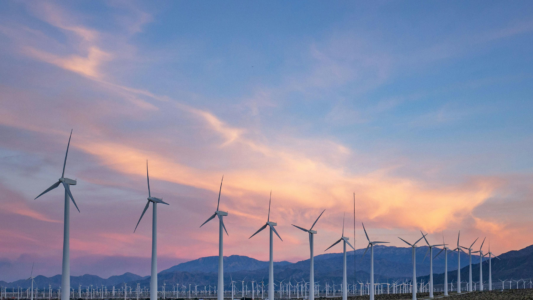
The featured photograph is for representation only.