CSERC publishes draft grid code 2026 with new rules on renewables, storage and cyber security
The Chhattisgarh State Electricity Regulatory Commission (CSERC) has released the draft Chhattisgarh State Electricity Grid Code, 2026, proposing to replace the existing 2011 Grid Code with a framework aligned to the Central Electricity Regulatory Commission’s (CERC) Indian Electricity Grid Code (IEGC) Regulations, 2023. The draft was notified on June 22, 2026, and comments from stakeholders have been invited by July 17, 2026. A public hearing has been scheduled for July 22, 2026, at the Commission’s office in Raipur.
The proposed code is intended to serve as a legally enforceable framework governing all entities connected to the State transmission system and to facilitate efficient planning, operation and development of the grid. Once notified, it will replace the Chhattisgarh State Electricity Grid Code, 2011 and its corrigendum dated July 5, 2013.
Major provisions
The draft code introduces a dedicated Resource Adequacy Code requiring distribution licensees to undertake long-term, medium-term and short-term demand forecasting, including the impact of open access consumers, captive generating plants, energy efficiency measures and demand response. Distribution licensees will be required to demonstrate generation resource adequacy, while the State Transmission Utility (STU) will be responsible for transmission resource adequacy assessments.
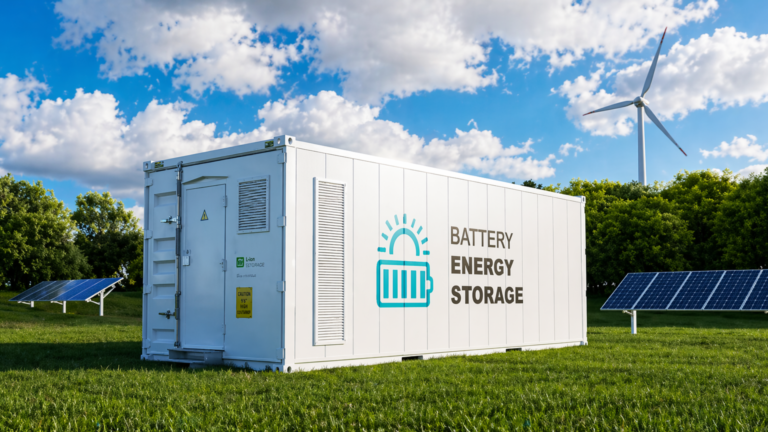
The code also incorporates detailed provisions for renewable energy and energy storage systems (ESS). Renewable energy generating stations, renewable hybrid projects and ESS will be required to have active power control and communication facilities in accordance with Central Electricity Authority (CEA) standards. Wind, solar and hybrid generators will be permitted to appoint a Qualified Coordinating Agency (QCA) for scheduling and commercial settlement.
The draft further adopts the framework under the CERC Ancillary Services Regulations, 2022, covering Primary, Secondary and Tertiary Reserve Ancillary Services. It specifies governor response requirements for generating units above 50 MW, Automatic Generation Control (AGC) for Secondary Reserve Ancillary Service (SRAS), and provisions relating to inertia management.
For thermal generating stations, the code introduces provisions for flexible operation, including compensation for increased Station Heat Rate and Auxiliary Energy Consumption when units operate below normative plant availability but above the technical minimum of 55% of Maximum Continuous Rating (MCR). It also provides for compensation towards start-up fuel costs beyond seven start-stop cycles in a year.
A separate chapter on cyber security requires the State Load Despatch Centre (SLDC), STU, QCAs and grid users to implement cyber security frameworks in accordance with the Information Technology Act, 2000, and the CEA (Cyber Security in Power Sector) Guidelines, 2021. Periodic cyber security audits and reporting of cyber incidents have also been made mandatory.
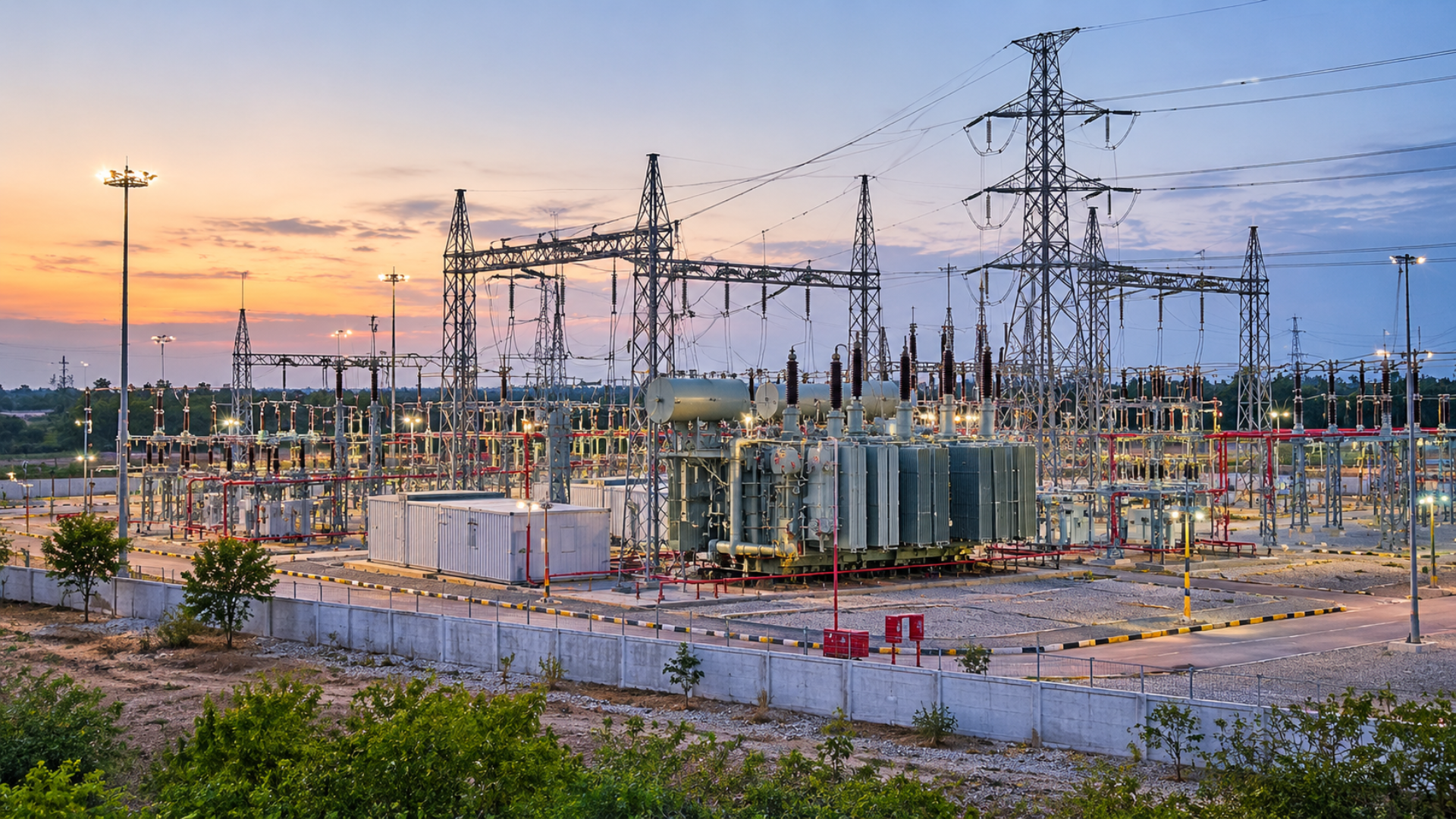
The draft updates protection standards by prescribing fault clearance times, protection schemes and short-circuit requirements for transmission assets. It also mandates third-party protection audits of all 220 kV and above substations once every five years.
Technical standards
The proposed Grid Code specifies an operating frequency band of 49.90 Hz to 50.05 Hz and adopts voltage limits for 400 kV, 220 kV and 132 kV systems. It prescribes ramp rates for coal, gas and hydro generating stations, retains a minimum thermal unit turndown level of 55% of MCR, and requires inverter-based resources to maintain reactive power capability at all times, including during non-operating hours.
The draft also adopts the CEA Transmission Planning Criteria, 2023, including n-1 security standards. It specifies transmission line loading limits, substation transformation capacities, connection voltages for generating stations and connectivity requirements, including restrictions on extra high voltage (EHV) line tapping and mandatory dedicated EHV transmission lines for generators with injection or drawal above 15 MVA.
Consultation process
The draft regulations have been published for stakeholder consultation. Comments and suggestions may be submitted to the Commission by July 17, 2026, while a public hearing on the draft has been scheduled for July 22, 2026, at 3:00 PM at the Commission’s office in Raipur.
If notified, the Chhattisgarh State Electricity Grid Code, 2026 will come into force from the date of its publication in the Chhattisgarh Rajpatra.
The featured photograph is for representation only.