From duck to camel: how India’s power demand curve is changing
India’s power grid met a record peak electricity demand of 270.8 GW at 3:45 PM on May 21, 2026. However, a new analysis by Sanjeev Sanyal and Satvik Dev of the Economic Advisory Council to the Prime Minister (EAC-PM) argues that the day’s significance extends beyond the record demand, highlighting that grid flexibility has become a bigger challenge than generation capacity.
Using 15-minute grid data, the paper shows that demand increased from 224.1 GW at 8:00 AM to 270.8 GW by 3:45 PM, requiring the grid to absorb an additional 46.7 GW within less than eight hours.
Changing load patterns
The analysis shows that rising solar generation is reshaping India’s daily net load curve, defined as total demand minus solar output. During summer, the curve resembles a “duck curve”, with low daytime net demand followed by a steep evening ramp as solar generation declines. In winter, the pattern changes into a double-peaked “Bactrian camel” curve, with morning and evening demand peaks separated by a solar-driven midday trough.
Comparing May 2023, May 2025 and May 2026, the evening ramp required from conventional generators increased from about 36 GW to 74 GW, while the morning ramp-down rose from 18 GW to 53 GW. During January over the same period, the evening ramp increased from 27 GW to 65 GW.
According to the paper, these trends indicate that flexibility, rather than installed generation capacity, has become the primary operational challenge for the grid.
Market signals point to storage need
The report notes that electricity prices on the Indian Energy Exchange (IEX) reflected the growing value of flexibility. On May 21, 2026, electricity scheduled for delivery at 1:00 PM cleared at Rs 1.56 per unit, while power for 6:30 PM reached the market price cap of Rs 10.00 per unit.
The average peak-to-trough price ratio during May increased from 2.9 in 2023 to 8.8 in 2026. The report attributes this widening spread to abundant daytime solar generation and tight supply during evening hours.
The analysis also highlights rising solar curtailment. During May 2026, an average of 24 GWh of solar generation was curtailed each day. Between April and May 2026, the grid experienced demand shortfalls on 36 of 61 days during the evening peak, compared with only six days during solar hours.
Storage gap remains significant
The paper identifies energy storage as the most direct solution to managing the growing daily ramps. It estimates that reducing a typical summer evening ramp by half would require around 130 GWh of storage discharge between 1 PM and 8 PM.
By comparison, India’s combined pumped storage and battery fleet discharged an average of only about 23.8 GWh per day during May 2026.
While pumped storage capacity has nearly reached its target of 7.2 GW, battery deployment remains below planned levels. Against the National Electricity Plan target of 8.68 GW of grid-scale battery storage for 2026-27, operational capacity stood at only 0.27 GW until January 2026, although recent additions have increased it to 2.7 GW.
California example
The paper cites California Independent System Operator (CAISO) as an example of how battery storage can reduce evening ramps. California’s battery fleet can discharge more than 10 GW, allowing excess midday solar generation to be shifted into evening hours and reducing the net-load swing for conventional generators from nearly 28 GW to around 10 GW.
Regulatory changes
The analysis notes that proposed policy reforms are intended to support greater grid flexibility.
The draft Electricity (Amendment) Bill, 2025 introduces a legal definition of an Energy Storage System (ESS) and incorporates it into the definition of the power system. It also proposes measures to strengthen electricity markets, including contracts for difference, and converts the Renewable Purchase Obligation into a nationally floored non-fossil obligation with monetary penalties for non-compliance.
The draft Electricity (Rights of Consumers) Amendment Rules, 2026 introduce demand response measures, set timelines for time-of-day tariffs from April 2027 for commercial and industrial consumers and April 2028 for other consumers, and encourage prosumers to install storage systems. The draft rules also propose mandatory storage for installations above 500 kW.
The paper concludes that continued expansion of solar capacity without corresponding investment in storage and other flexibility measures will increase operational stress on the grid, making large-scale storage deployment increasingly important for maintaining system reliability.
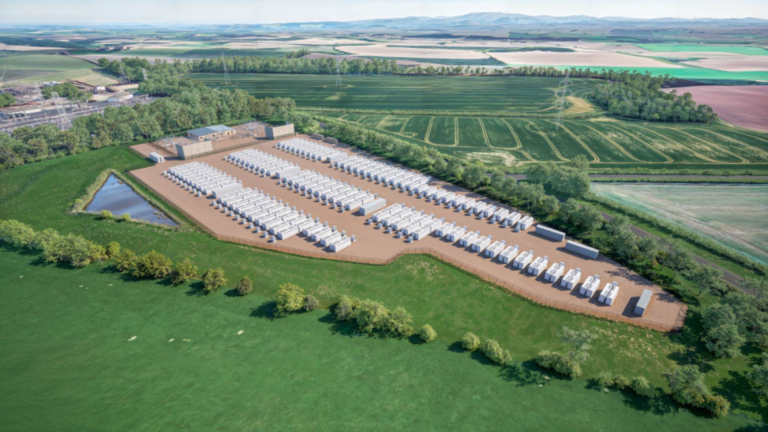
The featured photograph is for representation only.