Global transformer supply constraints show signs of easing: Rystad
Supply chain constraints in the global grid equipment market are beginning to ease as original equipment manufacturers (OEMs) expand production capacity and buyers diversify sourcing through countries with surplus manufacturing capability, including Turkey, China, South Korea, and India, according to a report by Rystad Energy.
The report stated that prices and lead times for key equipment such as power transformers, switchgears, and cables remain elevated compared to pre-2020 levels, although the pace of annual increases has slowed. In some product categories and regions, pricing and lead-time peaks may already have passed.
Transformer lead times
Power transformers and high-voltage circuit breakers continue to face long procurement timelines, particularly in Europe and North America, where lead times have reached 2–3 years, around twice the levels recorded in 2019.
Lead times remain historically high, exceeding 12 months for transformers above 20 MVA and more than 24 months for 100+ MVA units in Europe and North America. In some cases, lead times for large power transformers have reached 3–6 years.
However, Rystad Energy noted that growth in lead times and prices has largely stagnated over the past year. Recent transformer awards in Europe for 50–100 MVA units have remained in the range of $30,000–$35,000 per MVA.
According to the report, increased utilisation of global manufacturing capacity and planned plant expansions between 2026 and 2028 indicate that peak lead times could ease within the next 12 months.
Capacity additions
Global power transformer manufacturing capacity reached 4,700 GVA in 2025, supported by around 400 plants operated by more than 260 OEMs. Global capacity is projected to increase by over 10% by 2028.
Around 90 GVA of new capacity became operational in 2025, while nearly 200 GVA is expected to be added in 2026 as expansion activity accelerates.
Major suppliers including Hitachi Energy, Siemens Energy, HD Hyundai Electric, Eaton, and CG Power have announced expansion plans with combined investments estimated at approximately $4 billion.
The report stated that skilled workforce constraints continue to remain a challenge despite planned capacity additions.
US and Asia expansion
The United States is expected to account for more than 35–40% of global transformer manufacturing capacity additions through 2028.
East Asia, particularly South Korea and China, is expected to record the second-largest expansion in manufacturing capacity. In Western Europe, investments are underway in Germany, Sweden, Austria, and Finland.
Despite planned additions, the US continues to remain the world’s largest importer of transformers. Mexico, China, South Korea, and Europe accounted for 76% of imports for 10–100 MVA transformers and 70% of imports for 100+ MVA transformers into the US in 2025. Brazil has also emerged as a growing supplier.
Europe’s import dependence
According to the report, Europe is shifting from being a net exporter to becoming a net importer of power transformers.
Non-European suppliers now account for around 42% of Europe’s transformer imports. Imports from China have increased sharply, while imports from Turkey have grown nearly eightfold and imports from South Korea have roughly doubled since 2015.
Rystad Energy stated that Europe is likely to remain structurally dependent on imports despite planned capacity additions of more than 50 GVA by 2028.
Non-European sources now account for approximately 41% of Europe’s distribution transformer imports, with India contributing alongside China and Turkey. India has also emerged as a secondary but rapidly growing supplier of distribution transformers to Europe, with imports from India following a similar growth trend since 2020.
In the circuit breaker segment, Indian export volumes to Europe have climbed to 3,000 tonnes, helping lift the non-European share of circuit breaker imports to around 22%. India, together with Bahrain, also contributed more than 100,000 tonnes of aluminum conductors with steel cores used in overhead lines to Europe over the past decade.
India manufacturing expansion
The report noted that India is among the key regions driving global power transformer manufacturing capacity additions. In 2025, capacity expansions in India, alongside the United States and South Korea, contributed to a 1.8% year-on-year increase in global manufacturing capacity.
India is expected to remain a significant hub for transformer production, supported by domestic demand and export opportunities.
Companies such as CG Power have announced new capacity expansion programmes, including an investment of over $84 million in a new facility for medium and extra high-voltage production.
According to the report, buyers are increasingly turning to manufacturing hubs with excess export capacity, including India, Turkey, South Korea, and China, as lead times in Europe and North America remain elevated.
Chinese manufacturer JSHP Transformer has reportedly delivered units to the US with lead times of six months for medium-sized distribution units and one year for large 765 kV transmission units, compared to 3–6 year lead times quoted by some European and American factories.
Demand outlook
Global grid capital expenditure is projected to reach $650 billion in 2026, representing a 5% increase over the previous year. The growth is being driven by rising electricity demand, grid reliability requirements, ageing infrastructure, electrification, and new demand from data centres.
Transmission grid investments are expected to increase at an average annual rate of 6% between 2026 and 2029.
Global electricity demand is projected to grow at a compound annual rate of 3.2% over the next decade, reaching 40,600 TWh by 2035.
Data centre electricity consumption increased from 145 TWh in 2020 to 539 TWh in 2025 and is expected to account for around 4% of global electricity use by 2035, compared to approximately 1.5% currently.
According to Rystad Energy scenarios, data centre electricity consumption could reach between 1,000 TWh and 1,600 TWh by 2030.
Equipment pricing
The report noted that raw material costs continue to support elevated equipment prices.
Analysis of around 30 pricing indices showed average price increases of 1–3% for transformers and switchgears during 2025, below broader consumer price inflation levels. Cable prices recorded higher inflation of around 12% during the year due to copper and aluminium prices.
Switchgear prices have increased by 45–50% since 2020, while procurement lead times for standard medium-voltage systems currently range between 24 and 32 weeks.
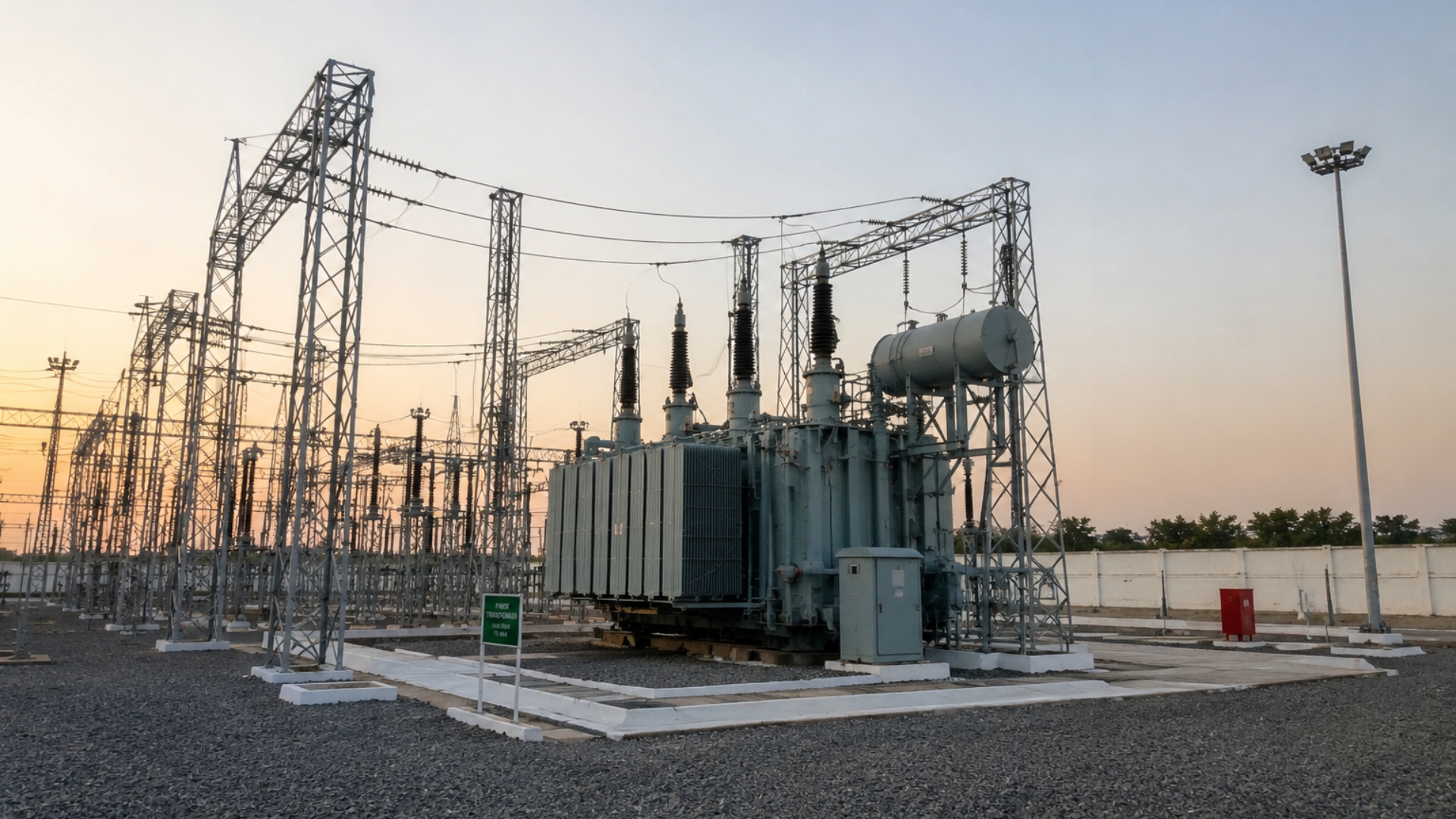
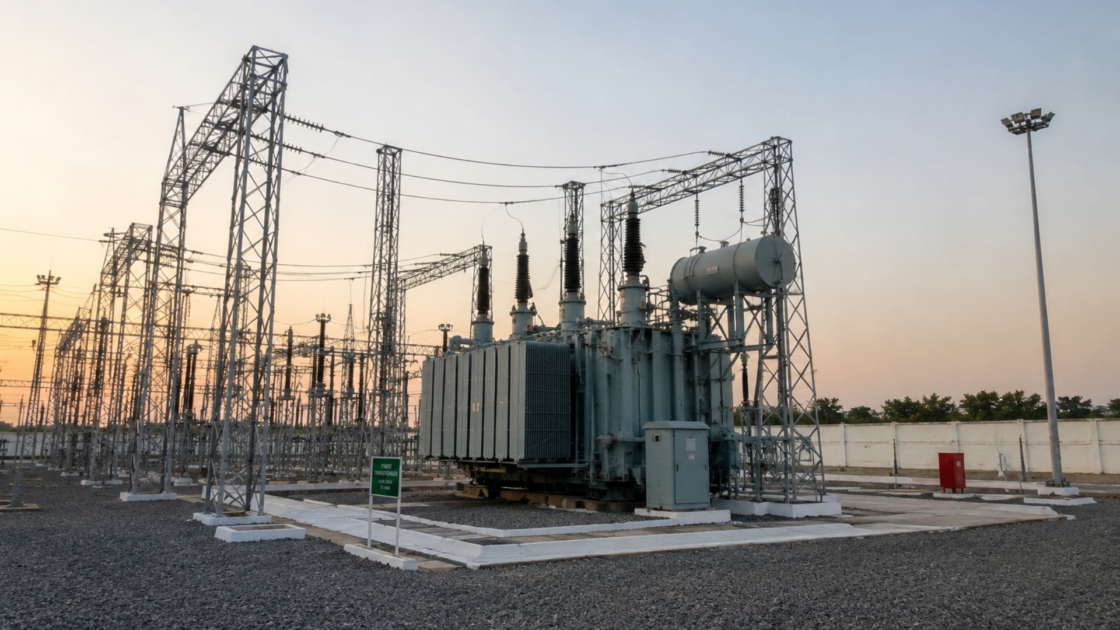
The featured photograph is for representation only.