
IIT Guwahati develops perovskite technology for solar and memory devices
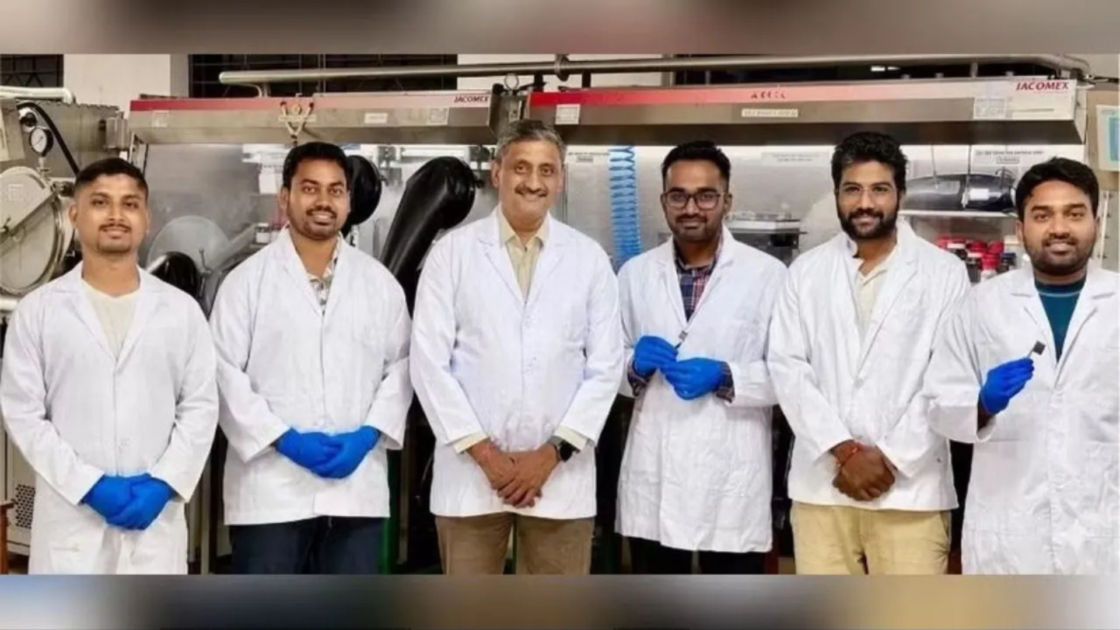
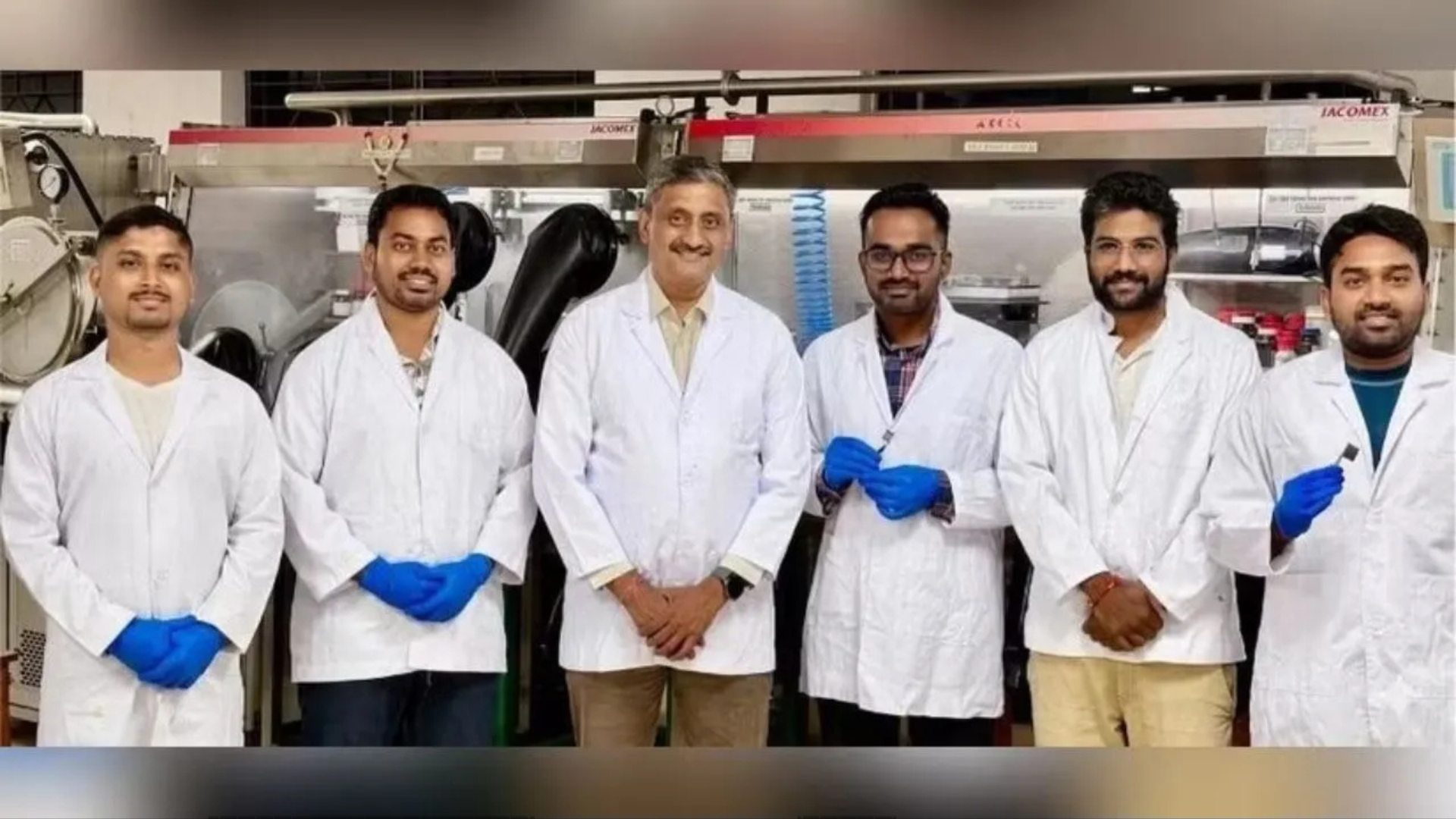
A research team at the Indian Institute of Technology (IIT) Guwahati has developed a hybrid perovskite semiconductor technology for high-efficiency solar cells and resistive-switching memory devices, with potential applications in energy conversion and neuromorphic computing.
The research, led by Prof. Parameswar K. Iyer, focuses on improving the performance and stability of perovskite-based semiconductor materials.
Perovskites are materials with a crystal structure that supports strong light absorption and efficient charge separation, making them suitable for high-performance solar cells. However, their commercial application has been constrained by interfacial energy losses and environmental degradation.
Interface engineering
To address these limitations, the IIT Guwahati team developed a molecular interface engineering technique using specially designed organic molecules deposited as ultrathin layers measuring 10–15 nm.
Using this approach, the researchers achieved a solar cell efficiency of 25.73%, enabling conversion of nearly one-quarter of incident sunlight into electricity.
According to the research team, the engineered interface also improved operational stability. The solar cells retained nearly 90% of their initial performance after prolonged storage under ambient conditions and around 75% under continuous thermal and light stress.
Memory device application
The researchers also demonstrated the use of the same perovskite material in memristor or resistive random-access memory (R-RAM) devices.
The devices incorporated a 220 nm active layer and showed stable low-power switching, multistate memory behaviour, and reliable endurance performance.
According to the team, these characteristics make the technology suitable for next-generation memory systems and crossbar arrays used in neuromorphic computing, which is designed to emulate brain-like information processing.
The researchers added that the stochastic formation of conductive filaments in the devices also enables true random number generation for cryptographic and secure computing applications.
Commercialisation efforts
Prof. Iyer stated that the work demonstrates the potential of perovskite semiconductor technologies for integrated optoelectronic systems combining energy harvesting, information storage, and intelligent computing.
The findings have resulted in multiple patent filings and publications in the journal Advanced Functional Materials published by Wiley.
The research team stated that it has since achieved solar cell efficiency above 26% and is working with an industry partner to scale up fabrication for larger-area and flexible devices. Potential commercial applications include space technologies for powering satellites and other space missions.
Funding support
The research has been funded by the Department of Science and Technology, New Delhi, under the Integrated Clean Energy Material Acceleration Platform on Materials (IC-MAP).