
CEA panel finds 55% MTL flexible operation does not damage thermal units
A committee constituted by the Central Electricity Authority (CEA) has found that operating thermal power plants at 55% minimum technical load (MTL) with conservative ramping rates does not result in significant damage to generating units. The report, based on multiple meetings held between July and October 2025, also recorded NTPC’s reluctance to participate in mandated pilot projects for two-shift operation, which has delayed the development of a compensation framework.
The committee was formed after a meeting chaired by the Secretary (Power) on May 27, 2025, where NTPC raised concerns regarding two-shift operation and 40% load flexing. NTPC reported increased boiler tube leakages, flame failures and turbine failures over the previous three years, attributing these to frequent ramp-ups and ramp-downs. The utility also stated that operation below 55% load was technically difficult due to poor coal quality. Following this, the Secretary (Power) directed CEA and GRID-INDIA (Grid Controller of India Limited) to evaluate potential damage across the thermal fleet before any decision on two-shift implementation.
The committee, chaired by Shri B.C. Mallick, Principal Chief Engineer-II at CEA, included representatives from NTPC, DVC (Damodar Valley Corporation), BHEL (Bharat Heavy Electricals Limited), GRID-INDIA, WBPDCL (West Bengal Power Development Corporation Limited) and Deloitte India, along with special invitees from Intertek and USISPF (U.S.-India Strategic Partnership Forum).
GRID-INDIA informed the committee that most inter-state generating stations and several state stations have technically achieved 55% MTL, though commercial and regulatory barriers remain. Rising renewable energy penetration is creating a pronounced duck-curve pattern, with excess mid-day generation and steep evening ramping needs of around 60 GW. GRID-INDIA highlighted grid security concerns in May 2025, when system frequency stayed above the Indian Electricity Grid Code operating band for nearly 20% of the time. On May 25, 2025, despite backing down the national thermal fleet to about 58% and curtailing nearly 10 GW of solar generation, frequency reached 50.48 Hz. The committee observed that achieving India’s 500 GW renewable capacity target by 2030 will require higher flexibility through 40% MTL operation, two-shift operation, battery storage and pumped storage projects.
The report reviewed international practices on minimum technical load. China operates at a 50–60% baseline, with around 30% achievable after retrofits. Denmark operates near 30% baseline with 20–25% achievable. The United States operates at a 40–50% baseline with 30–40% achievable. Japan operates near 30% baseline with 15–20% achievable. Germany operates around 40% baseline, with some units operating below 20% and specific units reaching 12–15%.
NTPC submitted operational data on October 7, 2025 for Farakka Unit-2 (210 MW, 39 years old) and Jhajjar Unit-3 (210 MW, 13 years old) after repeated reminders, which were jointly evaluated by CEA and Intertek. Analysis of Farakka Unit-2 identified 58 outage events over five years, including 12 boiler tube leakages, 6 human errors, 5 control and instrumentation issues and 5 planned outages. Ramp rates remained conservative at around 0.5% per minute, and the unit did not operate below 55% during routine load reduction. The outage profile comprised 21 cold starts, 14 warm starts and 23 hot starts.
For Jhajjar Unit-3, one year of data showed outages linked to electrical issues (32 hours), boiler tube leakage (52.3 hours), PA duct leakage (50.35 hours) and reserve shutdowns (28.38 hours). The unit also operated above 55% load. The committee found no evidence directly linking significant damage to operation at 55% MTL with conservative ramping rates and estimated that about 70% of issues were associated with ageing, coal quality or operational disturbances rather than flexible operation.
BHEL stated that flexible operation increases life consumption compared to base-load operation, but deterioration reflects both historical operating patterns and incremental effects from current flexible regimes. It noted that several components were already close to failure limits before flexibilisation began and indicated that retrofits and control system modifications can reduce damage. However, existing tenders and technical specifications largely focus on compliance with CEA regulations and do not adequately address flexible operation requirements. BHEL recommended integrating flexible operation provisions into standard technical specifications.
The Central Electricity Regulatory Commission (CERC), through its order dated March 29, 2025 in Petition No. 2/SM/2025, directed pilot projects for two-shift operation. NLDC (National Load Despatch Centre) identified candidate units and informed NTPC on May 22, 2025, requesting readiness confirmation and start-up cost data. NTPC, in a letter dated June 13, 2025, sought exemption citing technical constraints, operational risks, reliability concerns and higher unit efficiency. The committee repeatedly asked NTPC, DVC and Mahagenco (Maharashtra State Power Generation Company Limited) to nominate 210 MW units aged 35 years or more for pilot studies. As of the report’s finalisation on January 14, 2026, no utility had nominated a unit, delaying pilot implementation.
The committee concluded that NTPC’s data covers only two units and cannot represent the wider fleet due to variations in age, operating history and coal characteristics. It found no significant damage attributable to operation at 55% MTL with conservative ramp rates. Key drivers of accelerated wear include improper start-up and shutdown practices, human errors and poor combustion management. The committee stated that potential damage associated with operation below 55% can be mitigated through retrofits and control modifications, and utilities should undertake detailed assessments based on CEA’s 2023 flexibilisation report. It emphasised that pilot studies on smaller and older 210 MW units are required to assess technical constraints, quantify life consumption, identify retrofit needs and develop regulatory compensation frameworks. The absence of pilot units has slowed progress.
The committee recommended that generating utilities pursue measures to achieve 40% MTL in coordination with original equipment manufacturers, strengthen operational practices and improve operator training for cycling operations. It also highlighted the need to incorporate flexible operation requirements into standard technical specifications for new thermal projects.
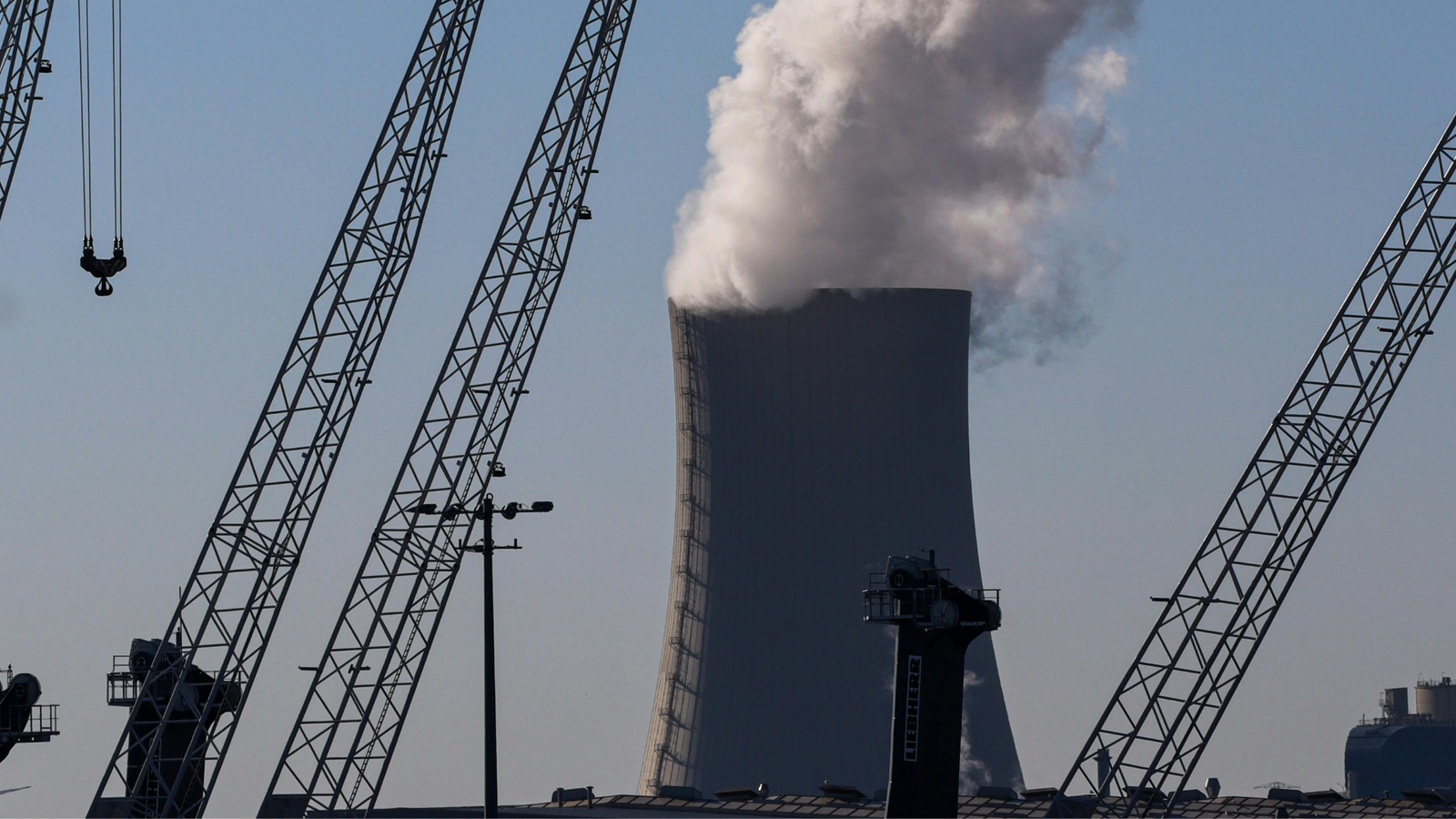
The featured photograph is for representation only.
