India’s electric mobility policy wrap 2025

The year 2025 for India’s electric mobility transition was characterized by a series of targeted policy interventions, manufacturing incentives, infrastructure expansions, and strategic pilot projects. From the launch of new manufacturing schemes and tighter domestic sourcing mandates to the rollout of financial incentives for commercial vehicles and the establishment of a national charging ecosystem, the government’s multi-pronged approach aimed to solidify India’s position as a global hub for electric vehicle production and adoption.
A cornerstone of the year’s policy thrust was strengthening domestic manufacturing capabilities and deepening the local supply chain.The Ministry of Heavy Industries (MHI) mandated a 100% Domestic Content Requirement (DCR) for 18 critical electric vehicle components across two-wheelers, three-wheelers, and electric buses under the PM E-Drive programme. This requirement, essential for availing subsidies, was paired with an updated Phased Manufacturing Programme to ensure original equipment manufacturers progressively localise production of components like traction battery packs, battery management systems, DC-DC converters, vehicle control units, traction motors, and instrument clusters. The Ministry also extended the DCR compliance deadlines for several two-wheeler and three-wheeler components until May 2025, while revising deadlines for e-bus components to six months from the amendment issue date. This push for indigenisation was further reinforced by a prohibition on the import of battery modules and other components in Complete Knocked Down form from a single supplier, mandating integrated unit-level verification.
To attract global investments in passenger car manufacturing, the MHI operationalised the Scheme to Promote Manufacturing of Electric Passenger Cars in India. The final guidelines, issued in June, offered approved applicants a reduced customs duty of 15% on the import of Completely Built-Up electric four-wheelers valued at a minimum of $35,000 for a period of five years, subject to an annual cap of 8,000 units. In return, companies are required to invest a minimum of Rs 4,150 crore within three years and achieve a minimum Domestic Value Addition of 25% within three years, scaling up to 50% within five years. The scheme, which opened its application portal from June to October 2025, also required applicants to submit a substantial bank guarantee and demonstrated global automotive manufacturing revenue. The policy framework explicitly permitted brownfield investments but required a physically demarcated new manufacturing unit. This initiative dovetailed with the broader Production Linked Incentive scheme for the automobile and auto component sector, which by February 2025 had attracted Rs 29,576 crore in investment.
The push for domestic manufacturing culminated in a landmark event in September, when Prime Minister Narendra Modi inaugurated Maruti Suzuki’s first made-in-India battery electric vehicle, the e-Vitara, in Gujarat. The model is slated for export to 100 countries, positioning the facility as Suzuki’s global EV export hub. Concurrently, the launch of hybrid battery electrode manufacturing under the Toshiba-Denso-Suzuki joint venture signalled a move towards localising the most critical part of the EV value chain, the battery cell.
Recognising the disproportionate emissions from the freight sector, the government unveiled its first dedicated policy for electric trucks. In July, the MHI notified detailed guidelines for the “Scheme to Promote Deployment of Electric Trucks in India” under the PM E-Drive initiative. The scheme offers an upfront financial incentive of up to Rs 960,000 per vehicle for electric trucks in the N2 and N3 categories, with a specific allocation of 1,100 e-trucks for Delhi to address urban air quality. Eligibility is contingent on the scrapping of old diesel trucks, and vehicles must be backed by a five-year or 500,000-kilometre battery warranty. With an estimated outlay of Rs 1,000 crore for the Delhi cluster alone, the scheme targets the deployment of approximately 5,600 e-trucks nationwide, benefiting sectors like cement, steel, ports, and logistics. Major public sector undertakings like SAIL committed to procuring 150 e-trucks, aiming for 15% electrification of hired vehicles.
For public transport, the PM e-Bus Sewa scheme, launched in August 2023 with a Rs 20,000 crore outlay, continued its rollout, approving 7,293 buses across 14 states and 4 union territories by August 2025. A payment security mechanism worth Rs 3,435.33 crore was approved in October 2024 to mitigate operational risks for bus operators. The broader PM E-Drive scheme, with an allocation of Rs 10,900 crore, supported over 28 lakh vehicles by July 2025, including more than 14,000 electric buses. The Faster Adoption and Manufacturing of Hybrid and Electric Vehicles (FAME) programme continued its support through Phase II, backing over 16 lakh vehicles including two-wheelers, three-wheelers, cars, and buses since 2019, with Rs 912.50 crore sanctioned for 9,332 public charging stations.
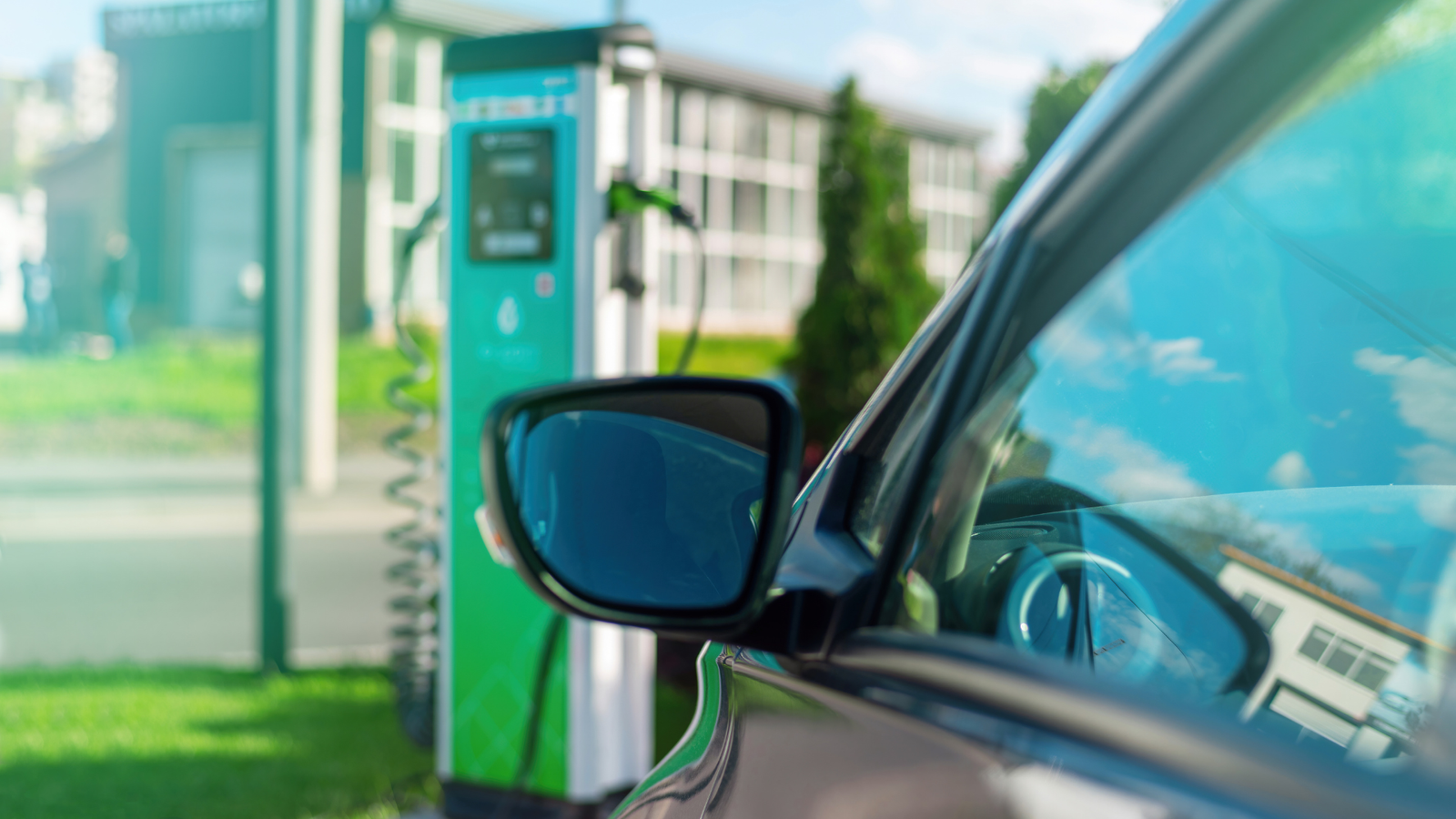
A robust and interoperable charging network remained a central focus. The Ministry of Power, in January, released the ‘Guidelines for Installation and Operation of Battery Swapping and Battery Charging Stations’, promoting the Battery-as-a-Service model to reduce downtime and improve convenience. The guidelines applied to all entities involved in swapping services and supported Battery-to-Grid applications to aid grid stability. Safety regulations were extended to cover these stations, and operators were permitted to use existing electricity connections. The guidelines also encouraged the development of liquid-cooled swappable batteries to support larger EVs like buses and trucks.
The MHI followed with operational guidelines for the deployment of public charging stations under the PM E-Drive Scheme, providing Rs 2,000 crore in financial support. The policy offered a 100% subsidy on upstream infrastructure and equipment for government premises offering free public access, and up to 80% support on infrastructure and 70% on equipment for other public locations like metro stations and bus depots. Battery swapping stations were also made eligible for 80% support. Furthermore, the Ministry revised the Phased Manufacturing Programme for public EV charging stations, mandating the domestic production of components like enclosures, wiring harnesses, software, auxiliary power supplies, DC meters, switchgear, charging guns, and controllers according to a staged timeline from December 2021 through December 2025. Compliance with IS:17017 standards was made mandatory, and imports in CKD form from a single supplier were prohibited.
The government launched ambitious pilot projects to explore frontier technologies. As part of the National Green Hydrogen Mission, five pilot projects were launched to deploy 37 hydrogen-fuelled buses and trucks on 10 routes across the country, supported by an allocation of Rs 208 crore and nine hydrogen refuelling stations. The pilots, awarded to automotive and energy majors including Tata Motors, Reliance, NTPC, and Ashok Leyland, aim to validate the technical feasibility, safety, and economic viability of hydrogen-powered transport under real-world conditions over 18 to 24 months. In a parallel initiative, the Ministry of New and Renewable Energy launched a dedicated pilot in December, handing over a Toyota Mirai hydrogen fuel cell vehicle to the National Institute of Solar Energy for a two-year, pan-India real-world trial to generate data for scaling hydrogen mobility.
To systematically track progress, NITI Aayog launched the India Electric Mobility Index in August 2025, measuring state-level performance across vehicle electrification, charging readiness, and research. Delhi, Maharashtra, and Chandigarh emerged as early leaders. The government’s import monitoring framework was also extended to the EV sector through the Renewable Energy Equipment Import Monitoring System, requiring registration for specific components to ensure quality and traceability.
India’s 2030 target of 30% EV penetration aligns with the global EV30@30 initiative and supports broader climate goals of reducing carbon emissions by one billion tonnes and carbon intensity by 45% by 2030, en route to net-zero by 2070. The year 2025 thus solidified the policy architecture for electric mobility, transitioning from broad ambition to targeted, sector-specific interventions designed to build a self-reliant, safe, and scalable zero-emission transport ecosystem.
The featured photograph is for representation only.