
Seven Rajasthan cities set to get new EV charging hubs
Rajasthan Renewable Energy Corporation Limited (RRECL) has issued a Request for Proposal (RFP) for the deployment of public electric vehicle (EV) charging infrastructure across Jaipur, Udaipur, Kota, Ajmer, Alwar and Jodhpur under the PM E-DRIVE Scheme.
The tender is divided into seven packages, including two for Jaipur, with a combined estimated project value of more than Rs 100 crore. The scope covers the design, installation, commissioning, and operation & maintenance of charging infrastructure at government and public sector locations.
The charging network will include Light EV DC chargers of up to 12 kW for two- and three-wheelers and Combined Charging System-II (CCS-II) DC chargers ranging from 50 kW to 250 kW for four-wheelers, buses and trucks, in line with Ministry of Power guidelines.
City packages
Jaipur I has an estimated project value of Rs 16.20 crore and requires a minimum installed charging capacity of 2,400 kW. Jaipur II is valued at Rs 14.67 crore with a minimum capacity requirement of 2,000 kW.
The Udaipur package, estimated at Rs 14.66 crore, requires at least 2,300 kW, while the Kota package is valued at Rs 9.48 crore with a minimum requirement of 1,400 kW.
Ajmer and Alwar each have an estimated package value of Rs 16.07 crore and require minimum installed capacity of 2,300 kW each. The Jodhpur package is estimated at Rs 12.62 crore and requires at least 2,000 kW.
The charging stations will be developed at locations owned or managed by government entities. Sites are divided into Category A, covering Central and State Government premises, and Category B, which includes public sector locations such as bus stations, railway stations, municipal parking lots and highway amenities.
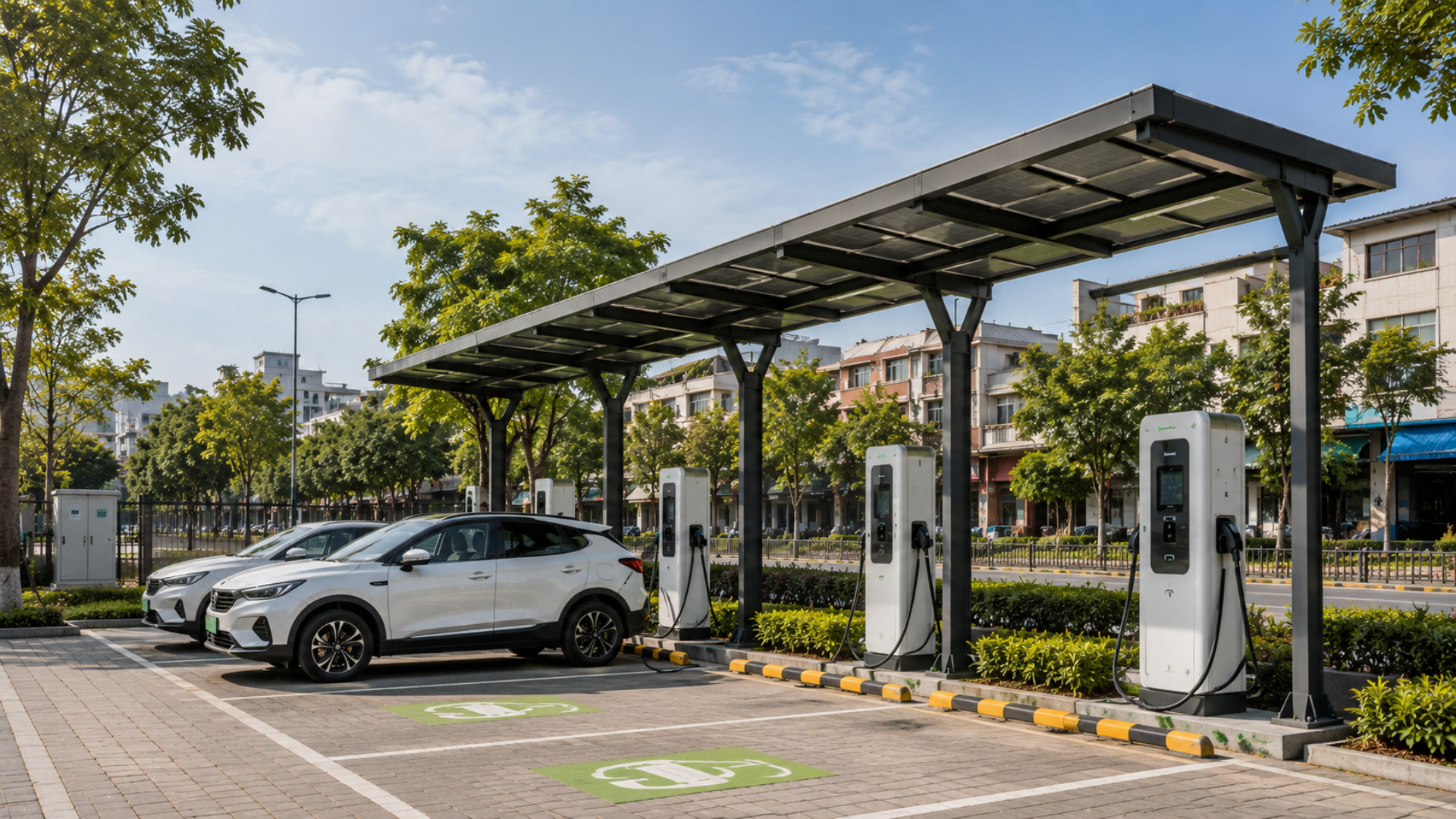
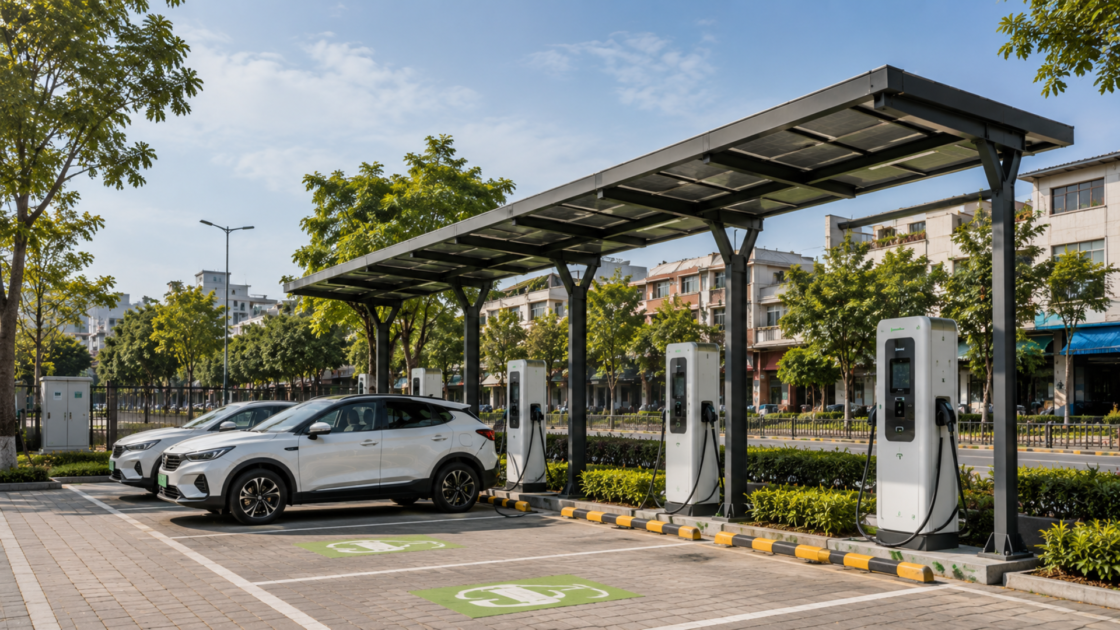
Each package also includes development of carports under the flagship program, with solar panels to be integrated on available rooftop areas. The carports are required to use pre-engineered steel construction and comply with prescribed design standards, including a minimum clear height of 4.5m for four-wheeler bays.
Subsidy
Charging stations established at Central or State Government premises under Category A are eligible for subsidy of up to 100% of upstream infrastructure and Electric Vehicle Supply Equipment (EVSE) costs, subject to benchmark costs prescribed by the Bureau of Energy Efficiency (BEE).
For Category B public sector premises, the scheme provides subsidy of up to 80% of upstream infrastructure costs and 70% of EVSE costs.
Benchmark costs for upstream infrastructure range from Rs 4.62 lakh for installations of up to 12 kW to Rs 45.32 lakh for capacity above 360 kW.
Revenue model
The project will operate under a revenue-sharing model with an agreement period of 10 years, which can be extended by up to five years.
Selected bidders will pay a fixed land usage charge of Rs 1 per kWh of electricity sold to EV users, along with a revenue share from the service charge component, quoted in Rs per kWh.
The highest revenue share bidder (H1) for each package will be selected. Service charges for end consumers are capped at Rs 11 per unit during solar hours and Rs 13 per unit during non-solar hours, in accordance with Ministry of Power guidelines.
Eligibility
Bidders must have a positive net worth as of March 31, 2026, along with a minimum average annual turnover of Rs 10 crore per package. For bidders participating in multiple packages, the turnover requirement will apply on an aggregate basis.
Technical eligibility requires previous experience in installing and operating EV charging stations. Package-specific minimum installed capacity requirements range from 1,400 kW to 2,400 kW.
Bidders must also have implemented a Charging Management System and an app-based charging platform. Joint ventures or consortia of up to two parties are permitted, with the lead member required to be a Charge Point Operator.
Implementation
Selected bidders must complete energization and onboard all EV chargers on the Ministry of Heavy Industries (MHI) portal within six months of issuance of the Letter of Award.
The charging infrastructure must maintain minimum monthly uptime of 90%. A penalty of Rs 2,000 will apply for every 1% shortfall. Uptime below 85% for three consecutive months may lead to forfeiture of the performance security.
Project sites will be handed over on an “as-is where-is” basis. Bidders will be responsible for obtaining the required electricity connections from Distribution Companies (DISCOMs) at their own cost.
The bid security varies by package from Rs 18.96 lakh to Rs 32.39 lakh and must remain valid for 180 days. Selected bidders will also have to provide performance security equivalent to 10% of the estimated package value.
The featured photograph is for representation only.