First in India: Rajasthan partners with ISA for energy transition
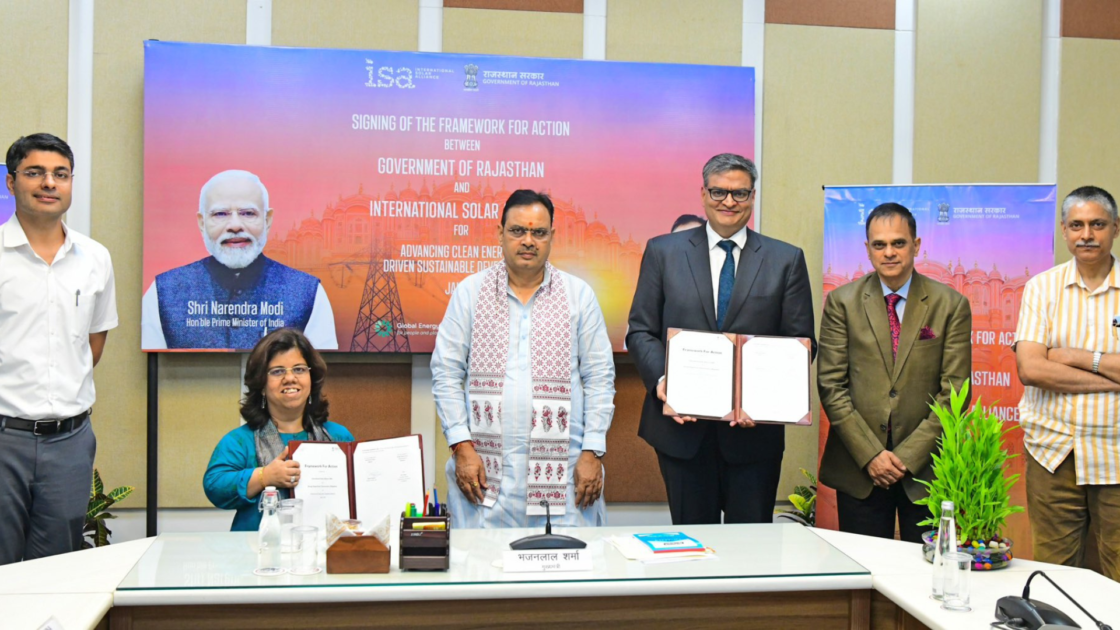
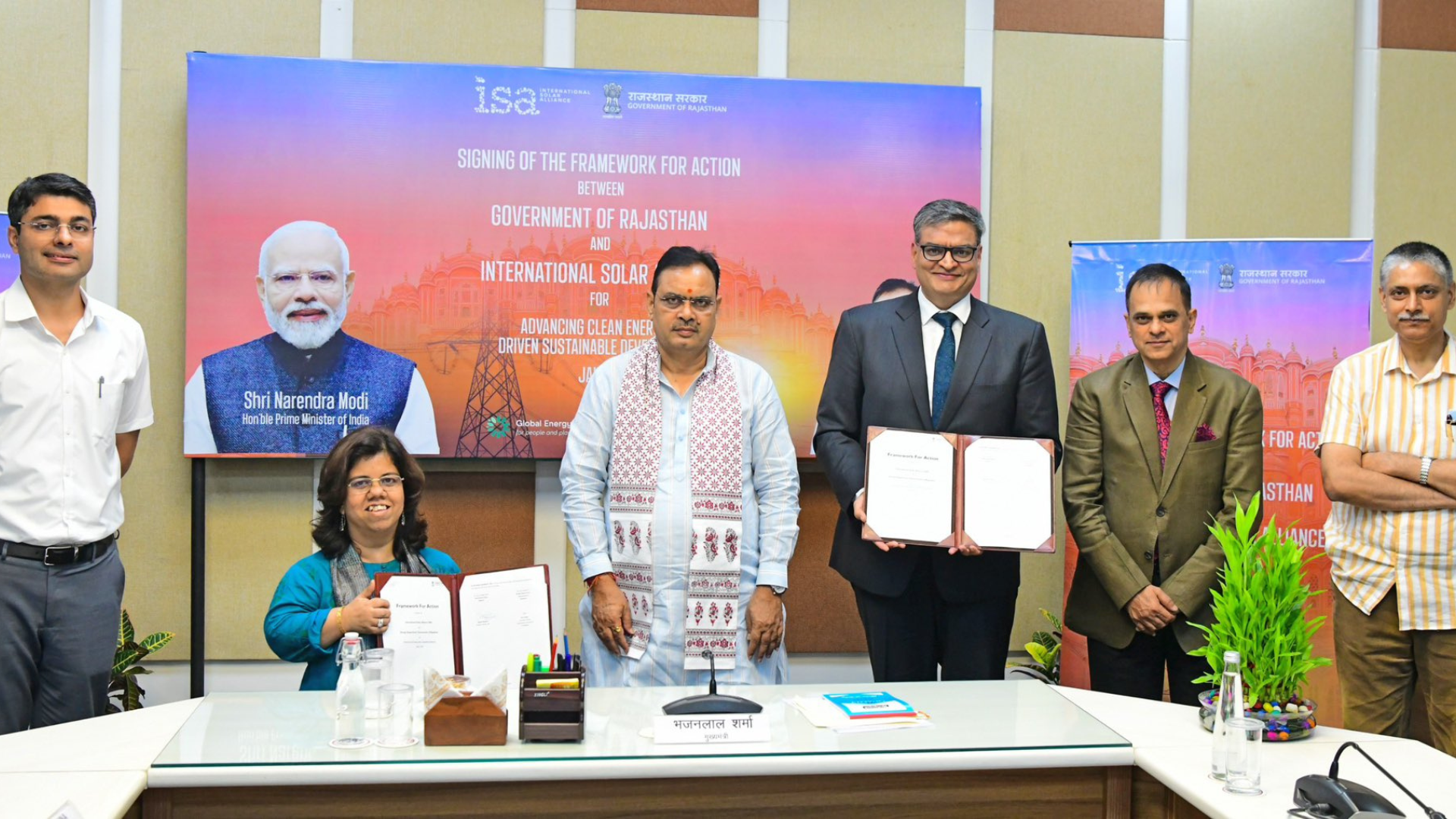
Rajasthan has become the first Indian state to sign a Framework for Action with the International Solar Alliance (ISA) to support the expansion of solar energy, strengthen grid infrastructure and accelerate the state’s clean energy transition.
The agreement was signed by Rajasthan Energy Secretary Aarti Dogra and ISA Director General Ashish Khanna in the presence of Chief Minister Bhajan Lal Sharma at the Chief Minister’s residence in Jaipur.
Focus areas
The partnership will support Rajasthan’s clean energy roadmap for the 2030-35 period. Key areas of cooperation include renewable energy capacity expansion, grid modernisation, transmission upgrades, energy storage deployment, energy efficiency, demand-side management, policy reforms and institutional capacity building.
The collaboration will also provide state engineers and government officials with access to international training programmes, technical expertise and knowledge-sharing initiatives through the ISA.
Clean energy targets
Rajasthan currently has more than 42 GW of installed solar capacity and nearly 48 GW of total clean energy capacity. Under the Rajasthan Integrated Clean Energy Policy, the state aims to increase its clean energy capacity to 125 GW.
According to the state government, achieving this target will require investments in battery energy storage, smart grids, digitalisation, demand-side management, and upgrades to transmission and distribution infrastructure to improve renewable energy integration.
Digital twin pilot
As part of the partnership, an artificial intelligence-enabled digital twin pilot will be implemented at Ajmer Vidyut Vitran Nigam. The system is expected to improve electricity demand forecasting, network planning, renewable energy integration and power supply reliability.
The state government said AI-based tools will also be used to strengthen electricity distribution planning, infrastructure management and consumer services.
PM-KUSUM and rooftop solar
The government highlighted the progress of decentralised solar deployment under the PM-KUSUM Scheme, under which more than 4 GW of solar capacity is supplying daytime electricity to farmers across 26 districts.
Separately, during a review meeting of the Energy Department, Chief Minister Sharma directed officials to accelerate implementation of the PM Surya Ghar-Muft Bijli Yojana and asked the Chief Secretary to regularly monitor progress to ensure timely achievement of rooftop solar deployment targets.
ISA Director General Ashish Khanna said Rajasthan is the first Indian state to sign such a framework with the alliance and noted that the initiative could serve as a model for other states pursuing large-scale clean energy transitions.