
Radio telescope forces re-route, cost jump for Gujarat transmission line
The National Committee on Transmission (NCT) has approved a revised estimated cost of Rs 3,418 crore for Part-C of a transmission scheme designed to evacuate power from 14 GW of renewable energy capacity in Gujarat. The cost has increased by approximately Rs 655 crore, or 23.7%, from the earlier estimate of Rs 2,763 crore following changes to transmission line routes and the addition of reactive power compensation equipment.
A major change involves re-routing the proposed Nasik-Alephata 765 kV double-circuit (D/c) transmission line to maintain sufficient distance from the Giant Metrewave Radio Telescope (GMRT) facility near Pune.
Scheme scope
The project, titled “Common Transmission System for evacuation of power from Lakadia (Phase-II: 7.5 GW), Jam Khambhaliya (Phase-II: 5.5 GW) and Jamnagar (Phase-I: 1 GW) Part-C,” forms part of the transmission infrastructure planned to evacuate renewable energy from the Dwarka/Jamnagar and Lakadia areas of Gujarat.
Together, the three renewable energy zones covered by the scheme represent 14 GW of capacity. The project will continue to be implemented through the Tariff-Based Competitive Bidding (TBCB) route.
GMRT constraint
The need to revise the transmission alignment emerged because the originally planned route of the Nasik-Alephata 765 kV D/c line passed within the vicinity of GMRT.
GMRT is operated by the National Centre for Radio Astrophysics (NCRA), an autonomous centre of the Tata Institute of Fundamental Research (TIFR). Given the sensitivity of radio telescope observations to electromagnetic interference, NCRA informed transmission planners that Extra High Voltage (EHV) lines need to maintain a minimum separation of 15 km from GMRT antennas.
This requirement resulted in a substantial re-routing of the Nasik-Alephata line and corresponding changes to other elements of the transmission scheme.
Route changes
Under the revised configuration, the surveyed length of the Alephata-Lonikand-I 400 kV D/c line has been reduced from the originally envisaged 70 km to 22 km.
At the same time, the Nasik-Alephata 765 kV D/c line has increased considerably in length. Against the earlier estimate of 100 km, the revised route extends for 145 km.
The longer 765 kV transmission line also created additional reactive power compensation requirements. The revised scope therefore includes a 240 MVAr switchable line reactor on each circuit at the Nasik end.
Associated bays and Neutral Grounding Reactor (NGR) bypass arrangements will also be added to provide the required voltage control and system stability.
Lonikand constraints
The scheme also encountered infrastructure constraints at Maharashtra State Electricity Transmission Company Limited’s (MSETCL) Lonikand-I substation.
The original configuration required two 400 kV line bays for termination of the Alephata-Lonikand-I 400 kV D/c line. However, sufficient space for the two bays was not available at the substation, requiring changes to the proposed arrangement.
A joint site visit was undertaken on June 10, 2026, to examine the available options. This was followed by a meeting convened by the Central Electricity Authority (CEA) on July 2, 2026.
Following these discussions, the Central Transmission Utility of India Limited (CTUIL) and MSETCL finalised the bay configuration and routing of the transmission line within the Lonikand-I substation boundary.
Revised cost
After considering the route modifications, additional compensation equipment and changes required at Lonikand-I, the NCT approved the revised technical scope of the project.
The estimated project cost has consequently increased from Rs 2,763 crore to Rs 3,418 crore, an escalation of approximately Rs 655 crore or 23.7%.
The revised transmission infrastructure remains critical to evacuation of power from the 7.5 GW Lakadia Phase-II, 5.5 GW Jam Khambhaliya Phase-II and 1 GW Jamnagar Phase-I renewable energy developments in Gujarat.
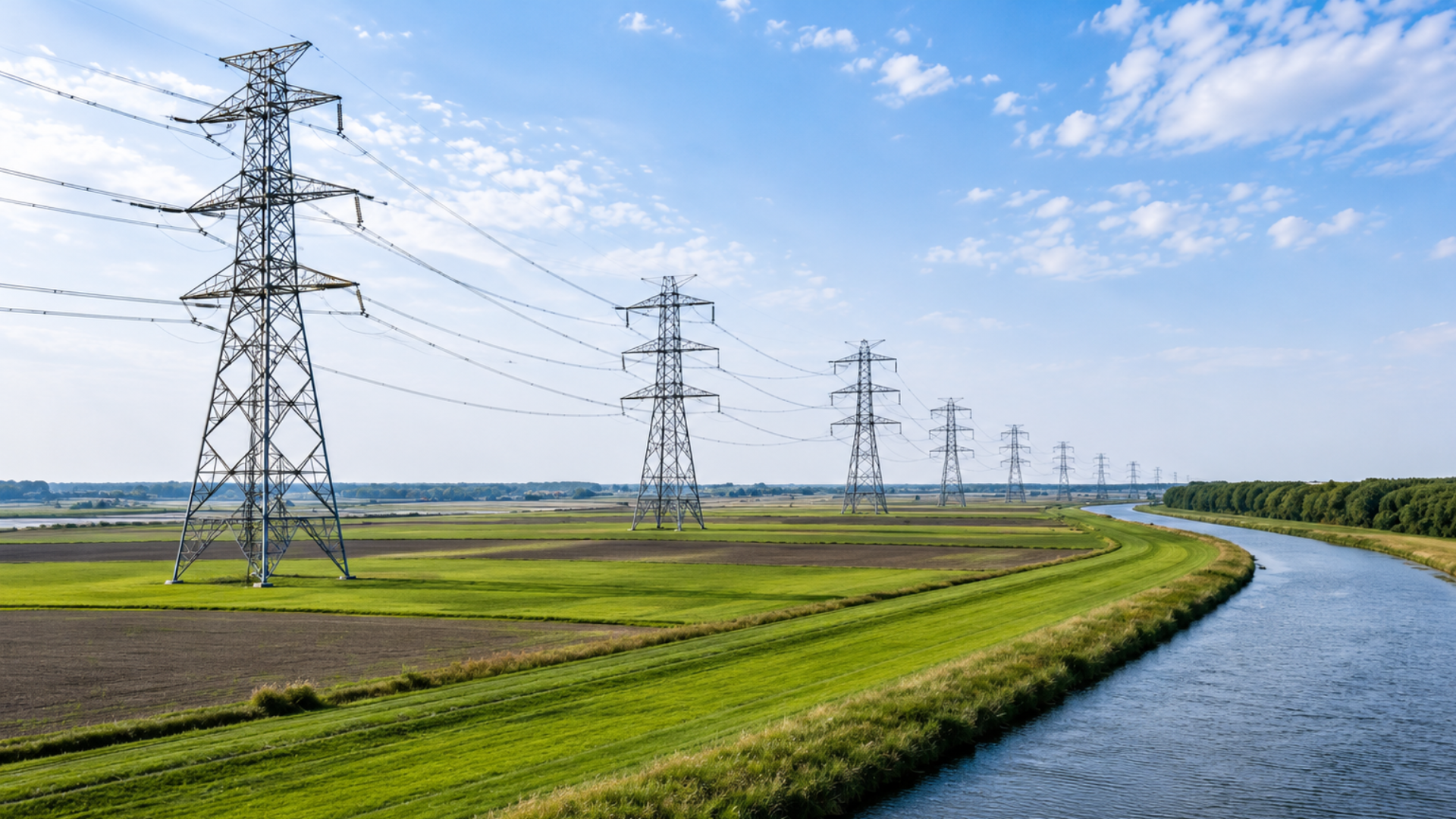
The featured photograph is for representation only.
