India’s conventional generation policy wrap 2025
Author: PPD Team Date: January 2, 2026

While the national gaze remained firmly fixed on the rapid expansion of renewable capacity, the bedrock of coal-based thermal power underwent substantive regulatory and operational shifts in 2025 to ensure grid reliability, address financial sustainability, and navigate an increasingly complex compliance landscape.
A cornerstone development was the Cabinet Committee on Economic Affairs’ approval of the revised SHAKTI (Scheme for Harnessing and Allocating Koyala Transparently in India) policy in May. This reform introduced a streamlined, dual-window framework for coal allocation aimed at ensuring fuel security across all generating sectors. Window-I continued the provision of coal at notified prices for central and state government-owned generators. The more transformative Window-II opened auction-based linkages at a premium to all domestic and imported coal-based power producers, with contracts lasting up to 25 years. This market-linked mechanism granted generators enhanced flexibility to sell power according to commercial strategy, including in power exchanges. Further operationalizing this, Coal India Limited (CIL) permitted the sale of Un-requisitioned Surplus (URS) electricity from plants using its linkage coal in power markets, a move expected to improve station load factors and provide a stabilizing effect on spot prices during peak demand.
Simultaneously, the Ministry of Power issued detailed procedures for coal linkage allocation under the revised SHAKTI Policy 2025, establishing clear timelines for commitment guarantees, Letters of Assurance, boiler-turbine-generator orders, and Fuel Supply Agreement execution. For greenfield plants, a strict proximity-to-mine rule was reinforced, typically within 300 kilometres, to optimize logistics. The policy also actively encouraged the substitution of imported coal in existing imported coal-based plants, aiming to reduce reliance on volatile international markets. In a related push for domestic production, the Ministry of Coal introduced targeted incentives to boost underground mining, including a reduction in the floor revenue share from 4% to 2% and a waiver of mandatory upfront payments, addressing the sector’s high capital intensity and longer gestation periods.
The Ministry of Environment, Forest and Climate Change (MoEFCC), in July 2025, set out a new policy limiting flue gas desulphurisation (FGD) installation to a small set of coal plants instead of all units. Only plants within 10 kilometres of the National Capital Region or cities with populations of at least one million must now install FGDs, with a compliance deadline of 30 December 2027. Plants within 10 kilometres of critically polluted areas or non attainment cities may be asked to install FGDs based on the Expert Appraisal Committee decision, with a deadline of 30 December 2028 if required. All remaining coal based thermal power units are exempt from installing FGDs. This decision, following a committee led by the Principal Scientific Adviser, significantly narrowed the nationwide mandate, exempting 462 of India’s 600 operational units. The policy shift, reported to be based on selective interpretation of studies from institutions like NEERI and IIT Delhi, drew criticism from health researchers. Organizations like the Centre for Research on Energy and Clean Air (CREA) highlighted associated public health risks and contested arguments linking FGDs to substantial increases in national carbon emissions, noting that full deployment would add less than one %. The revision created uncertainty for capital goods companies with sizable FGD order books, such as Thermax and Techno Electric, even as major generators like NTPC continued with deployment plans for a significant portion of their fleet.
In a parallel regulatory space, the Ministry of Power issued a clarification on the Renewable Generation Obligation (RGO) for new thermal projects. The directive stipulated that coal and lignite-based plants commissioned after April 1, 2023, must integrate or procure renewable energy equivalent to 40% of their capacity. For projects with Commercial Operation Dates between April 2023 and March 2025, the compliance deadline was set for April 2025, while plants commissioned thereafter must meet the target at COD. The ministry also clarified that RE capacity developed by wholly-owned subsidiaries or subsidiaries of joint venture partners would be eligible for compliance, offering generators some operational flexibility.
The financial and operational mechanics of the conventional sector saw critical interventions. The Central Electricity Regulatory Commission (CERC) proposed, via draft regulations, limited payments for “infirm power” injected by thermal generators between first synchronization and the successful trial run. This addressed long-standing industry concerns about unrecovering fuel costs during mandatory testing, proposing payment at the Normal Rate of Charges for Deviation, capped at Rs 2.86/kWh, albeit not when grid frequency exceeds 50.05 Hz. On the market side, CERC changed power trading rules to enhance transparency and participation in short-term contracts like the Term Ahead Market (TAM) and Day-Ahead Contingency (DAC) segments. It discontinued custom time slots in TAM, moving to fixed blocks, and introduced a single-price auction for DAC to reduce price manipulation.
A major operational shift was mandated through the new biomass co-firing policy, rolled out in November 2025, requiring all coal-based thermal power plants to use biomass pellets from the 2025-26 financial year. The mandate varied by region, with plants in the National Capital Region required to start with a 5% blend and increase it annually, while others outside the NCR had a 5% mandate. The policy notably included torrefied charcoal from municipal solid waste as an eligible fuel, aligning waste management with energy generation. A clear cost recovery pathway was established: for Section 62 projects, costs would flow through the Energy Charge Rate; for Section 63 projects, generators could claim costs under Change in Law or fuel cost pass-through clauses. A committee chaired by the Central Electricity Authority (CEA) was empowered to assess exemption requests.
Beyond coal, the hydropower segment witnessed procedural streamlining. The Ministry of Power revised the capital expenditure threshold requiring CEA concurrence for hydro projects upwards to Rs 3,000 crore and explicitly exempted off-stream closed-loop pumped storage projects from this requirement irrespective of cost. To address chronic delays and cost overruns, the Ministry also amended guidelines for a “Dispute Avoidance Mechanism” in hydro contracts, involving Independent Engineers, and issued an Expression of Interest to empanel experts. This mechanism, featuring fixed retainer and site visit fees, aims to resolve disagreements between Central Public Sector Enterprises and contractors at an early stage, replacing dispute boards in new contracts.
The government’s capital expenditure for the conventional sector and its enabling infrastructure was reflected in the Union Budget 2025–26, which allocated Rs 218.47 billion to the Ministry of Power. The Budget reiterated support for the long-term nuclear expansion plan, targeting 100,000 MW by 2047. Furthermore, in a landmark reform poised to reshape the nuclear landscape, the Union Cabinet approved the Atomic Energy Bill, 2025, or the SHANTI Act. This legislation, aimed at ending the Department of Atomic Energy’s monopoly, seeks to open atomic mineral exploration, fuel fabrication, and equipment manufacturing to private sector participation, establish an independent safety authority, and clarify liability provisions to accelerate progress towards the national target of 22,000 MW by 2032.
Finally, in a move to improve the efficiency and dispute resolution framework for large public sector projects, the Ministry of Power set up Conciliation Committees of Independent Experts. These committees, comprising former senior government officials, domain experts, and finance professionals, offer an alternative to protracted arbitration for disputes involving Central Public Sector Undertakings, with proceedings mandated to conclude within three months. This initiative aims to reduce the time and cost overruns that have historically plagued major power and mining projects.
In summary, 2025 was a year where India’s conventional power sector focused on refining the mechanics of fuel supply, introducing nuanced and often contentious environmental compliances, embedding renewable integration obligations, and streamlining project execution and dispute resolution. These developments collectively framed the sector’s ongoing transition, ensuring its role as a critical provider of baseload and flexible power, even as the country marches decisively towards its ambitious non-fossil fuel targets.
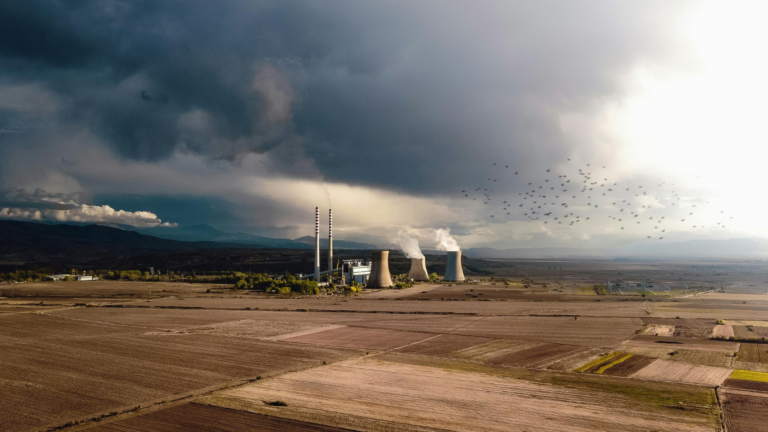
The featured photograph is for representation only.