India’s green hydrogen policy wrap 2025
Author: PPD Team Date: January 2, 2026

India’s green hydrogen sector has transitioned from a nascent vision to a landscape dotted with concrete policy frameworks, ambitious pilot projects, and strategic international positioning. The year 2025 has been pivotal in establishing the operational, financial, and regulatory architecture necessary to transform the National Green Hydrogen Mission (NGHM) from a statement of intent into a tangible industrial reality. From the launch of a rigorous certification scheme to the activation of pilot mobility projects and the designation of strategic hubs, the government’s methodical, multi-pronged approach has sought to de-risk investment, stimulate domestic demand, and position India as a future leader in the global hydrogen economy.
In a move to bring clarity and credibility to the market, the Ministry of New and Renewable Energy (MNRE), in April 2025, launched the Green Hydrogen Certification Scheme (GHCI). This framework established a critical greenhouse gas emissions threshold of 2 kg of CO₂ equivalent per kg of hydrogen produced via electrolysis or biomass pathways. The certification, mandatory for producers availing government incentives or selling hydrogen domestically, introduced a rigorous, facility and production-level, four-stage process. It incorporated a robust Monitoring, Reporting, and Verification (MRV) system, excluding emissions from capital goods and travel to focus purely on process efficiency. This scheme, aligned with ISO 19870:2023 for lifecycle assessment, provided the much-needed benchmark for what constitutes ‘green’ hydrogen in India, a foundational step for market development and future carbon credit linkages under the Indian Carbon Market.
Parallel to defining the product, the government moved to stimulate demand and demonstrate feasibility in the transport sector, a key end-use segment. Under the NGHM, five pilot projects for hydrogen-fuelled vehicles were launched, marking a significant on-ground initiative. The pilots, involving 37 vehicles, a mix of fuel cell and internal combustion engine technologies, were allocated Rs 2.08 billion and deployed across 10 national routes, including Greater Noida-Delhi-Agra and Ahmedabad-Vadodara-Surat. Backed by nine dedicated refuelling stations and executed by automotive and energy majors like Tata Motors, Reliance Industries, and Ashok Leyland, these projects aim to validate the technical feasibility, safety, and economic viability of hydrogen mobility under diverse Indian conditions. The insights from these 18 to 24-month trials are expected to lay the groundwork for scaling up hydrogen-powered freight and passenger transport.
Recognising the importance of concentrated infrastructure and economies of scale, MNRE revised its NGHM guidelines to introduce a clearer cluster-based development model. The framework distinguished between small-scale Hydrogen Valley Innovation Clusters (HVICs), serving as technology testbeds with Rs 172 crore in funding, and large-scale Green Hydrogen Hubs, each requiring a minimum capacity of 100,000 Metric Tonnes Per Annum. Strategic port locations were identified as natural hubs, and by October, Deendayal Port (Gujarat), V.O. Chidambaranar Port (Tamil Nadu), and Paradip Port (Odisha) were formally designated under the mission. These hubs, while not receiving direct financial support for infrastructure under this specific notification, became eligible for various other central and state incentives, aiming to overcome hydrogen transport challenges and improve project viability through aggregation.
Innovation beyond conventional electrolysis also received a push. In September, MNRE launched a dedicated Call for Proposals (CfP) with a Rs 1 billion outlay for pilot projects producing green hydrogen from biomass and waste materials, managed by the Biotechnology Industry Research Assistance Council.
The regulatory and financial ecosystem around green hydrogen saw further refinements. The government approved a massive Rs 163 billion for the National Critical Mineral Mission, which includes exploring and processing minerals essential for electrolyser manufacturing, addressing a key supply chain vulnerability for green hydrogen. Furthermore, the approval of a Rs 1,500 crore scheme for critical mineral recycling from sources like battery scrap and e-waste promises to secure secondary sources of materials vital for the hydrogen economy.
A significant clarification from MNRE in December eased near-term procurement challenges for early movers. The ministry exempted renewable energy projects set up exclusively to supply power to green hydrogen and ammonia facilities (under SIGHT Programme Modes 2A and 2B) from the stringent Approved List of Models and Manufacturers (ALMM) mandate for solar cells, provided their bids were submitted by August 31, 2025. This pragmatic step acknowledged the integrated planning timelines of these pioneering projects and aimed to prevent policy bottlenecks for the very capacity the mission seeks to catalyse.
In December, Union Minister Pralhad Joshi handed over a Toyota Mirai FCEV to the National Institute of Solar Energy (NISE) for a two-year real-world study across diverse Indian conditions. This collaboration, formalised via an MoU, aims to generate crucial indigenous data on performance, durability, and refuelling under local heat, dust, and traffic, informing future scaling strategies under the NGHM.
As the year progressed, the focus on research and development intensified. MNRE launched the second round of its R&D call under the NGHM, inviting proposals with a Rs 400 crore budget. The call targets affordable, efficient, and scalable technologies across the green hydrogen value chain, offering up to 100% funding for public institutions and 80% for private entities, thereby incentivising domestic innovation.
However, the journey is not without its strategic adjustments. The government’s decision to mandate 100% domestic content requirement (DCR) for 18 critical electric vehicle components under the PM E-Drive programme, while aimed at boosting local manufacturing, also highlights the broader ‘Atmanirbhar’ philosophy that will inevitably extend to electrolysers and other hydrogen system components in the future. This creates both an opportunity for domestic industry and a challenge for global technology integration.
In summary, 2025 has been the year where India’s green hydrogen ambitions were methodically codified and cautiously activated. The establishment of a certification standard, the kick-off of multi-modal pilot projects, the strategic designation of port-based hubs, and the flow of funding into R&D and feedstock-agnostic production have collectively constructed a comprehensive policy scaffold. The challenges of cost-competitiveness, large-scale infrastructure deployment, and international market dynamics remain formidable. Yet, the systematic approach evidenced this year, balancing pilot-scale demonstration with long-term regulatory and industrial policy, suggests a deliberate trajectory. The mission has moved firmly from the drawing board into a phase of active experimentation and infrastructure priming, setting the stage for the more capital-intensive, scaled deployment anticipated in the years leading up to 2030.
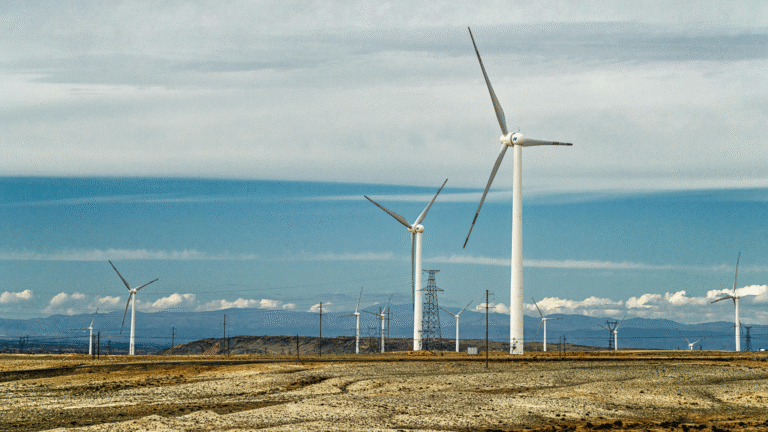
The featured photograph is for representation only.