India’s energy storage policy wrap 2025
Author: PPD Team Date: January 2, 2026

The year 2025 marked a pivotal period for India’s energy storage landscape, transitioning from conceptual discussions to a concrete regulatory and implementation framework. Driven by the imperative to integrate a massive pipeline of renewable energy and ensure grid stability, the government and its agencies rolled out a series of guidelines, mandates, and support mechanisms specifically targeting Battery Energy Storage Systems (BESS) and Pumped Storage Projects (PSP). These moves collectively aim to build a foundational ecosystem for storage, addressing everything from procurement and financing to safety standards and grid integration.
A cornerstone of this push was the Ministry of Power’s advisory, later clarified and supported by the Central Electricity Authority (CEA), urging Renewable Energy Implementing Agencies (REIAs) and state utilities to incorporate a minimum of two-hour co-located storage, equivalent to 10% of installed solar project capacity, in future tenders. This mandate, however, was strategically applied only to upcoming tenders, ensuring existing schemes like the Pradhan Mantri Surya Ghar Muft Bijli Yojana continued unhindered. The CEA estimated this clause alone could catalyze around 14 GW/28 GWh of new ESS capacity by 2030. To further de-risk investment, the Ministry of Power approved a significant Viability Gap Funding (VGF) scheme worth Rs 5,400 crore via the Power System Development Fund (PSDF) to support 30 GWh of BESS rollout across 15 states and through NTPC. The funding structure was designed to provide staggered payments, 20% after financial closure, 50% at commissioning, and 30% after one year of operation, with projects required to be completed within 18 months of signing agreements.
The procurement pathway for this new storage capacity was firmly established through tariff-based competitive bidding (TBCB). The Ministry of Power released comprehensive guidelines for procuring stored energy from pumped storage projects, outlining two distinct modes. Mode 1 reduced developer risk by having the procurer identify the site, form a Special Purpose Vehicle, and obtain clearances for a Build-Own-Operate-Transfer model spanning 25-40 years. Mode 2 placed more initiative on developers to identify sites and secure approvals under a Build-Own-Operate model for 15-40 years. Evaluation criteria were clarified to include storage charges, viability gap funding-linked charges, or a composite tariff covering both input power and storage costs.
Simultaneously, efforts were made to clarify the legal and operational identity of storage systems. The Ministry of Power released draft amendments to the Electricity Rules, 2005, formally recognizing Energy Storage Systems as distinct entities that could operate standalone or be integrated into generation, transmission, or distribution networks. The rules granted developers, utilities, and independent providers flexibility to sell, lease, or rent storage capacity, with the system’s legal status tied to its owner. This clarity was seen as essential for scheduling and market operations. Grid-India followed with a detailed draft procedure to govern the scheduling, metering, deviation settlement, and transmission charge waivers for ISTS-connected ESS. It proposed a full 12-year transmission charge waiver for BESS projects commissioned by June 2028, provided they are charged at least 51% from renewable sources, with reduced waivers for projects commissioned later.
Safety emerged as a parallel and critical focus. The CEA proposed a dedicated safety framework for BESS through a draft amendment to the safety regulations, introducing a new chapter. It mandated stringent fire and explosion protection, automatic emergency shutdowns, hazard detection systems, and a minimum physical separation of 7.5 meters between battery containers. For installations above 200 kWh, a compulsory water-based fire suppression system and a third-party fire safety audit were prescribed. Later in the year, the CEA released a draft Standard Operating Procedure for these mandatory third-party audits, outlining a structured process for pre-commissioning and periodic assessments every five years.
The financial ecosystem for storage projects also received attention. To ease the liquidity burden on developers, the Ministry of Power revised Standard Bidding Documents for interstate transmission, permitting Insurance Surety Bonds (ISBs) and Payment on Order Instruments (POIs) from institutions like IREDA, PFC, and REC as alternatives to traditional bank guarantees for bid security and performance guarantees. This was aimed at freeing up working capital and speeding up project awards.
On the ground, the sector witnessed a landmark commissioning with IndiGrid bringing online India’s first regulated utility-scale standalone BESS project, a 20 MW/40 MWh facility in Delhi. This project, won through a BSES Rajdhani Power Ltd tender, was highlighted as a significant step towards cleaner, more resilient power infrastructure at the distribution level.
Looking ahead, the Central Electricity Regulatory Commission (CERC) took steps to formalize the revenue model for storage, issuing draft amendments to tariff regulations to create a supplementary tariff structure for Integrated Energy Storage Systems paired with thermal plants or transmission networks. The draft proposed norms for fixed storage charges, energy charges accounting for round-trip efficiency, and a return on equity framework. Furthermore, CERC proposed a buyout price of Rs 245 per MWh for entities failing to meet their Renewable Consumption Obligations, creating a financial mechanism that could indirectly support the REC market linked to storage.
The National Electricity Plan’s projection of a requirement for 73.93 GW/411.4 GWh of storage by 2031-32 to support 364 GW of solar and 121 GW of wind capacity loomed large over all these policy moves. With battery costs reportedly declining from about Rs 8-9 per unit in 2022 to Rs 6-7 per unit in 2024, the economic case for storage strengthened throughout the year.
In summary, 2025 was the year India’s energy storage agenda moved from the drawing board into a structured phase of implementation. Through a combination of procurement mandates, financial incentives, clarified regulations, stringent safety codes, and pioneering projects, the framework for a storage-supported grid took definitive shape. The focus remained squarely on enabling this nascent sector to scale up reliably and efficiently, ensuring it can fulfill its critical role in balancing India’s rapidly growing renewable energy portfolio and maintaining grid stability in the decades to come.
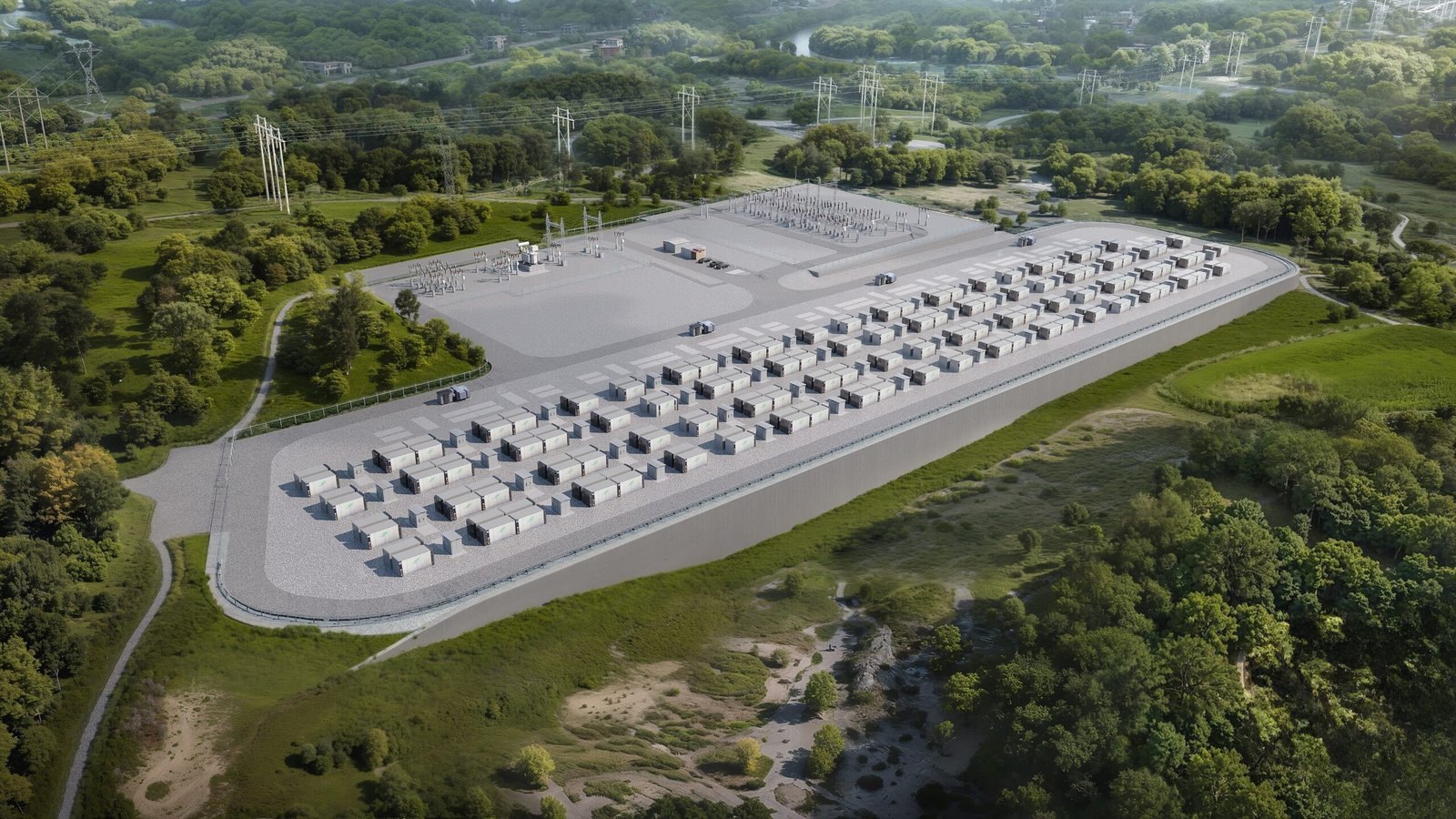
The featured photograph (Source: Flatiron Energy) is for representation only.