IEA cites India’s auction model as Southeast Asia faces energy security risks
India’s renewable energy auction framework offers important lessons for Southeast Asian countries seeking to accelerate clean energy deployment while managing energy security risks, according to the International Energy Agency’s (IEA) Southeast Asia Energy Outlook 2026.
The report, the seventh edition of the IEA’s regional outlook, highlights India’s progress in renewable energy deployment and examines the challenges facing Southeast Asia amid rising energy import dependence, higher fuel costs and growing electricity demand.
India’s auction framework
The IEA noted that India achieved its target of installing 50% non-fossil power generation capacity five years ahead of schedule, supported by clearly defined targets, policy support mechanisms and institutional capacity.
India’s competitive renewable energy tendering framework, introduced in 2010, has evolved from technology-specific procurement towards system-oriented approaches incorporating hybrid projects, energy storage and firm renewable power supply.
A key development was the introduction of Firm and Dispatchable Renewable Energy (FDRE) auctions in 2023. These tenders require developers to supply renewable electricity during specific periods aligned with utility demand requirements.
The report also highlighted a sharp decline in tariffs for emerging technologies, noting that utility-scale standalone energy storage system tariffs fell by 80% within two years.
However, the IEA observed that India fell short of its annual auction target in 2025 due to undersubscription and the cancellation of some FDRE tenders.
Lessons for Southeast Asia
According to the report, several elements of India’s renewable energy programme could be relevant for Southeast Asian markets.
These include establishing long-term deployment targets, creating predictable project pipelines, adapting procurement mechanisms to evolving grid requirements, strengthening institutional support through specialised agencies, and expanding the use of hybrid, storage and round-the-clock renewable energy projects.
The report noted that Southeast Asia possesses significant renewable energy potential but continues to face constraints related to transmission infrastructure, financing and regulatory frameworks.
Energy security concerns
The outlook was released amid heightened concerns over global energy security and fuel price volatility.
According to the IEA, around 60% of Southeast Asia’s crude oil imports and one-third of its gas imports originated from the Middle East before the recent conflict in the region.
The agency stated that global benchmark crude oil prices and regional liquefied natural gas (LNG) prices have risen by around 60% compared with pre-conflict levels, prompting governments across Southeast Asia to implement measures such as price controls, demand restraint and efforts to secure alternative fuel supplies.
Under current policy settings, the region’s fossil fuel import bill is projected to increase from USD 80 billion in 2024 to around USD 245 billion by 2035.
The report noted that renewable energy deployment and energy efficiency investments have already reduced import costs by around USD 30 billion since 2015.
Changing investment patterns
The IEA also highlighted major changes in energy financing across Southeast Asia.
Chinese development finance for the region’s energy sector declined from around 30% of total energy spending in 2015 to 1% in 2024 following China’s decision to end overseas financing of coal-fired power projects.
Official Chinese financing is now largely focused on renewable energy projects, although Chinese state-owned enterprises, commercial banks and policy banks remain active in the region.
Solar manufacturing shifts
The report identified significant changes in Southeast Asia’s solar manufacturing sector following the imposition of U.S. anti-dumping and countervailing duties on solar imports from Cambodia, Malaysia, Thailand and Viet Nam in June 2025.
The measures have prompted manufacturers to reconfigure production plans across the region. Indonesia is projected to become the largest solar module manufacturing destination in Southeast Asia by 2030.
Viet Nam’s solar module manufacturing capacity is expected to decline to less than 40% of its 2024 level by 2030. Overall module manufacturing capacity in Southeast Asia fell from 107 GW in 2023 to 100 GW in 2024.
Regional power integration
The report emphasised the importance of the ASEAN Power Grid (APG) in strengthening regional energy security and supporting renewable energy integration.
The APG is expected to require around USD 27 billion of investment between 2025 and 2040, representing a substantial increase compared with cumulative interconnection investments made between the 1970s and 2024.
Six ASEAN member countries have recently signed an enhanced APG Memorandum of Understanding, providing additional momentum for cross-border electricity trading and grid connectivity.
Nuclear plans emerge
The IEA noted growing interest in nuclear energy across the region.
Indonesia, the Philippines and Viet Nam have established nuclear development targets, with the first reactors expected to enter service after 2030.
Under the Announced Pledges Scenario, nuclear capacity across Southeast Asia could reach nearly 30 GW by 2050, displacing around 35 million tonnes of coal and 20 billion cubic metres of natural gas annually.
Energy transition outlook
The report outlined three potential pathways for Southeast Asia’s energy sector.
Under the Current Policies Scenario, carbon dioxide emissions continue rising and exceed 3 Gt by 2050. Under the Stated Policies Scenario, emissions reach around 2.5 Gt as existing policy measures support greater clean energy deployment. Under the Announced Pledges Scenario, emissions peak around 2030 and decline to around 1 Gt by 2050, with low-emission sources providing 90% of electricity generation.
The IEA said Southeast Asia’s response to energy security challenges, clean energy deployment and infrastructure investment will play an important role in shaping both regional resilience and the global energy system.
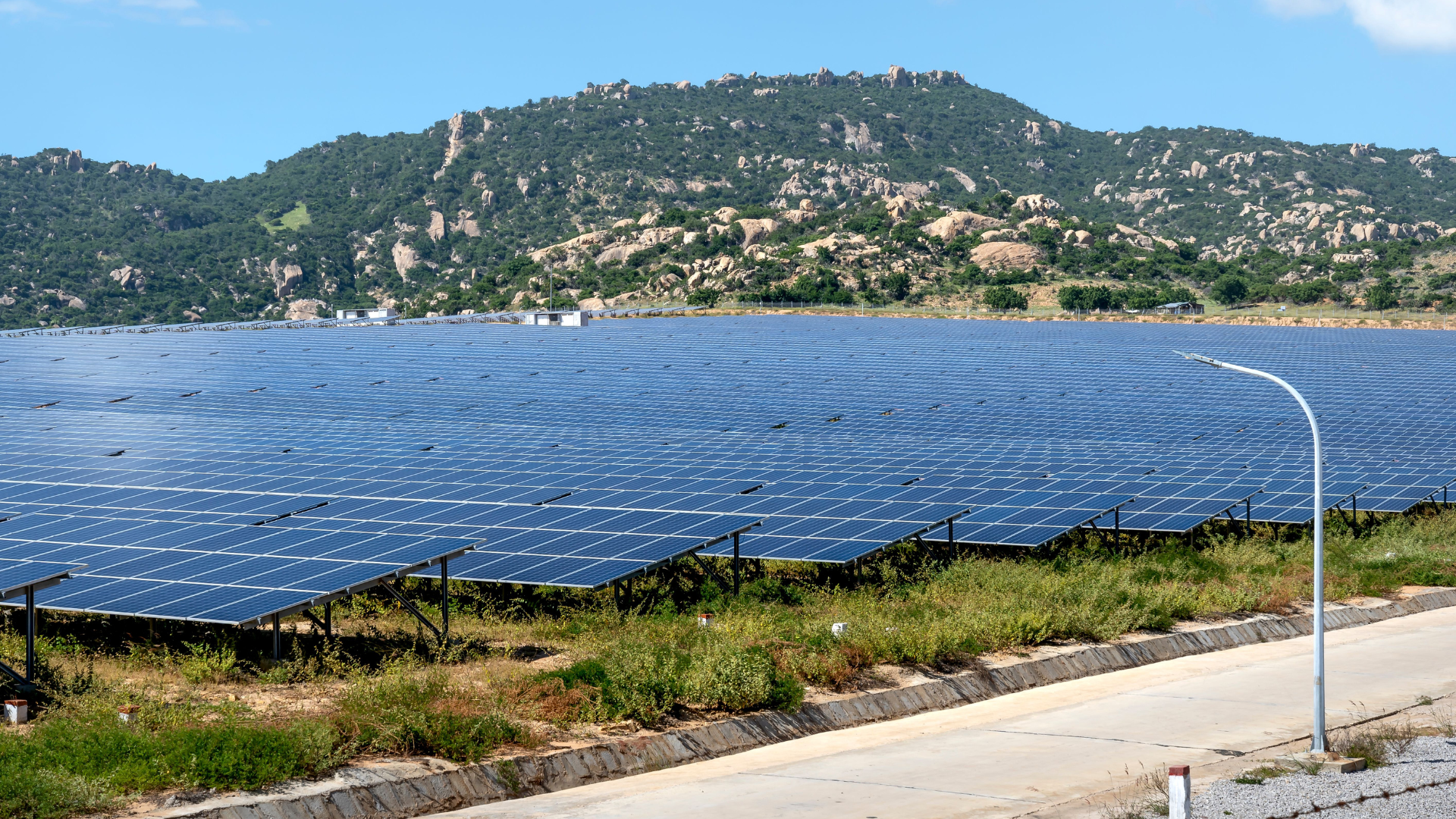
The featured photograph is for representation only.