
Fraunhofer ISE tests medium voltage solar plants to cut costs and materials
Author: PPD Team Date: February 2, 2026
Researchers at Germany’s Fraunhofer Institute for Solar Energy Systems (Fraunhofer ISE) are developing the first medium voltage photovoltaic power plants. The initiative aims to lower material use, reduce costs, and streamline the deployment of large-scale solar projects, particularly in areas with grid constraints.
Two pilot plants, each with a capacity of 135 kW, will be established in the German states of Baden-Württemberg and Rhineland-Palatinate. These systems will operate at 3 kV on the direct current (DC) side and 1.2 kV on the alternating current (AC) side. A key component is a newly developed medium voltage photovoltaic inverter utilizing silicon carbide semiconductors.
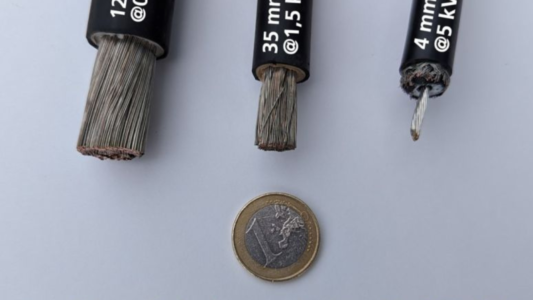
The shift to medium voltage, approximately double that of conventional designs, allows for a reduction in conductor cross-sectional area by about 75%. This enables the use of thinner cables, simplifies installation, and decreases the requirement for transformers and substations. Fraunhofer ISE states this approach can significantly lower both material consumption and balance of system costs.
“Moving to medium voltage substantially reduces copper and aluminium requirements while cutting installation effort and costs,” said Felix Kulenkampff, a researcher at Fraunhofer ISE. The pilot plants will evaluate two configurations: one using standard 1500 V solar modules with centre point grounding, and a second operating at 3 kV with prototype high voltage photovoltaic modules.
The project involves collaboration with industry partners Pfalzwerke AG, Hanwha Q Cells, and Infineon Technologies. The goal is to demonstrate that voltage-resistant and cost-competitive components can perform reliably in real-world conditions. The initiative receives funding from the German Federal Ministry for Economic Affairs and Energy under its “Innovations for the Energy Transition” programme.
According to Fraunhofer ISE, medium voltage solar systems provide greater flexibility than high voltage plants and are better suited for decentralised projects and regions lacking high voltage grid infrastructure. A successful demonstration could lower both the capital costs and the carbon footprint of future utility-scale photovoltaic installations.
Photo credit: Fraunhofer Institute for Solar Energy Systems