
Bhutan completes Punatsangchhu-II hydroelectric project
Author: PPD Team Date: August 28, 2025
The 1020 MW Punatsangchhu-II Hydroelectric Project in Bhutan has reached completion with the synchronisation of its final unit, Unit 6 (170 MW), to the national power grid, the Embassy of India has announced in Thimphu. A ceremony was held at the project powerhouse to mark the milestone.
Dasho Tshering Tobgay, Prime Minister of Bhutan, Lyonpo Gem Tshering, Minister of Energy & Natural Resources, Indian Ambassador Sudhakar Dalela, and senior officials from both governments attended, along with the project team, WAPCOS representatives, and contractors.
The Punatsangchhu-II project is part of a wider bilateral collaboration between India and Bhutan in hydropower. Both governments have jointly developed five major projects in Bhutan, including Chukha HEP (336 MW), Kurichhu HEP (60 MW), Tala HEP (1020 MW), Mangdechhu HEP (720 MW), and Punatsangchhu-II HEP (1020 MW).
Completion of this project has increased Bhutan’s total installed generation capacity by around 40 per cent, taking it above 3500 MW.
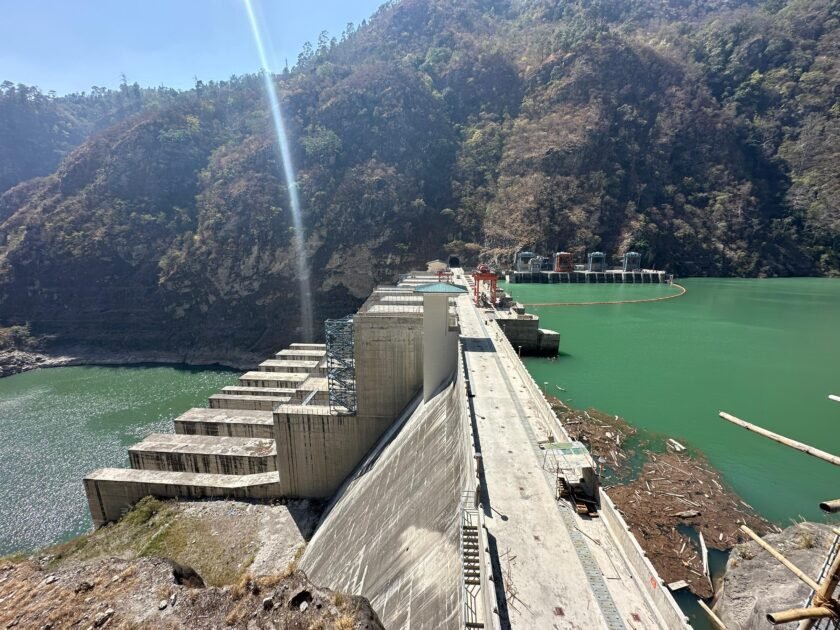
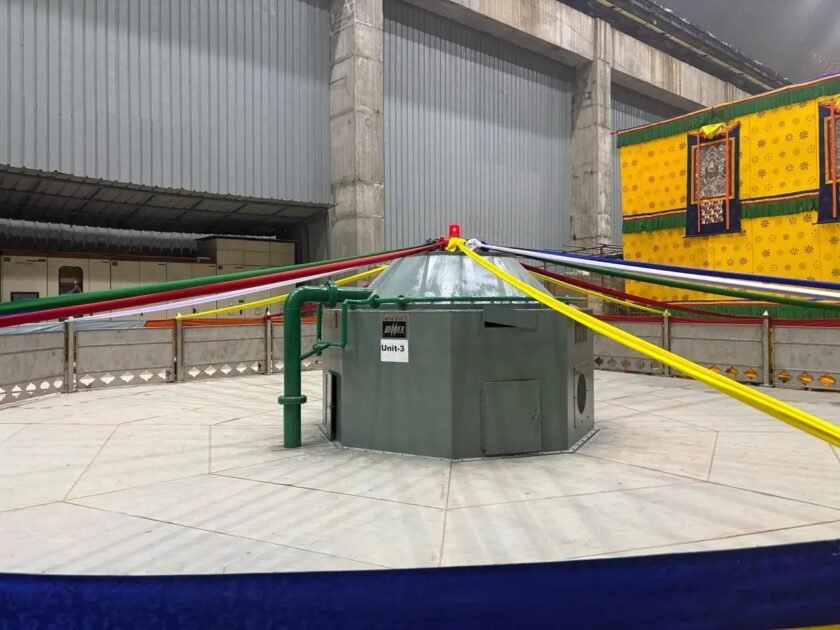
Punatsangchhu-II’s completion has raised Bhutan’s installed power generation capacity by roughly 40 per cent, bringing total capacity to over 3,500 MW. The project’s six units were commissioned in stages: Units 1 and 2 in December 2024, Unit 3 in March 2025, Unit 4 in May 2025, Unit 5 in July 2025, and finally Unit 6. Once operating at full capacity, the project is expected to generate around 4,357 GWh annually.
Bharat Heavy Electricals Limited (BHEL) handled the design, supply, installation, and commissioning of the electromechanical works, including turbines, generators, SCADA systems, and transformers. BHEL’s contribution has been significant, accounting for approximately 89 per cent of Bhutan’s total installed hydropower capacity.
Hydropower cooperation between India and Bhutan began in 1961 with the Jaldhaka agreement. Bhutan’s first major project, the 336 MW Chukha HEP, was commissioned in 1987 with full funding support from India, comprising 60 per cent grant and 40 per cent loan. The success of Chukha led to subsequent projects, including Tala HEP, Mangdechhu HEP, and Punatsangchhu-I and II HEPs, under agreements that emphasised mutual economic benefits.
In 2006, both countries signed the Agreement on Cooperation in the Field of Hydroelectric Power, later supplemented by a 2008 protocol to increase the scale of hydro projects from 5,000 MW to 10,000 MW by 2020. Under this framework, projects such as Punatsangchhu-I (1200 MW) and Punatsangchhu-II (1020 MW) were initiated. Additional projects, including Kholongchhu (600 MW), Bunakha (180 MW), Wangchu (570 MW), and Chamkarchu (770 MW), were planned under a Joint Venture model between Indian and Bhutanese public sector entities.
Hydropower has become Bhutan’s most significant export, contributing approximately 63 per cent of total exports. Druk Green Power Corporation, which manages all electricity generation in Bhutan, is the country’s highest taxpayer. The sector remains central to Bhutan’s economy, leveraging the country’s abundant water resources while providing a sustainable source of revenue.
The Punatsangchhu-II project highlights the ongoing win-win nature of Indo-Bhutan hydropower cooperation, delivering power to India while generating income for Bhutan and strengthening economic ties between the two nations.
Image credits: Embassy of India, Thimphu, Bhutan
