WRPC clarifies mandatory BESS action at 49.5 Hz after Khavda event
The Western Regional Power Committee (WRPC) has clarified that Battery Energy Storage Systems (BESS) operating in charging mode must either switch to discharging or disconnect at 49.5 Hz, following a non-compliance observed during the May 13, 2026 grid disturbance at Khavda.
The 180 MW/360 MWh Charal BESS, operated by IndiGrid, remained connected while charging at the time of the disturbance. The system frequency subsequently fell to 49.39 Hz, triggering the first stage of Under Frequency Relay (UFR) operation.
The clarification was issued during the 7th Renewable Energy (RE) Sub-Committee meeting, where Adani Green Energy and other renewable energy developers raised concerns over the technical feasibility, reconnection process and commercial implications of mandatory BESS disconnection. The committee maintained that grid security considerations must take precedence over the commercial implications arising from such disconnection.
Regulatory requirement
Clause 29(12) of the Indian Electricity Grid Code (IEGC), 2023 states: “Pumped storage hydro plants operating in pumping mode or Energy Storage Systems (ESS) operating in charging mode shall be automatically disconnected before the first stage of Under Frequency Relay (UFR) operation.”
The Task Force on Automatic Under Frequency Load Shedding (AUFLS) and df/dt Scheme, approved at the 14th National Power Committee (NPC) Meeting, further specifies that all Energy Storage Systems (ESS) must automatically switch from charging mode to discharging mode at 49.50 Hz. If the transition is not feasible, the ESS must be tripped at 49.50 Hz.
The requirement is intended to arrest frequency decline by removing loads from the grid. A BESS operating in charging mode acts as a load, whereas a BESS operating in discharging mode can support the system by injecting power.
Khavda event
During the May 13 disturbance, system frequency fell to 49.39 Hz. An analysis by Western Region Load Despatch Centre (WRLDC) found that automatic disconnection of BESS operating in charging mode at 49.5 Hz had not occurred.
At 14:09 hrs on May 13, the Charal BESS was operating at 180 MW/360 MWh capacity and charging at +21 MW. The Rajnandgaon BESS, with a capacity of 40 MW/120 MWh, was at 0 MW and was neither charging nor discharging.
The Charal BESS remained connected in charging mode. The RE Sub-Committee described the non-compliance as “not desirable in view of grid security and system reliability.”
Developer concerns
At the 7th RE Sub-Committee meeting, Adani Green Energy and other renewable energy developers raised questions about the practical implementation of the requirement.
Developers questioned whether an immediate transition from charging to discharging is technically feasible, what ramp rate would be required and whether such a transition could place stress on power conversion systems. They also sought a clear reconnection protocol, including the frequency stabilisation level at which a BESS could reconnect and resume charging.
The developers further raised concerns about the commercial consequences of forced disconnection. Uncertainty over the duration of disconnection could result in revenue losses and affect contractual obligations.
Committee clarification
The Member Secretary, WRPC, emphasised that grid security considerations must take precedence over commercial implications arising from BESS disconnection.
The committee clarified that if an immediate transition from charging to discharging is not possible, the BESS must disconnect immediately at 49.5 Hz. There is no provision for a grace period or hold condition.
For reconnection, the committee stated that a BESS may reconnect once system frequency has stabilised within the normal operating range specified in the IEGC, which is 50.00 Hz ± 0.2 Hz. The BESS operator is responsible for monitoring frequency and reconnecting safely.
The sub-committee acknowledged the commercial concerns raised by developers but reiterated that grid security cannot be compromised.
Implementation
Gujarat State Load Despatch Centre (SLDC) has been requested to advise IndiGrid to immediately implement the stipulated frequency setting for the Charal BESS.
The issue also points to the need for advanced controls that can enable BESS to switch between charging and discharging modes based on predefined frequency thresholds without a delay. Such controls could reduce the need for an immediate hard trip where a technically feasible transition to discharging can be achieved.
The regulatory position following the Khavda event is clear: at 49.5 Hz, a BESS operating in charging mode must either switch to discharging or disconnect.
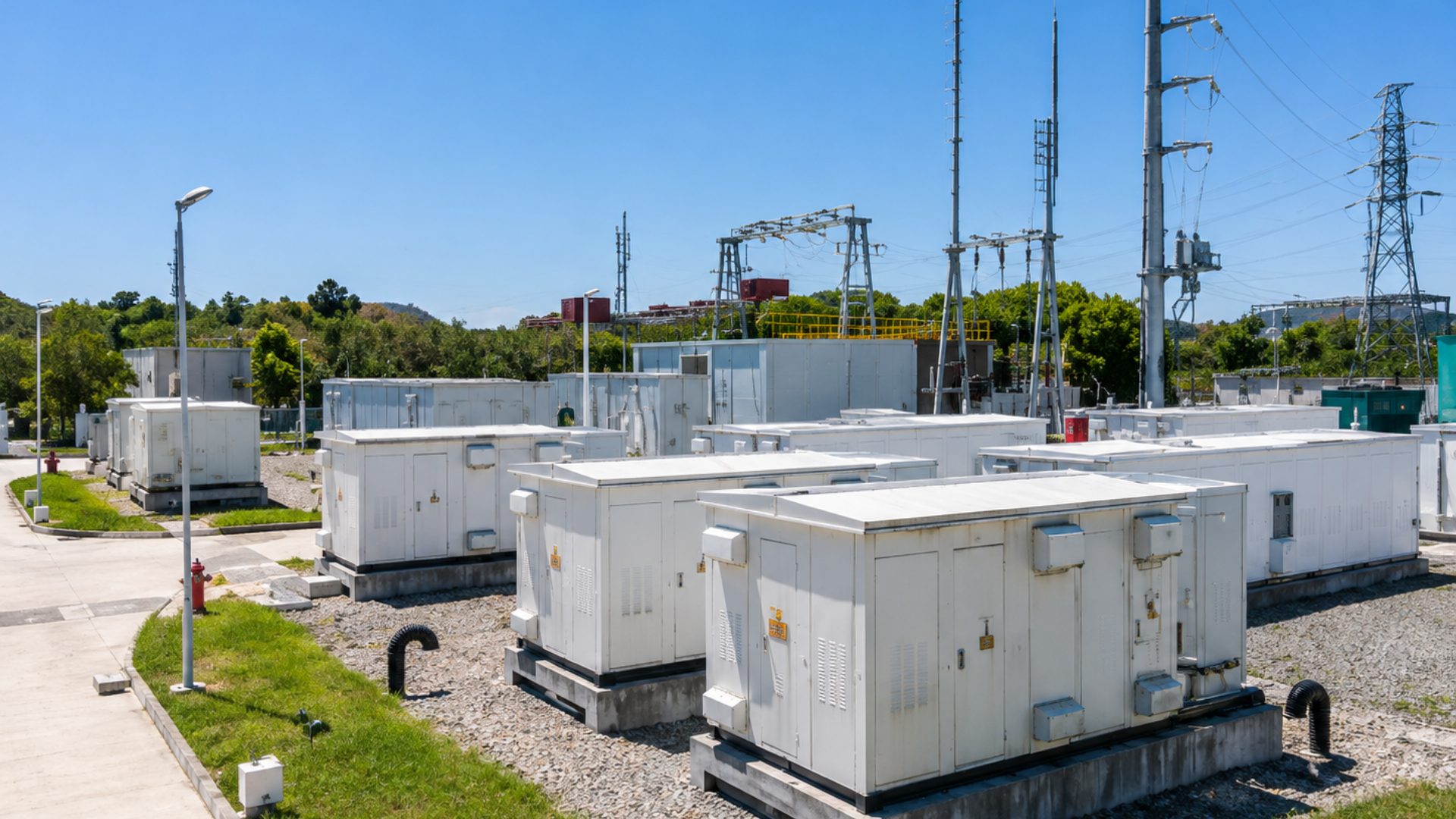
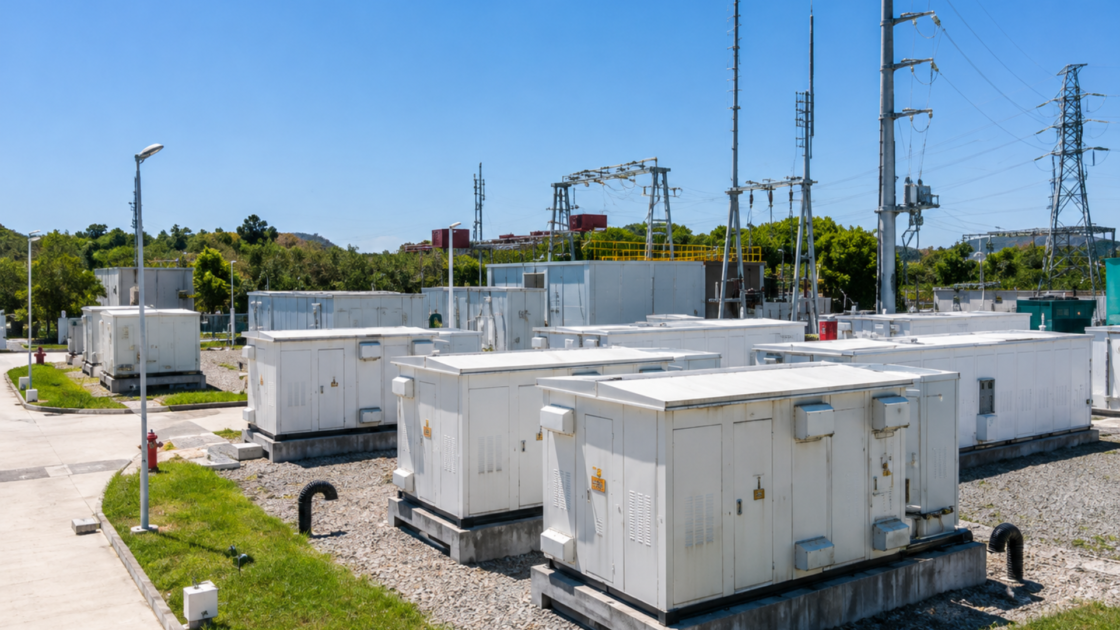
The featured photograph is for representation only.